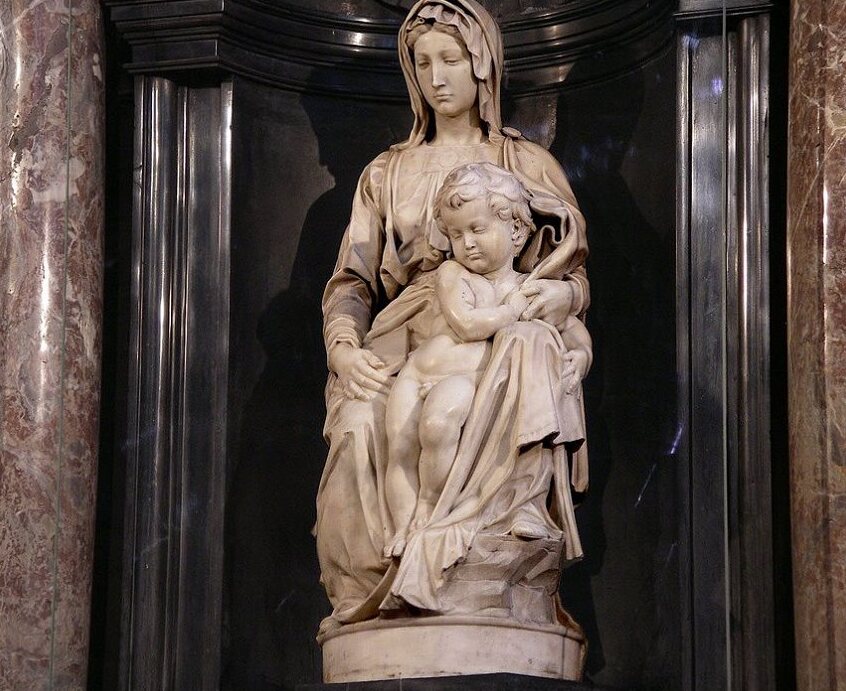

In the heart of Brugge, Belgium, lies a treasure that captivates art enthusiasts and pilgrims of faith alike: Michelangelo’s Madonna of Bruges. This stunning marble sculpture, created by the renowned Renaissance artist Michelangelo Buonarroti, is not just a remarkable piece of art; it is a poignant symbol of maternal sorrow and the complexities of love.
### History and Origins
The Madonna of Bruges was sculpted between 1501 and 1504, during a time when Michelangelo was weaving his magic in Italy. It is believed that the sculpture was commissioned by a French merchant, intending it to be a gift for the Cathedral of Our Lady in Bruges.
After its completion, the statue made its way to Belgium, where it was installed in the cathedral. However, the sculpture’s journey took a tumultuous turn during the French Revolution, when it was taken by invading soldiers. It was hidden and later rediscovered, only to face another crisis during World War II when it was once again at risk of being lost to the ravages of war. Fortunately, the Madonna was safeguarded and returned to Bruges, where it now resides in the Church of Our Lady.
### Art and Architecture
The Church of Our Lady is an architectural marvel itself, showcasing a blend of Gothic influences with its soaring spires and meticulously designed interiors. Within this sacred space, Michelangelo’s masterpiece stands out not just for its artistic beauty but also for its emotional depth.
Unlike many depictions of the Madonna, where she is often portrayed with a gentle smile, Michelangelo's interpretation reveals a mother burdened by the knowledge of her son’s impending fate. The delicate features of Mary, combined with the tender yet heavy embrace of the child Jesus, evoke a profound sense of melancholy that resonates deeply with viewers.
This sculpture holds the distinction of being the only work by Michelangelo to leave Italy during his lifetime, marking its presence as a unique cultural artifact in the Low Countries. Its craftsmanship, with fine details and fluid forms, showcases Michelangelo’s mastery of the human figure, making it a significant study piece for art historians and students alike.
### Local Culture and Traditions
Brugge is steeped in rich traditions that celebrate its artistic and cultural heritage. The city is often referred to as the “Venice of the North” due to its extensive network of canals and medieval architecture. Each year, Brugge holds various festivals that highlight its history and community spirit, such as the Bruges Beer Festival, which pays homage to the city's brewing traditions, and the Festival of Flanders, a celebration of classical music.
Local customs also reflect a deep appreciation for the arts. The Procession of the Holy Blood, held every May, features elaborate floats and costumes, showcasing Brugge’s historical connections to Christianity and its artistic past.
### Gastronomy
A visit to Brugge is incomplete without indulging in its culinary delights. The city is famous for its Belgian chocolate, and many shops offer tastings of artisanal creations. Local beers, particularly the Trappist ales, are a must-try, with many breweries offering tours and tastings.
Don’t miss the chance to savor moules-frites (mussels served with fries) or the rich and creamy Belgian waffles, each bite encapsulating the essence of Brugge’s gastronomic identity. Pair your meal with a glass of Kriek, a cherry-flavored beer that beautifully complements the local fare.
### Lesser-Known Curiosities
While many tourists flock to see the Madonna, few may know that Michelangelo was only 29 years old when he created this iconic work. Additionally, Brugge itself is woven with intriguing stories; the city’s canals were once the bustling highways of trade, and some streets still echo with tales of medieval merchants and artists.
Another fascinating detail is that the Church of Our Lady houses other significant artworks, including pieces by Hans Memling, a prominent Flemish painter. Visitors often overlook these masterpieces, engrossed in Michelangelo's presence.
### Practical Visitor Information
The best time to visit Brugge is during the spring months of April to June or the fall from September to October. These seasons offer pleasant weather and fewer crowds, making it easier to explore the city’s cobblestone streets.
When visiting the Madonna of Bruges, take the time to explore the church’s interior and other artworks. Consider joining a guided tour to gain deeper insights into the history and significance of this iconic sculpture.
For those looking to plan a personalized itinerary, the Secret World app can help you uncover hidden gems and tailor your journey through Brugge’s rich tapestry of culture and art.
