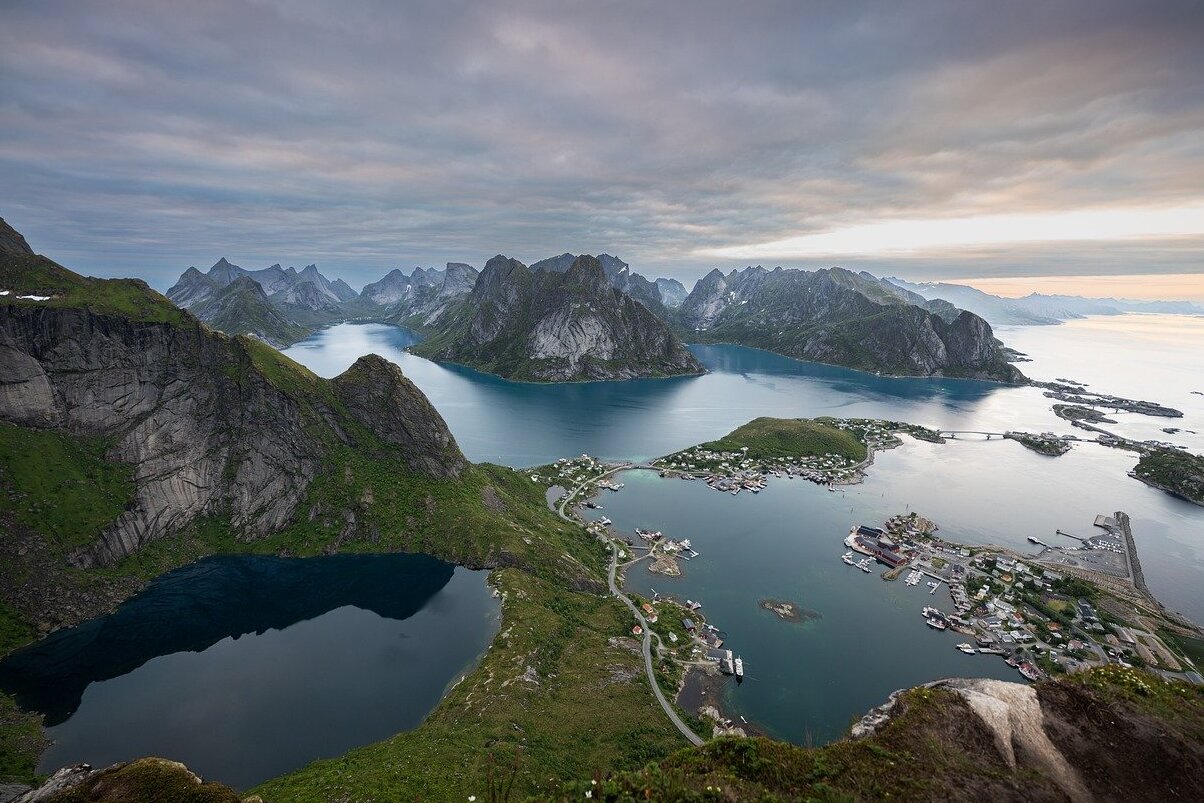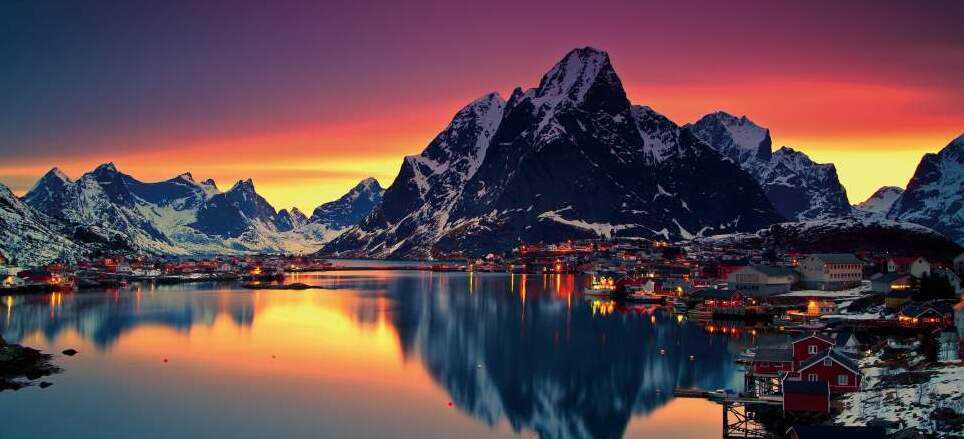

As the Midnight Sun graces the tiny village of Moskenes in the Lofoten Islands, this extraordinary phenomenon invites visitors to experience a world where daylight never fades. Situated at the coordinates of 67.8755513, 12.8968674, Moskenes serves as a gateway to the breathtaking landscapes and rich cultural heritage of Norway's northern archipelago.
### History and Origins
The history of Moskenes is deeply intertwined with the ancient traditions of the Viking Age. This region, like much of Lofoten, was settled around 800 CE, primarily due to its abundant fishing resources. The name "Moskenes" itself is derived from the Old Norse "Mosken" and "nes," meaning "the headland of the marsh." Evidence of Viking settlements can still be seen today, with remnants of longhouses and fishing tools that tell stories of a time when the sea was the lifeblood of the community.
In the 19th century, Moskenes became a vibrant fishing village, buoyed by the booming cod trade. The establishment of the Lofoten Fishery in the 1860s transformed the local economy, attracting fishermen from all over Norway and beyond. This influx of people contributed to a rich blend of cultures and traditions, as maritime life continued to shape the village's identity.
### Art and Architecture
The architectural style of Moskenes reflects its maritime heritage, characterized by traditional rorbuer—the iconic red and yellow fishing cabins that dot the shoreline. These structures, originally used by fishermen during the cod fishing season, have now become charming accommodations for visitors. Their bright colors contrast beautifully with the rugged landscapes and dramatic peaks of the Lofoten archipelago.
Art in Moskenes is closely tied to its surroundings, with local artists often drawing inspiration from the breathtaking natural beauty. The Lofoten Museum, located in nearby Å, showcases the artistic heritage of the region, displaying works that capture the raw essence of the landscape and its history. Seasonal art exhibitions and workshops often feature local artists, allowing visitors to immerse themselves in the creative spirit of Lofoten.
### Local Culture and Traditions
Local customs in Moskenes are steeped in the rhythms of nature and the sea. Traditional fishing practices are still honored today, with many residents engaging in seasonal fishing and preserving age-old techniques. The annual Lofoten Festival, held in July, celebrates this heritage with live music, traditional dances, and culinary showcases featuring local seafood.
Another fascinating aspect of the culture is the Sami influence in the region. The indigenous Sami people have historically inhabited parts of Northern Norway, and their customs, language, and art can be observed in the Lofoten Islands. Visitors can learn about Sami traditions through workshops and events that highlight their unique way of life.
### Gastronomy
Lofoten's gastronomy is a reflection of its maritime roots. The region is renowned for its fresh seafood, particularly cod, which has been a staple for centuries. One dish you must try is klippfisk, a dried and salted cod that has its origins in the Viking Age; it’s often served with potatoes and vegetables.
Another local specialty is lutefisk, a dish made from aged stockfish soaked in a lye solution. While it may sound unusual, it’s a beloved dish during winter festivities. Pair your meal with aquavit, a traditional Nordic spirit, usually flavored with herbs and spices, which complements the rich flavors of the local cuisine.
### Lesser-Known Curiosities
While many visitors come to Moskenes for its stunning landscapes and outdoor activities, a few hidden gems often go unnoticed. One such curiosity is the Moskenes Chapel, built in 1958. Its unique architecture and serene location make it a peaceful spot for reflection, away from the hustle and bustle of the village.
Another intriguing aspect of Moskenes is the local folklore surrounding the Midnight Sun itself. Legends tell of mystical beings who dance on the mountains during the extended daylight, creating an enchanting atmosphere that captivates the hearts of locals and visitors alike.
### Practical Visitor Information
The best time to visit Moskenes to experience the Midnight Sun is from late May to mid-July. During this period, the sun does not set, allowing for endless exploration of the stunning landscapes. Ideal activities include hiking the surrounding mountains, kayaking in the crystal-clear waters, or simply soaking in the beauty of the scenery at Reinebringen.
For a smooth journey, consider renting a car to explore the surrounding areas at your own pace. Accommodations range from cozy rorbuer to charming guesthouses, often with breathtaking views of the fjords.
Don’t forget to pack layers, as the weather can be unpredictable, even in summer. And if you're keen on photography, the soft light of the Midnight Sun offers perfect conditions for capturing the stunning vistas.
For a personalized experience tailored to your interests, consider using the Secret World app to plan your itinerary as you explore the wonders of Moskenes.