
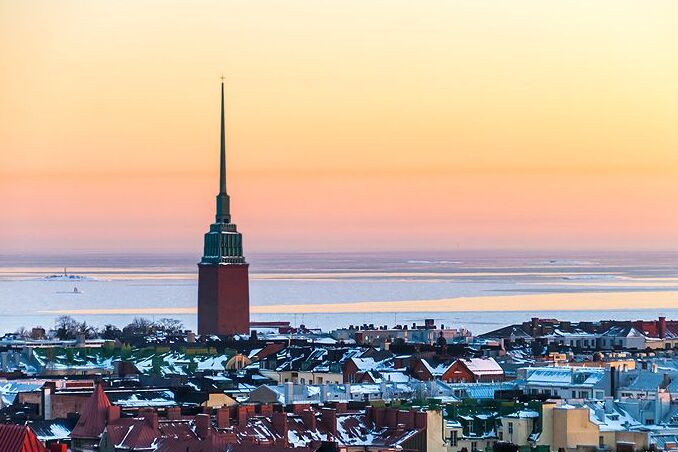

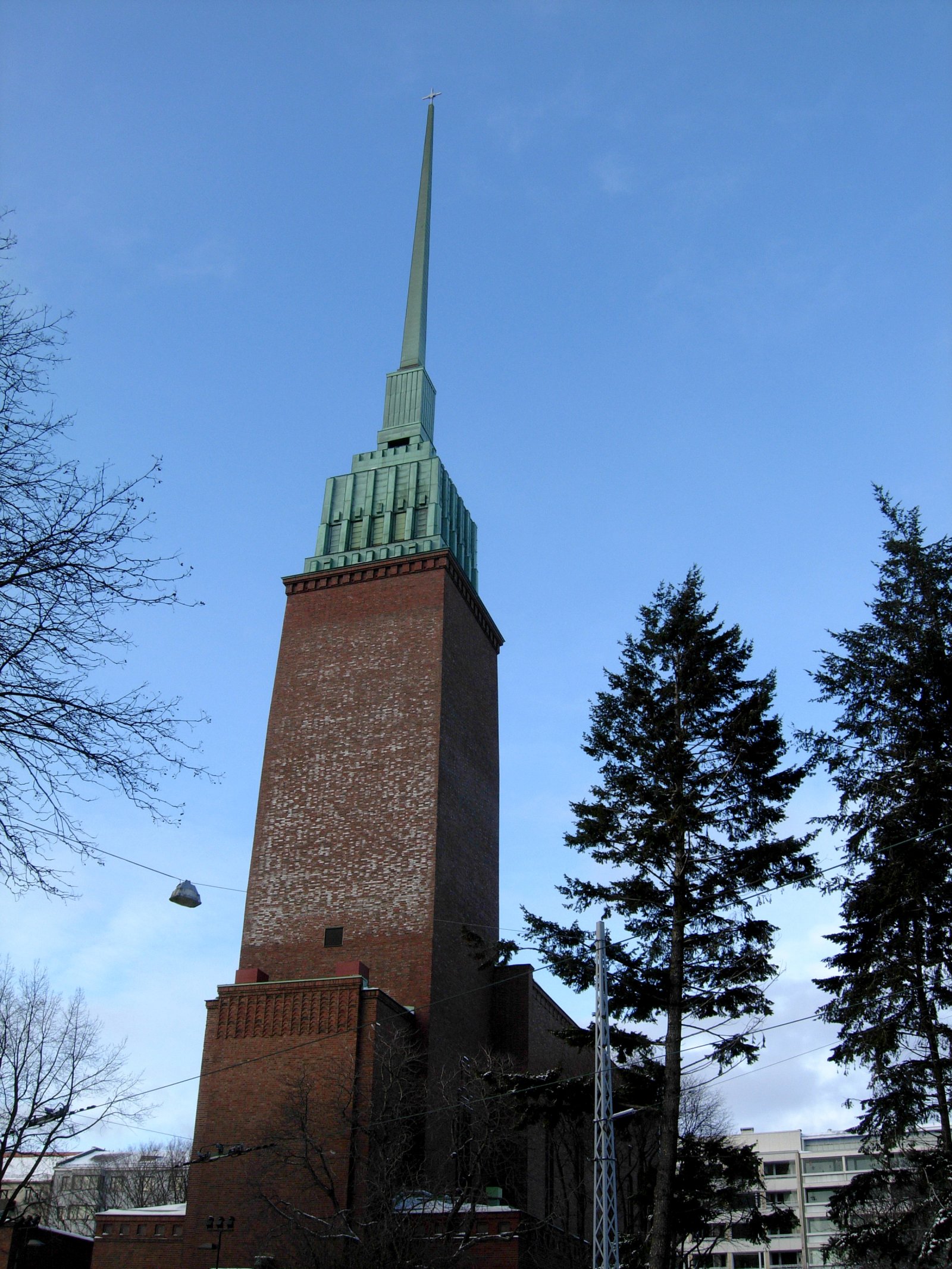
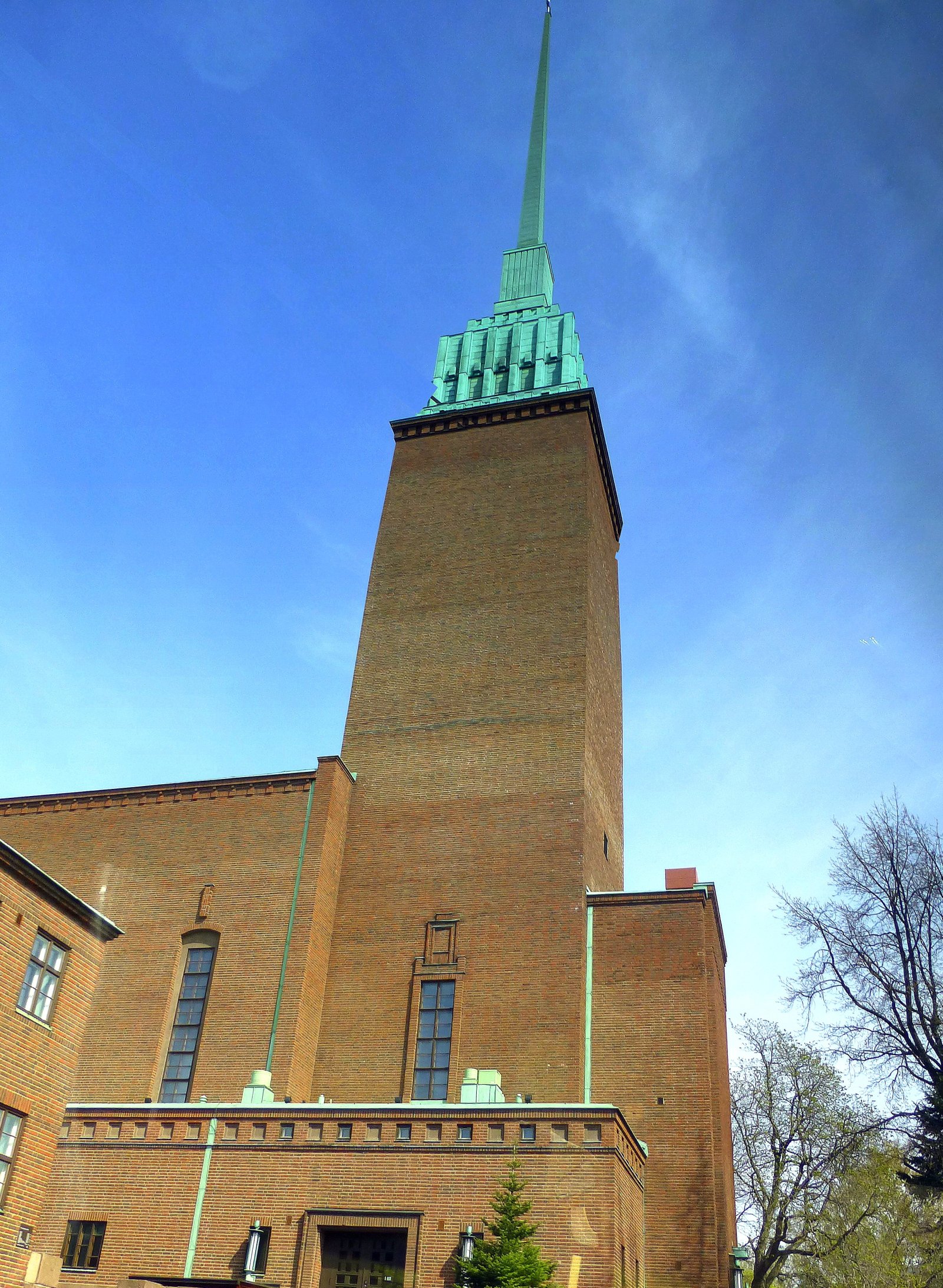
Nestled in the vibrant Punavuori district of Helsinki, Mikael Agricola Church stands as a testament to both faith and artistry. Opened on April 14, 1935, this Lutheran church is named after Mikael Agricola, the revered bishop credited with bringing the Finnish language to the written word. Designed by the notable architect Lars Sonck, who was influenced by both Gothic and Art Deco styles, the church is a striking example of red brick architecture adorned with a towering spire that reaches a majestic 97 meters in height. The tower's unique retractable spike once served a practical purpose during the Winter War and Continuation War, when it was lowered to avoid detection by enemy aircraft, showcasing the church's historical significance beyond its spiritual role.
Inside, visitors are greeted by a serene atmosphere complemented by stunning stained glass windows and a rich wooden altar, which contribute to the church's spiritual ambiance. The artwork within includes an impressive mural by artist Ahti Hammar, depicting scenes from the life of Agricola, further emphasizing the church's connection to Finnish culture and religion.
Culturally, Mikael Agricola Church is a hub for local traditions, hosting various community events and services that reflect the Finnish ethos of togetherness and spirituality. The church is often a venue for concerts, particularly during the Helsinki Festival, where local musicians celebrate the rich heritage of Finnish music.
In terms of gastronomy, the surrounding Punavuori district offers a delightful array of cafés and restaurants where visitors can indulge in local delicacies. Be sure to try karjalanpiirakka (Karelian pasties) or salmiakki (salty licorice), which embody the distinctive flavors of Finnish cuisine. Pair these treats with a warm cup of kahvi (Finnish coffee) for the full experience.
For those looking to uncover lesser-known curiosities, the church features a hidden crypt that houses historical artifacts related to the Finnish Lutheran Church. Furthermore, many locals believe that the church's acoustics are so remarkable that it is one of the best places in the city for choral music, a claim that resonates well with both musicians and audiences alike.
The best time to visit Mikael Agricola Church is during the spring and summer months when the surrounding parks are lush and vibrant, providing a picturesque backdrop for photographs. Visitors should take note of the church’s operating hours, as they may vary, particularly during religious holidays. Don’t forget to look up while inside; the vaulted ceilings and intricate woodwork are simply breathtaking.
In planning your visit to Helsingfors, consider using the Secret World app to create a personalized itinerary that highlights both the well-known and hidden gems of this beautiful city.


