
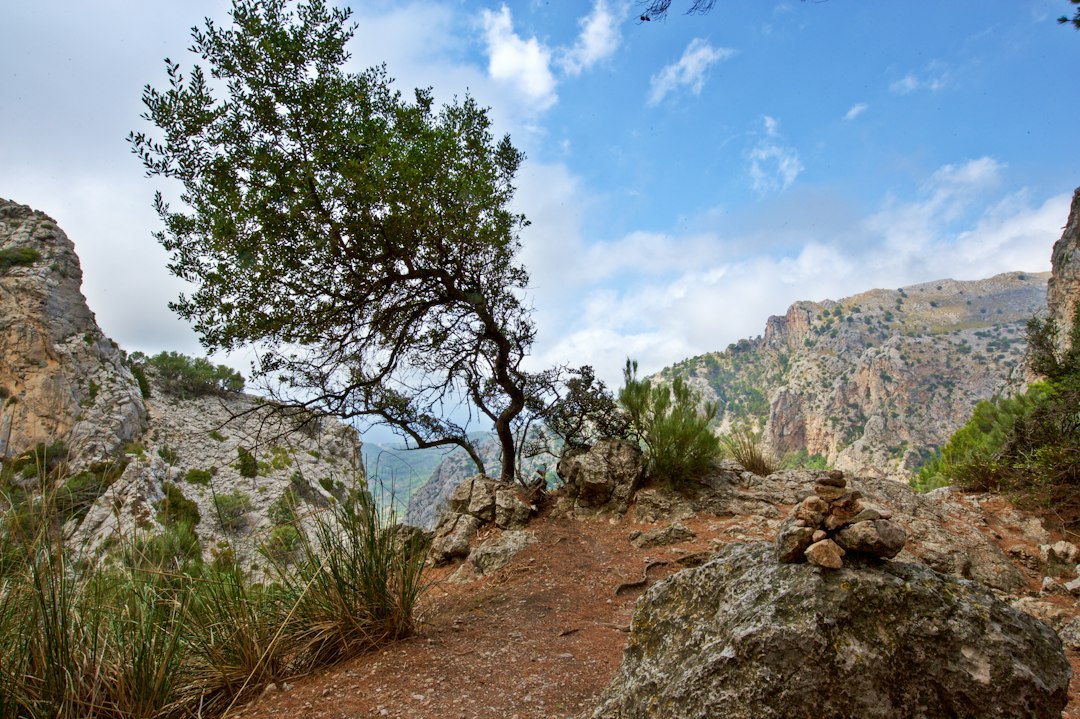

A dirt path rises beyond the last houses of Valldemossa, the village of the Serra de Tramuntana declared a UNESCO World Heritage Site in 2011. There are no signs, there are no arrows painted on the walls. After about ten minutes of walking on this unmarked trail, the ground opens up to a ledge of light gray limestone that juts out into the void: the Mirador de ses Puntes. In front of you stretches a visual arc of about 270 degrees that embraces the terraced olive groves of the valley, the western coast of Mallorca, and, on clear days, the open horizon of the Mediterranean.
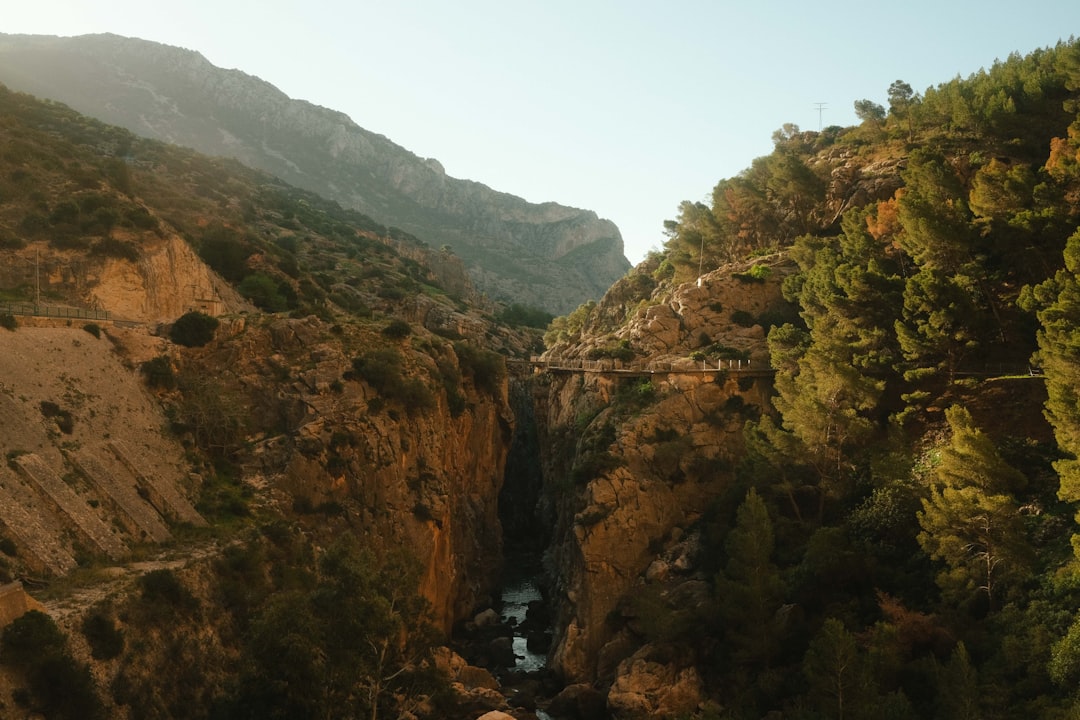
What makes this place unusual is not just the view, but the absence of those who should be there. Valldemossa attracts tens of thousands of visitors every year, many of whom come for the Cartoixa de Valldemossa, the Carthusian monastery where Frédéric Chopin and George Sand spent the winter of 1838-1839. Yet the path leading to the ledge remains almost always deserted. The rock is not fenced, it is not equipped, it does not have a name on Google Maps. It is simply there, as it always has been.
The morning light and the colors of dawn
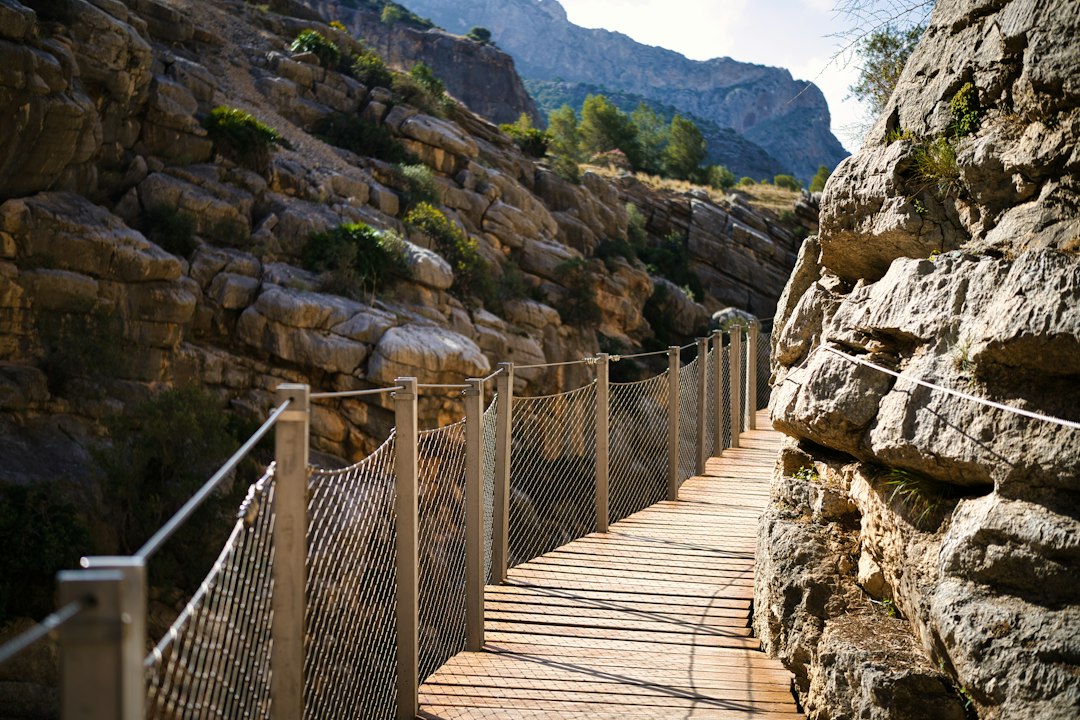
In the early hours of the day, when the sun rises beyond the eastern crests of the Serra de Tramuntana, the light strikes the olive terraces at a grazing angle that transforms each tree into a distinct object. The silvery leaves of the olive trees — many of which are centuries old, with twisted trunks and cracked bark visible even from afar — capture the reflection and return an almost metallic surface. The ground between the dry stone walls, built from local limestone according to a technique passed down by generations of Majorcan farmers, appears a warm ochre that shifts towards red in the hours immediately following dawn.
The sea, at this time of day, has a chromatic quality that changes every quarter of an hour. First it is almost gray-purple, then it becomes a deep blue, and then progressively lighter as the sun rises higher. The coast below the ledge is jagged, with small coves that are not easily reached from the main road. From up here, the structure of the landscape is visible in a way that no photograph can fully capture: the vertical layering of the terraces, the network of paths among the olive trees, the gray ribbon of the road that descends towards Deià.

The afternoon and sunset on the west coast
In the late afternoon, the scene changes radically. The sun moves westward and directly illuminates the surface of the sea, which becomes almost blinding during the central hours of the afternoon. Around five or six o'clock, depending on the season, the light begins to warm up to yellow and then to orange. The shadows of the terraces stretch eastward and draw sharp horizontal lines on the hillside. The olive trees lose their silvery appearance and become dark masses against the sky.

The sunset from this position is one of the few moments when the ledge could be crowded — but it is not. The sun descends toward the open sea, unobstructed, and the horizon is tinged with shades ranging from pale pink to deep red. The limestone rock underfoot, white during the day, takes on an almost golden color in these moments. It is a simple physical effect, but particularly pronounced on this porous stone that absorbs and reflects light differently than other surfaces.
How to reach the Mirador de ses Puntes

The starting point is the center of Valldemossa, easily reachable by car from the Ma-1110, the road that connects Palma to Deià. From the entrance of the Cartoixa de Valldemossa, you go up through the streets of the village towards the north, looking for the unpaved paths that open beyond the last houses. There is no official signage: you need to follow the dirt track that rises among the Mediterranean vegetation — mastic tree, rosemary, carob — for about ten minutes with a modest elevation gain.
The most useful practical advice is to wear shoes with non-slip soles: the limestone rock of the ledge, especially after rain or with morning dew, can be slippery. The best time is early in the morning, both for the quality of the light and because the temperatures remain cool. In summer, the path is exposed to the sun and the rock heats up quickly. There is no entrance ticket, there are no facilities, there are no services: it is simply a stretch of open land. Bringing water is advisable, as well as checking the weather conditions before approaching the edge of the ledge on windy days.
Why this place remains ignored
The simplest answer is that it does not have a visible name, it does not have a Wikipedia page in Italian, it does not appear in the most popular printed guides. Valldemossa is collectively associated with the Cartoixa, with Chopin, with the painted ceramics on the doors of the historic center houses. The surrounding landscape is traversed by car, not explored on foot. The Mirador de ses Puntes has never had a tourism promotion campaign, it has not been subject to restorations or institutional enhancement.
This makes it, in fact, one of the few viewpoints in the Serra de Tramuntana where it is still possible to stand still in silence for an hour without hearing voices, without encountering other hikers, without the noise of buses on the bend below. The limestone ledge is there, the sea is there, the olive trees are there. The landscape does not need to be discovered — it has existed since before anyone thought to photograph it.


