

he chocolate of Modica has very ancient origins and finds its roots in what is called: "the people of the fifth sun," the Aztecs who ruled Central and South America from the 13th to the 16th century. Among the great and wonderful cultures and traditions of this extraordinary people of ancient Mexico, cocoa played an important role; in fact, it was considered nutritious food, economic support, a symbol of excellent social standing, effective medicine, and a means of communication with deities. The mythical origin was linked to "QUETZALCOATL" deified as the god of chocolate who descended to earth, had brought with him from heaven a cocoa plant that he grew in his sacred garden and later gave to the locals. These soon learned how to roast and grind the seeds (or beans) enclosed by the pod to make a thick, nutritious gruel.
The cocoa beans were roasted on an instrument called a "METATE" a curved stone resting on two transverse bases, which was heated with wood placed under it and then ground using a special rolling pin also made of stone. The cocoa paste thus obtained was flavored with spices: most commonly vanilla but also red pepper, cinnamon and many other local herbs and spices and even exotic flowers; the mixture finally was rubbed on the "metate" until it hardened, becoming a single homogeneous dough.
To avoid having to grind the beans each time, they would prepare a kind of cocoa and corn cake, used as a thickener, with a small amount of water to solidify the mixture now ready to be used. When needed, small pieces were broken off and dissolved in the water, the resulting drink was called and still is called by the indigenous people of Central America "XOCO-ATL" (XOCO=AMARA, ATL=WATER) hence " BITTER DRINK" firmly convinced that it was the bearer of wisdom and wisdom.
It was then the Spaniards who through the work of Hermes Cortes, around 1519, imported the first cocoa beans having learned its excellent qualities and economic riches, and subsequently established a real trade in it around 1580. Making different uses of it and having learned its processing, it was during their domination in Sicily ne XVI century, that the Spanish introduced it in the "County of Modica"; the largest County in the Kingdom of Sicily, such that it was also named as "The Kingdom within the Kingdom" both for the abstention of its territory (it extended, in fact to the gates of Palermo) and for the economic riches , the resources of the territory, the magnificent baroque art as well as the confectionery traditions rooted in it. Returning to our "Chocolate of Modica," contrary to what happened later in the Kingdom of Italy and throughout Europe, in the County of Modica it never went to industrial processing , thus preserving over the centuries until today the genuineness and purity of the ingredients as well as the craftsmanship of its manufacture.
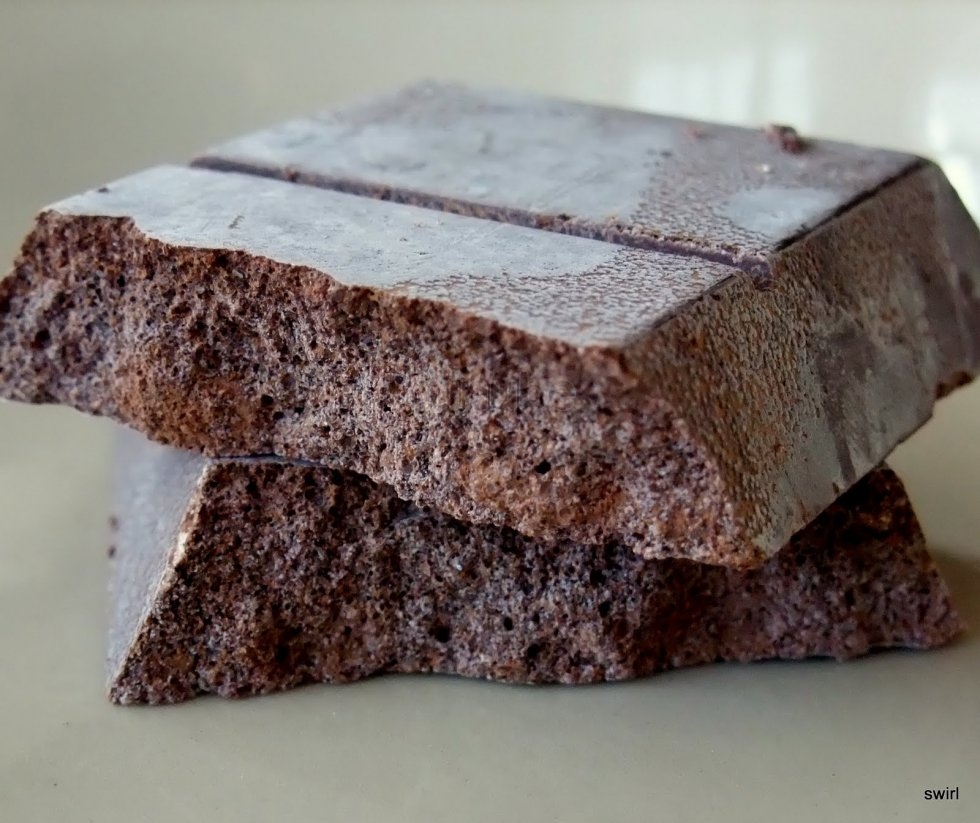
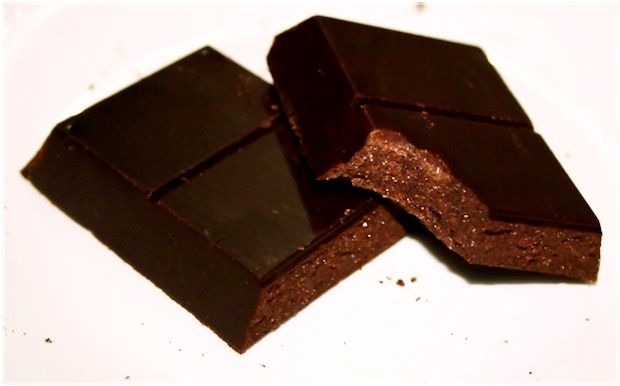
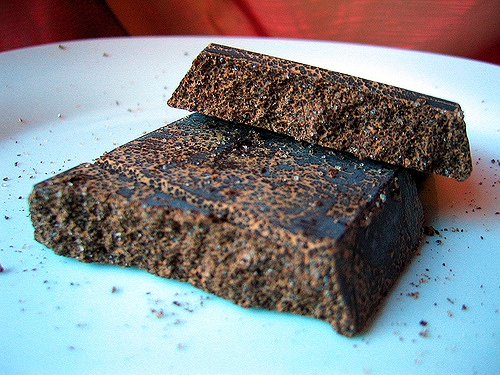
"Cioccolato di Modica" is dark black in color with brown highlights; rustic, almost coarse, with sugar granules left coarse that give it, in addition to its distinctiveness in taste, a brilliance of reflections almost like "marble stone"; its round, velvety cocoa taste that persists; the aromas in their qualities accompany it divinely. Its processing, which takes place almost cold (max 35/40°), allows it to have its organoleptic characteristics remain unaltered and thus be able to fully enjoy flavors and aromas from beyond time. All this differentiates it from other types of chocolate, making it original and therefore unique.


