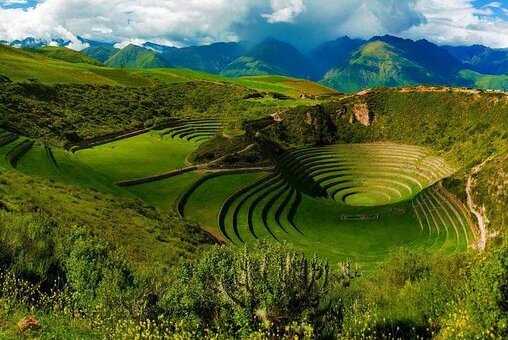

Nestled high in the Andes Mountains, the Incan ruins of Moray stand as a testament to the ingenuity of an ancient civilization. Perched at 11,500 feet above sea level in Maras, Peru, this archaeological site is renowned for its circular terraces, whose exact purpose continues to intrigue historians and archaeologists alike.
### History and Origins The Moray ruins date back to the Inca Empire, flourishing from the early 15th century until the Spanish conquest in the 16th century. Believed to be constructed during the reign of Pachacuti, the ninth Sapa Inca, Moray served as an agricultural experimentation center, although the specific details remain shrouded in mystery. The location's strategic elevation allowed the Incas to explore diverse agricultural practices adapted to varying climatic conditions, a revolutionary concept for its time.
### Art and Architecture The remarkable architecture of Moray features a series of terraced circular depressions, with the largest measuring approximately 150 meters in diameter. Each tier is meticulously designed, showcasing the Incan architectural style characterized by precision stonework and functional engineering. The terraces are arranged in concentric circles, which create distinct microclimates—an impressive feat that reflects the Incas' profound understanding of their environment.
Notably, the southern terrace is deeper than the others, allowing for an extraordinary temperature difference of up to 27 degrees Fahrenheit between the top and bottom. This variation hints at the possibility of cultivating a wide range of crops, suggesting that Moray may have served as a prototype for agricultural innovation in the Inca Empire.
### Local Culture and Traditions The small town of Maras, located near Moray, is rich in Peruvian traditions. The local communities celebrate various festivals, including the Feast of the Cross in May, where colorful processions and traditional music fill the streets, showcasing the area’s vibrant cultural heritage. The people of Maras maintain a close connection to their Incan ancestors, with customs often reflecting the ancient practices that once thrived in these highlands.
### Gastronomy When visiting Moray, one cannot overlook the delicious culinary offerings of the region. Causa Rellena, a layered potato dish seasoned with lime and aji, reflects the local agricultural bounty. The Andean corn, known as maíz morado, is often transformed into chicha morada, a refreshing purple corn drink steeped with spices and fruits. Another local favorite, pachamanca, is a traditional Peruvian dish featuring marinated meat and vegetables cooked underground—a nod to the ancient cooking methods that may have been utilized by the Incas themselves.
### Lesser-known Curiosities While Moray is a popular destination, some intriguing details often go unnoticed. For instance, the Inca's understanding of microclimates is not just limited to Moray; they applied this knowledge throughout their empire, adapting crops to various altitudes and climates. Additionally, the irrigation system integrated into the terraces is believed to be one of the earliest forms of hydraulic engineering, showcasing the advanced techniques the Incas employed.
Travelers might also find it fascinating that Moray is often associated with theories of extraterrestrial influence due to its unique design and the mystery surrounding its purpose. While these ideas remain speculative, they add an element of intrigue to the site's history.
### Practical Visitor Information The best time to visit Moray is during the dry season, from May to September, when the weather is typically clear and sunny. Early morning visits are recommended to avoid crowds and to experience the site in a serene atmosphere. Bring a hat, sunscreen, and plenty of water, as the high altitude can be challenging for some visitors.
When exploring Moray, take time to wander along the terraces, observing the intricate construction and contemplating the agricultural innovations that may have occurred here. Don't forget your camera, as the panoramic views of the surrounding mountains are breathtaking.
In conclusion, the Incan ruins of Moray offer a profound glimpse into a civilization that masterfully integrated agriculture with the natural world. For a personalized itinerary to explore this captivating site and its surroundings, consider using the Secret World app to discover hidden gems in Maras.
