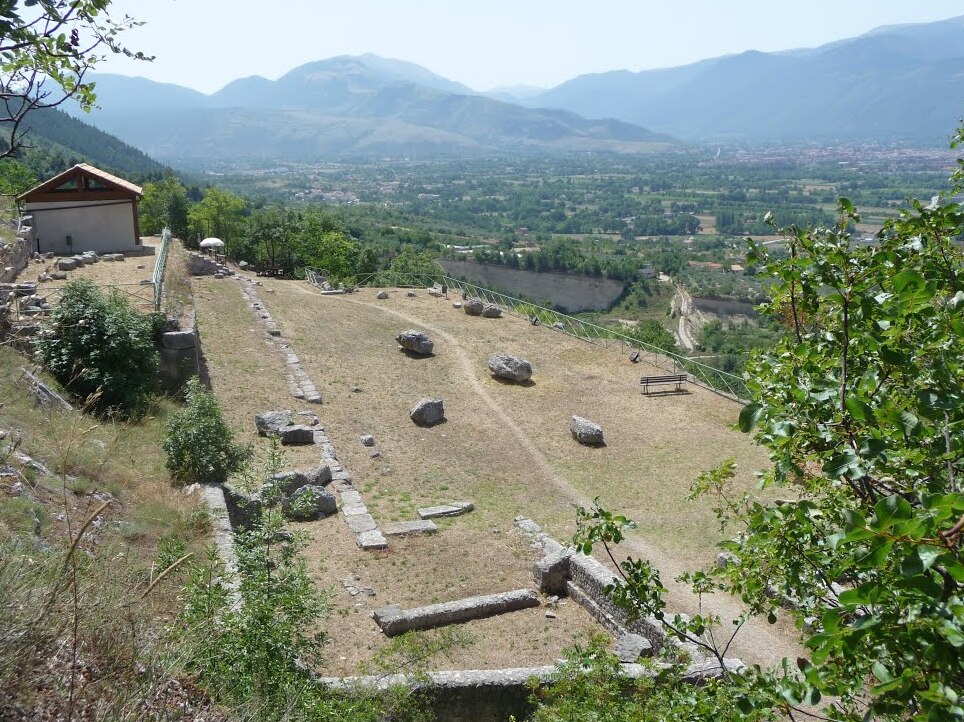

Nestled on the slopes of Mount Morrone, just a stone's throw from the charming town of Sulmona in the *Abruzzo* region of Italy, lies one of the most captivating archaeological treasures of the area — the Sanctuary of Hercules Curino. This site is not just a sanctuary; it is a window into the profound cultural and spiritual life of ancient Italic civilizations.
### History and Origins
The Sanctuary of Hercules Curino dates back to the Italic phase of the 4th-3rd centuries B.C., a period rich in cultural development among the Italic tribes. Dedicated to Hercules, a deity revered for his strength and heroic feats, this sanctuary served as a confederal site for the surrounding communities, fostering a sense of unity among the inhabitants. The site was monumentalized following the Social War (91-88 B.C.), which saw various Italic peoples unite against Rome in a fight for citizenship and rights.
The sanctuary is believed to have been constructed around the time of Pope Celestine V, a local figure and hermit who became Pope in 1294 and is remembered for his ascetic lifestyle. The proximity of the hermitage attributed to him adds a layer of historical significance to the area, intertwining religious devotion with local governance.
### Art and Architecture
The architectural layout of the sanctuary is remarkable, consisting of two terraces from different periods. Visitors can access the upper terrace through a grand staircase that features two flights of steps, leading to the heart of the sanctuary — the sacellum. This sacred space boasts remnants of intricate wall decorations and a stunning polychrome mosaic floor, showcasing the artistic prowess of ancient craftsmen.
One of the most significant artifacts discovered within the sacellum is a bronze statue of Hercules at rest. Now exhibited at the National Archaeological Museum Villa Frigerj in Chieti, this statue is a testament to the artistry and cultural values of the time, embodying the reverence for the hero-god. The sanctuary's fountain, which drew water from an upstream spring, and the donarium—a hollow stone block originally sealed—further enhance its archaeological importance, offering insights into the rituals and practices of ancient worship.
### Local Culture and Traditions
The region surrounding Mount Morrone is steeped in rich traditions and customs that reflect its storied past. The festival of Celestinian Forgiveness, held in August, pays homage to Pope Celestine V and draws thousands of visitors each year. This event is marked by colorful processions, reenactments, and local feasts that celebrate the area's heritage and communal spirit.
The inhabitants of Sulmona and the surrounding areas take pride in their cultural identity, which has been shaped by centuries of history. Local artisans continue to practice traditional crafts, such as the production of confetti (sugar-coated almonds), which have become synonymous with celebrations in the region, including weddings and festivals.
### Gastronomy
No visit to the sanctuary would be complete without indulging in the local gastronomy. The Abruzzo region is known for its hearty and rustic cuisine. Saffron from the nearby town of L’Aquila is a prized ingredient, often used in dishes like *saffron risotto* or *arrosticini*—skewered lamb cooked over an open flame.
Visitors should also try the maccheroni alla chitarra, a type of pasta cut using a special tool resembling a guitar. Paired with a rich meat sauce or simple olive oil and garlic, this dish encapsulates the essence of local cooking. A glass of Montepulciano d'Abruzzo wine completes the meal, offering a taste of the region's vineyards.
### Lesser-known Curiosities
While the sanctuary is often overshadowed by more famous Italian landmarks, it holds hidden details that intrigue the curious traveler. For instance, the existence of ancient graffiti found on the stones around the sanctuary offers a glimpse into the lives of worshippers who frequented the site centuries ago. Some of these inscriptions are thought to be votive offerings, a unique form of communication to the gods.
Another lesser-known fact is the connection between Hercules and local folklore. Many local legends depict Hercules as a protector of the land, and tales of his adventures continue to be shared among residents, enriching the cultural tapestry of the area.
### Practical Visitor Information
The best time to visit the Sanctuary of Hercules Curino is during the spring and autumn months when the weather is mild, and the surrounding nature is in full bloom. Early morning visits are recommended for a peaceful experience, allowing you to absorb the serenity of the site before the crowds arrive.
When exploring the sanctuary, pay special attention to the intricate details of the mosaics and the architecture. Don’t forget to bring your camera to capture the breathtaking views of the Apennine Mountains that frame this historic site.
For a truly personalized experience, consider using the Secret World app to plan your visit, ensuring you uncover all the hidden gems of this enchanting area.
