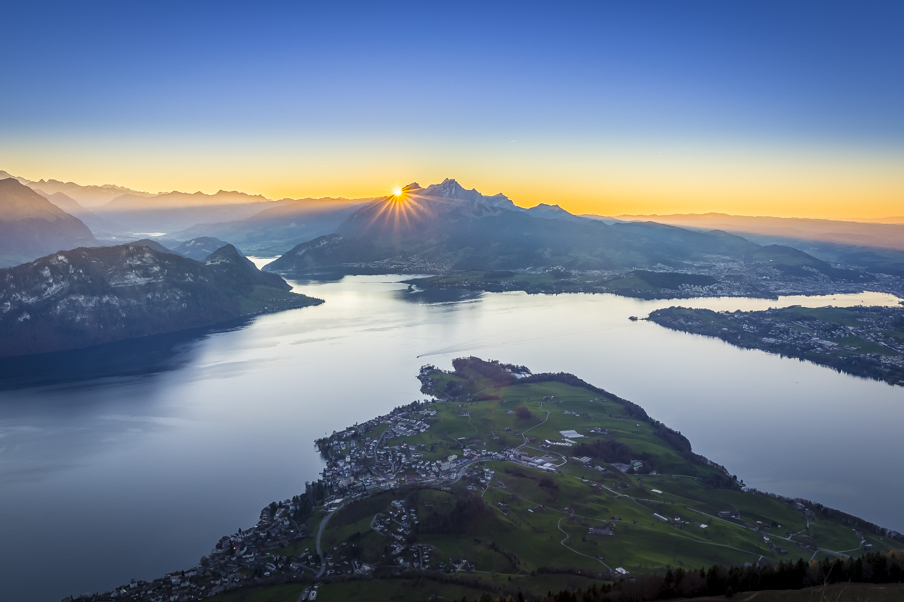

Mount Rigi, known as the Queen of the Mountains, is a stunning peak in the Swiss Plateau mountain range, rising majestically above the surrounding landscape. With its breathtaking views and rich history, it has attracted visitors since the 1800s. Nestled between the shimmering waters of Lake Lucerne, Lake Zug, and Lake Lauerz, this mountain is a testament to both nature’s beauty and Switzerland’s cultural heritage.
### History and Origins The allure of Mount Rigi dates back to ancient times. The name "Rigi" is derived from the Old High German word *rigia*, meaning "ridge." Historical documents suggest that the area was inhabited as far back as the Neolithic period, with archaeological findings indicating settlements on its slopes. However, it wasn’t until the 19th century that Mount Rigi gained prominence as a tourist destination. In 1873, the Rigi Railway began operations, becoming one of the first cog railways in Europe, making the summit accessible to the masses. The railway transformed the region, attracting artists, writers, and travelers from across Europe, all eager to experience what was then termed the "Swiss Riviera."
### Art and Architecture Mount Rigi’s art scene is intertwined with its natural beauty. The Rigi Kulm Hotel, opened in 1893, is an architectural gem that reflects the grandeur of the era with its charming wooden structure and panoramic terraces. The hotel has hosted notable figures, including Mark Twain and Queen Victoria, each captivated by the mountain's vistas. Visitors can explore various paintings and sketches inspired by Mount Rigi, particularly from the Romantic period, showcasing its influence on artists like Johan Heinrich Füssli and Ferdinand Hodler. Art exhibitions often take place in the region, celebrating local talent and the mountain's ethereal beauty.
### Local Culture and Traditions The culture surrounding Mount Rigi is vibrant and steeped in tradition. The mountain is not just a natural wonder; it is also home to local customs that reflect the community’s connection to the land. One of the most significant events is the Rigi Festival, held annually in late summer, celebrating Swiss folklore with traditional music, dance, and local crafts. Visitors can witness performances of Alphorn players and taste local delicacies during this lively festivity. Moreover, the mountain's trails are often lined with Swiss cow herders during the summer months, providing a glimpse into the pastoral lifestyle that has existed for centuries.
### Gastronomy No visit to Mount Rigi is complete without indulging in local flavors. The region's cuisine is heavily influenced by its agricultural roots. Traditional dishes include Älplermagronen, a hearty Swiss mac and cheese, and Rösti, a crispy potato dish often served with cheese or local meats. The area is also known for its Rigi cheese, produced from the milk of cows grazing on the mountain’s pastures. Visitors can enjoy these specialties at the various mountain restaurants, where the combination of fresh ingredients and stunning views makes for an unforgettable dining experience.
### Lesser-Known Curiosities While many are drawn to Mount Rigi for its views and history, several hidden gems often go unnoticed. For instance, many hikers are unaware of the Rigi Panorama Trail, a lesser-known route that offers serene landscapes away from the bustling tourist paths. Additionally, the Rigi Chapel, dedicated to Saint Nicholas, is a small yet significant site that dates back to 1809 and provides a peaceful spot for reflection. Legend has it that the mountain is home to mystical creatures known as "Rigi spirits," believed to guide lost travelers back to safety.
### Practical Visitor Information The best time to visit Mount Rigi is from May to October when the weather is mild, and the trails are accessible. The Rigi Railway operates year-round, but the cog railway and cable car services are most frequent during the summer months. For those seeking a less crowded experience, early mornings or late afternoons are ideal for capturing stunning photographs of the sunsets over the lakes. Don’t forget to bring a camera, as the changing light offers breathtaking views throughout the day.
For those planning a visit, consider exploring the various hiking trails that cater to all skill levels, from leisurely walks to challenging hikes. Additionally, the Rigi Suworow, a historical path retracing the footsteps of General Suvorov, provides insight into the mountain's role in Swiss military history.
In conclusion, Mount Rigi is not just a mountain; it is a cultural emblem of Switzerland, steeped in history, art, and local traditions. Whether you’re hiking its trails, savoring local cuisine, or simply soaking in the views, the Queen of the Mountains promises an unforgettable experience. For a personalized journey through Arth, consider using the Secret World app to create your custom itinerary.
