


Mount Sanqing, a sacred peak in China’s Jiangxi Province, is a place where nature and spirituality intertwine in a breathtaking display of beauty and reverence. The mountain’s name, “Three Pure Ones,” refers to its three majestic summits—Yujing, Yushui, and Yuhua—each symbolizing one of the highest deities in Taoism, the ancient Chinese philosophy that emphasizes living in harmony with the Tao, or the fundamental nature of the universe.

As you ascend the trails winding through Mount Sanqing, you are not just climbing a mountain; you are journeying into the heart of Taoist mysticism. The landscape is otherworldly, with towering granite peaks that pierce the sky, often shrouded in ethereal mists that seem to blur the line between the earthly and the divine. The mountain has long been considered a holy site, attracting pilgrims and travelers seeking to connect with the sacred energy that is believed to permeate the area.
But it’s not just the spiritual significance that makes Mount Sanqing special. The mountain is a living sanctuary of rare and ancient flora, including the Chinese Douglas fir, a tree that has stood the test of time, weathering centuries of change. In spring, the slopes come alive with the vibrant colors of rhododendrons, their bright blossoms contrasting beautifully with the rugged granite cliffs. This unique blend of spiritual significance and natural beauty has earned Mount Sanqing a place on the UNESCO World Heritage list.
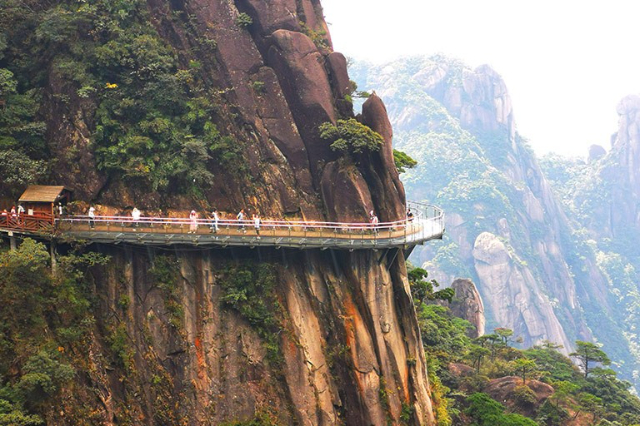
One of the most fascinating aspects of Mount Sanqing is its connection to Taoist legend. It is said that the mountain was a favored retreat for Taoist hermits, who sought solitude in its remote peaks to meditate and practice alchemy, striving for immortality. Even today, you can find ancient Taoist temples nestled among the cliffs, where monks continue these ancient practices, maintaining a tradition that has been passed down through the centuries.
A particularly enchanting feature of the mountain is the natural rock formations that dot the landscape, many of which have been given poetic names based on their shapes. These formations, such as the “Goddess Peak” or the “Python Out of the Mountain,” inspire a sense of awe and wonder, as if the mountain itself is alive with the spirits of the Taoist gods.
Walking along the paths of Mount Sanqing, surrounded by the timeless beauty of nature and the echoes of ancient wisdom, you can’t help but feel a deep sense of peace and connection. It’s a place where the soul can find clarity, much like the clear streams that flow down its slopes, nourishing both the land and the spirit. Whether you are a spiritual seeker, a nature lover, or simply a traveler looking to experience one of China’s most sacred landscapes, Mount Sanqing offers a journey that transcends the physical and touches the divine.


