
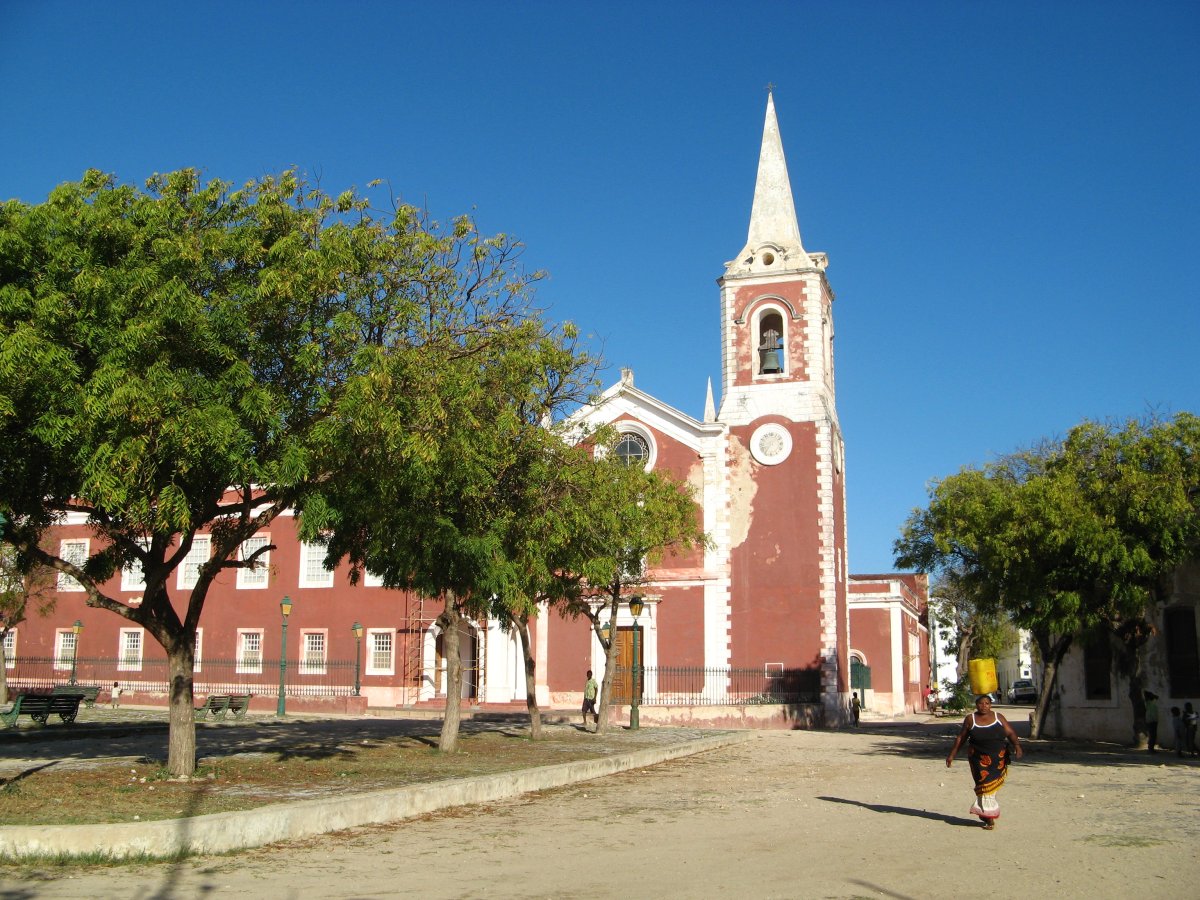

The pastel-colored houses overlook a sea that changes shades every hour, from emerald green to deep blue. The Island of Mozambique — in Portuguese Ilha de Moçambique — is connected to the mainland by a bridge about three kilometers long, the only land access to this piece of coral and history in the Mozambique Channel. As soon as you cross that bridge, the rhythm changes: no cars in the conventional sense of the term, only bicycles, rickshaws, and the sound of waves crashing against the foundations of buildings built centuries ago.
The island measures about three kilometers in length and less than a kilometer in width, but it contains a historical stratification that few places on the African continent can boast. The Portuguese established a stable trading base there from the end of the 15th century, and for almost two centuries the island was the capital of Portuguese East Africa. In 1991 UNESCO included it in the World Heritage List, recognizing the exceptional preservation of its colonial urban fabric.
The Fort of São Sebastião and Colonial Architecture
The most imposing monument on the island is the Fort of São Sebastião, built by the Portuguese starting from 1558 and completed during the 16th century. It is considered one of the best-preserved Portuguese colonial forts in the entire Indian Ocean. The walls made of local coral stone reach significant thicknesses, and inside, you can still find the chapel of Nossa Senhora do Baluarte — dated 1522, one of the oldest churches in the southern hemisphere — and the original warehouses. The entrance ticket to the fort costs around 100-150 meticais, but it is advisable to check the updated price on site.
Walking in the so-called Cidade de Pedra — the stone city, the northern part of the island where colonial buildings are concentrated — you can see facades decorated with Portuguese azulejos, wooden doors carved with Arab and Indian influences, and inner courtyards that mix architectural elements from different cultures. Many buildings are in a state of advanced decay, which gives the whole place an atmosphere of authentic melancholic beauty, not built for tourism.
The City of Macuti and Daily Life
To the south of the bridge lies the City of Macuti, the part of the island where most of the local population lives, built with traditional materials such as macuti — woven palm leaves — which gives the neighborhood its name. Here, the contrast with the colonial area is immediate and real: open-air markets, children playing on the beach, women carrying goods on their heads along narrow streets. It is not a museum-like area, but a lively neighborhood.
The beach of Macuti is mainly frequented by residents and offers a different perspective of the island compared to the quieter beaches on the eastern side. Fishermen set out at dawn with traditional sailing boats called dhow, a type of vessel of Arab origin widespread throughout the Indian Ocean. Witnessing the departure or return of the dhows is one of the most characteristic visual experiences of the island.
The marine ecosystem and coral reefs
The waters around the island are part of a marine ecosystem that includes coral reefs that are still relatively intact compared to other contexts in the Indian Ocean. Snorkeling is possible directly from the island, but to reach the best sites it is advisable to rent a dhow or a small boat with a local guide. Sea turtles frequent these waters, as well as various species of tropical fish typical of the Indo-Pacific.
The best season to visit the island is from June to November, when there is no rain and the sea is calmer. From December to April, the rainy season can make travel difficult and reduce underwater visibility. Temperatures remain high throughout the year, between 25 and 32 degrees Celsius.
How to get there and practical tips
The most common access is by plane to Nampula, the main city of the eponymous province, located about 180 kilometers from the island. From Nampula, the island can be reached by bus or private vehicles across the bridge. Some regional airlines operate direct flights from Maputo to Nampula, but availability varies seasonally. It is advisable to book accommodation in advance during the high season months, as the lodging options on the island are limited: there are a few small hotels and guesthouses in Cidade de Pedra, often converted from renovated historic buildings.
Those visiting the island should dedicate at least two or three days to appreciate both the architectural heritage and the marine life. Wandering aimlessly in Cidade de Pedra in the early morning hours, when the light is lateral and the streets are still almost deserted, is probably the best way to understand what makes this place different from any other island in the Indian Ocean.


