
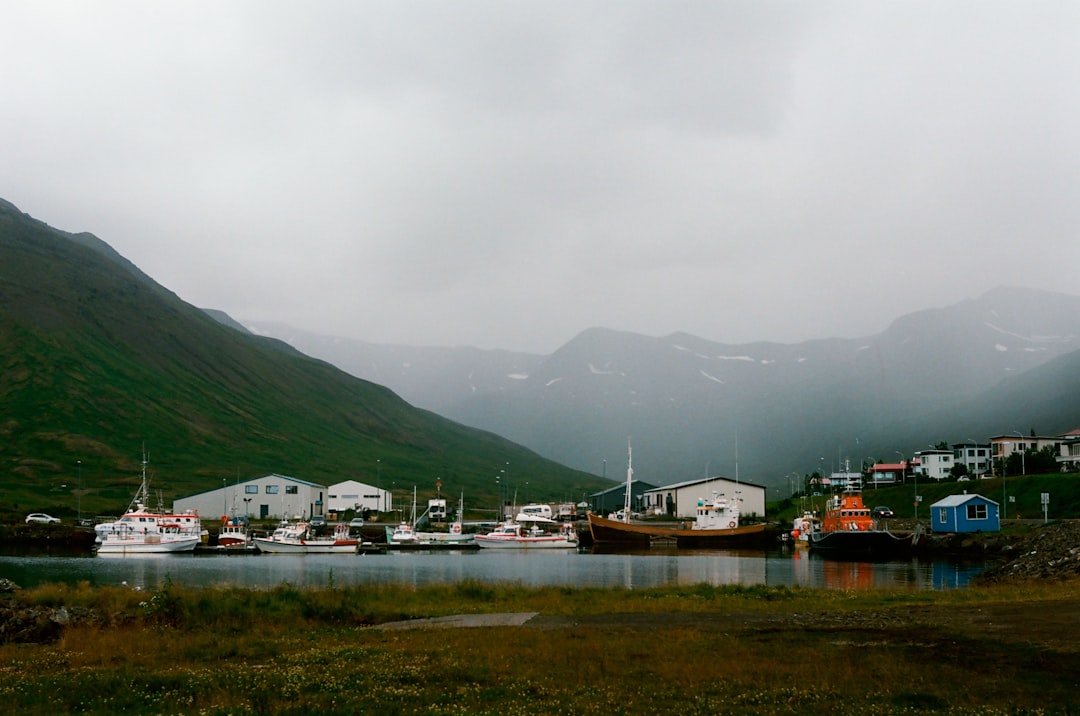

The walls of the buildings speak in Siglufjörður. Large figures of fishermen, nets unfurling in the wind, women working herring under skies painted blue and gray: the murals that decorate this remote town in the far north of Iceland are not mere decorative accessories, but a collective narrative imprinted on concrete and wood. Siglufjörður, with its just over a thousand inhabitants, was for decades the beating heart of the Icelandic herring industry, and today it preserves that memory through public art and the Herring Era Museum, one of the most appreciated museums in the country.

The museum itself is spread across three historic buildings along the harbor, faithfully reconstructed to evoke the atmosphere of the golden age of fishing, which roughly spans from the 1920s to the 1960s. But it is outside the museum walls that Siglufjörður reveals its most surprising dimension: the large-scale murals that extend along the streets of the center transform every corner into an open-air gallery, with the fjord mountains providing a natural backdrop and often visually blending with the landscapes painted on the facades.
The Era of Herring and the Memory Painted on the Walls

Between the end of the 19th century and the mid-20th century, Siglufjörður was one of the most active ports in the entire North Atlantic. In peak seasons, thousands of seasonal workers — many of whom were women, called síldarkonur, the women of herring — arrived from all over Iceland and Norway to salt and can the fish. The town came to temporarily host tens of thousands of people in a narrow valley between the mountains, accessible for years only by sea. When herring stocks collapsed around 1969, Siglufjörður emptied almost overnight.
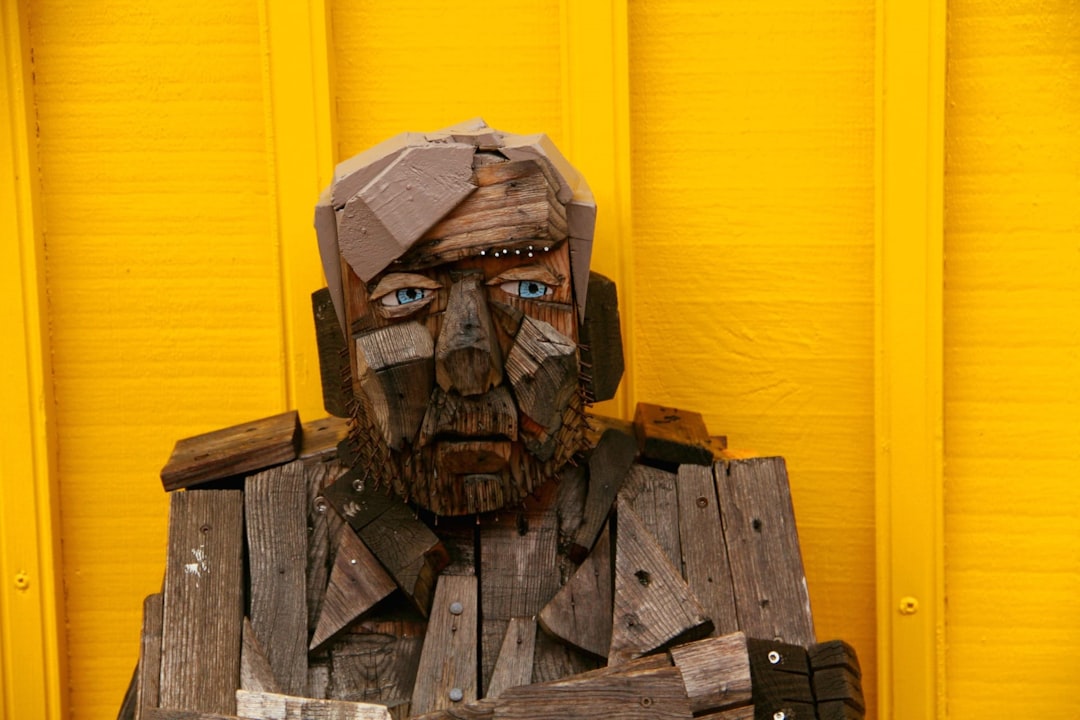
The murals that today decorate the town tell exactly this: the physical labor, the community, the toil, and the vitality of that era. The works, created by Icelandic and international artists over the years, vary in style but share an imposing scale — some facades exceed ten meters in height — and an attention to historical details that makes them almost documentary-like. The fishing tools of the time, work clothes, and facial expressions are recognizable. Nothing is generic: every figure seems taken from an archive photograph.
The Herring Era Museum: what to see inside
The Herring Era Museum (in Icelandic Síldarminjasafnið) opened its doors in 1994 and has since received the Museum of the Year award in Iceland. The three buildings that make it up — an old salting factory, a boat shed, and a processing building — have been carefully restored and re-equipped with original machinery, period clothing, and reconstructions of the work environments. The entrance ticket costs around 1,800-2,000 Icelandic crowns for adults, with discounts for students and children.

Inside, there are also audio and video testimonies with interviews of former workers, who describe daily life during the herring season. Particularly striking is the section dedicated to the síldarkonur, with the tools they used to fillet fish at impressive speed. It is a space that does not idealize the past but shows it in its laborious and human concreteness.
How to get there and when to visit

Siglufjörður is located about 40 kilometers north of Akureyri, the main city in northern Iceland. The most direct route, Route 82, crosses the Héðinsfjörður Tunnel, opened in 2010, which has made the town much more accessible than in the past. Before the tunnel, in winter the town was often cut off from the rest of the island. Today, the drive from Akureyri takes about 45 minutes.
The best time to visit is between June and August, when the days are very long and the northern light enhances the colors of the murals and the intense green of the mountains surrounding the fjord. In summer, the museum is open every day, generally from 10 AM to 6 PM. It is advisable to dedicate at least half a day to the visit: an hour and a half for the museum, the rest for walking around the town and looking for the murals, some of which are located in side alleys that are easy to overlook if you only walk along the main road. Wearing comfortable shoes is essential: the streets are often uphill and the terrain can be uneven.
Why the trip to the end of the fjord is worth it
Siglufjörður is not on Iceland's main tourist route. There is no geyser, there is no famous waterfall. What there is, is something rarer: a town that has gone through a complete cycle of birth, prosperity, and decline, and that has found in the telling of itself a new reason to exist. The murals do not beautify the town: they explain it. And seeing them with the snow-capped mountains in the background, reflected in the still waters of the fjord, is a visual experience that stays with you for a long time.


