
← Back

Museum of Mummies

92010 Burgio AG, Italia ★★★★☆ 174 views
Laura Morell
92010 Burgio AG
🏆 AI Trip Planner 2026

Get the free app

Discover the best of 92010 Burgio AG with Secret World — the AI trip planner with 1M+ destinations. Get personalized itineraries, hidden gems and local tips. Free on iOS & Android.

🧠 AI Itineraries 🎒 Trip Toolkit 🎮 KnowWhere Game 🎧 Audio Guides 📹 Videos
Scan to download iOS / Android
Scan for AppGallery Huawei users

About Museum of Mummies

Museum of Mummies - 92010 Burgio AG | Secret World Trip Planner

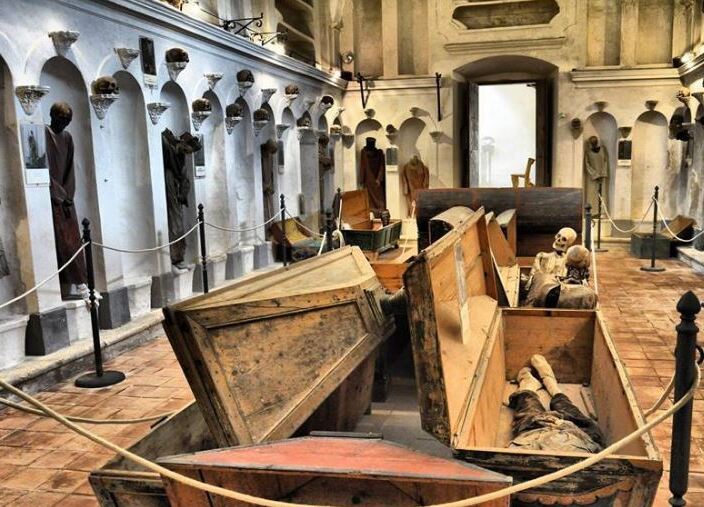
The convent of Burgio (built between 1634 and 1647, replacing the primitive hermitage -1580) was later rebuilt following the construction model of Antonio da Pordenone: a single-nave church, covered with a gabled roof, with a rudimentary, unique system of masonry trusses, resting on the vault of the church so that the roof could stand, albeit barely, standing; a very simple facade, facing the town of Burgio, with a small bell gable. To the left of the nave, the burial, a crypt with small niches to house the mummies of religious and benefactors. On the right, the two-tiered body of the cells of the convent. The work of rearranging the mummified bodies found in the coffins was not easy: bodies and garments were disinfected and sanitized and, at the end of this procedure, which also involved the use of special technologies and laboratory tests, the bodies were stripped bare to allow the separate restoration of skeletons and tissues. Everything, including the grave goods, are from the 18th, 10th and 20th centuries. There are also precious fabrics, velvets, silks, taffeta, linen, lace, lace, as well as jewellery, crowns of thorns, rosary beads, scapulars, hats, shoes, stockings and other small objects. The Capuchins used special techniques for the mummification of corpses: after being stripped bare and purified of their internal organs, the bodies were purged for a year in special colanders and then dried, cleaned and perfumed with aromatic ointments; finally, the bodies were filled with stubble and held up with sticks. Each corpse took shape through the clothes chosen by the respective families and then were placed in the niches of the crypt or inside the wooden boxes, sometimes together with other family members. As many as 49 mummies have been found in the Church of the Capuchins in Burgio, and are now on display in the ancient crypt, which has been turned into a museum.

🗺 AI Trip Planner

Plan your visit to 92010 Burgio AG

Suggested itinerary near Museum of Mummies

MAJ+
500.000+ travelers worldwide
  1. 🌅
    Morning
    Museum of Mummies
    📍 92010 Burgio AG
  2. ☀️
    Afternoon
    Burgio, the town of bells
    📍 0.4 km · 92010 Burgio AG
  3. 🌆
    Evening
    Sanctuary of Rifesi
    📍 5 km · 92010 Burgio AG

Buy Unique Travel Experiences

Powered by Viator

See more on Viator.com

Explore nearby · 92010 Burgio AG

Frequently Asked Questions

There are 49 mummies currently on display in the ancient crypt of the Church of the Capuchins in Burgio, which has been converted into a museum. These mummified remains represent religious figures and benefactors from the 18th, 19th, and 20th centuries, each dressed in clothes chosen by their families.
The Capuchins employed a sophisticated mummification process: they removed internal organs, purged the bodies for a year in special colanders, then dried, cleaned, and perfumed them with aromatic ointments. Finally, they filled the bodies with stubble and held them upright with sticks before dressing them in fine garments and placing them in the crypt niches.
The Convent of Burgio was built between 1634 and 1647, replacing a primitive hermitage from 1580, and was reconstructed following the design model of Antonio da Pordenone. The church features a single-nave design with a gabled roof, simple facade facing the town, and a crypt to the left of the nave housing the mummies in small niches.
Visitors can view an impressive collection of precious fabrics including velvets, silks, taffeta, and lace, along with jewelry, crowns of thorns, rosary beads, scapulars, hats, shoes, stockings, and other personal objects dating from the 18th to 20th centuries. All items were carefully restored and are now displayed alongside the mummified remains in the crypt museum.
The restoration process involved careful disinfection and sanitization of the bodies and garments using special technologies and laboratory tests. The bodies were then stripped bare to allow separate restoration of skeletons and tissues, after which they were redressed in their original clothing and grave goods before being placed back in the crypt niches for public viewing.
