
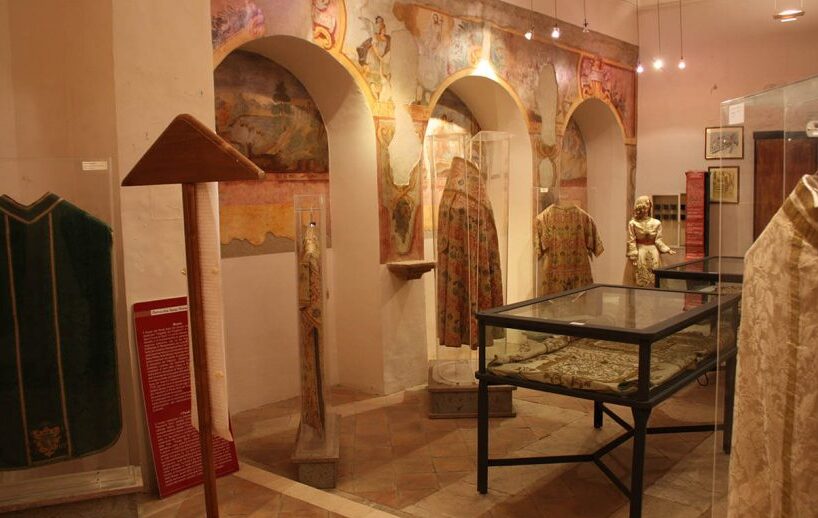

Nestled in the hills of Campania, the Museum of the Sacred Vestments of Montemarano stands as a testament to the rich tapestry of local history and religious devotion. This unique institution is the first of its kind in Southern Italy, dedicated to the collection and preservation of sacred vestments that speak volumes about the region's artistic heritage.

The museum is housed in the former Church of Purgatory, originally constructed in the early 1700s. This building was an extension of the noble chapel belonging to the Aliasi family, who played a significant role in Montemarano's history. The church itself is a reflection of Baroque architecture, characterized by its elaborate ornamentation and grandeur. As you step inside, the intricate details of the frescoes adorning the walls become a focal point, depicting the devotions of the Aliasi family alongside more somber scenes of violence and tragic death, emblematic of the popular piety prevalent in the 1700s.
The heart of the museum lies in its collection of sacred vestments, primarily crafted between the 16th and the early 20th centuries. One of the crown jewels of this collection is the parade of Bishop Celestino Labonia, dating back to the late 17th century. Labonia, who served from 1670 to 1720, was a pivotal figure in the region, and his vestments reflect the artistry and devotion of the time. Another significant piece is a dress belonging to the Madonna, produced in Sicily during the 1600s, which showcases the cross-regional influences that shaped religious attire in Southern Italy.

Beyond its historical and artistic significance, the museum is deeply intertwined with the local culture of Montemarano. The town is renowned for its vibrant festivals, particularly the Feast of the Assumption, which takes place in August. During this celebration, the sacred vestments are displayed and paraded through the streets, allowing the community to connect with its past and showcase its heritage. The event embodies the spirit of Montemarano, where tradition and modernity coexist harmoniously.
In addition to its religious festivities, Montemarano offers a rich culinary landscape that reflects the flavors of Campania. Local specialties include candele, a traditional type of pasta, often served with a rich, slow-cooked sauce made from local tomatoes and meats. Another must-try dish is pizza di Montemarano, a unique variation that features a blend of local cheeses and herbs, capturing the essence of the region's agricultural bounty. Pair your meal with a glass of Falanghina, a local white wine that beautifully complements the area’s culinary offerings.
For those seeking lesser-known curiosities, the museum is home to several artifacts that tell stories beyond the sacred. One intriguing piece is a 19th-century chasuble, decorated with motifs that symbolize the region's agricultural life, including grapes and wheat. These details serve as a reminder of the community’s close ties to the land and its history of agrarian practices. Additionally, visitors might be surprised to learn that the church itself was once a gathering place for local artisans, who would meet to discuss their crafts and exchange ideas.
The best time to visit the Museum of the Sacred Vestments is during the spring and early autumn months, when the weather is mild, and the surrounding countryside is at its most picturesque. To fully appreciate the museum’s offerings, take the time to engage with the knowledgeable staff, who are often eager to share stories and insights about the exhibits. Look closely at the intricate embroidery and craftsmanship of the vestments—each stitch carries a narrative that speaks to the devotion of those who created them.
As you explore this hidden gem in Montemarano, let the vibrant history, art, and culture wash over you. The Museum of the Sacred Vestments is not just a place to view artifacts; it’s an invitation to experience the soul of the region.
To enhance your visit, consider using the Secret World app to craft a personalized itinerary that reveals even more treasures in Montemarano.


