



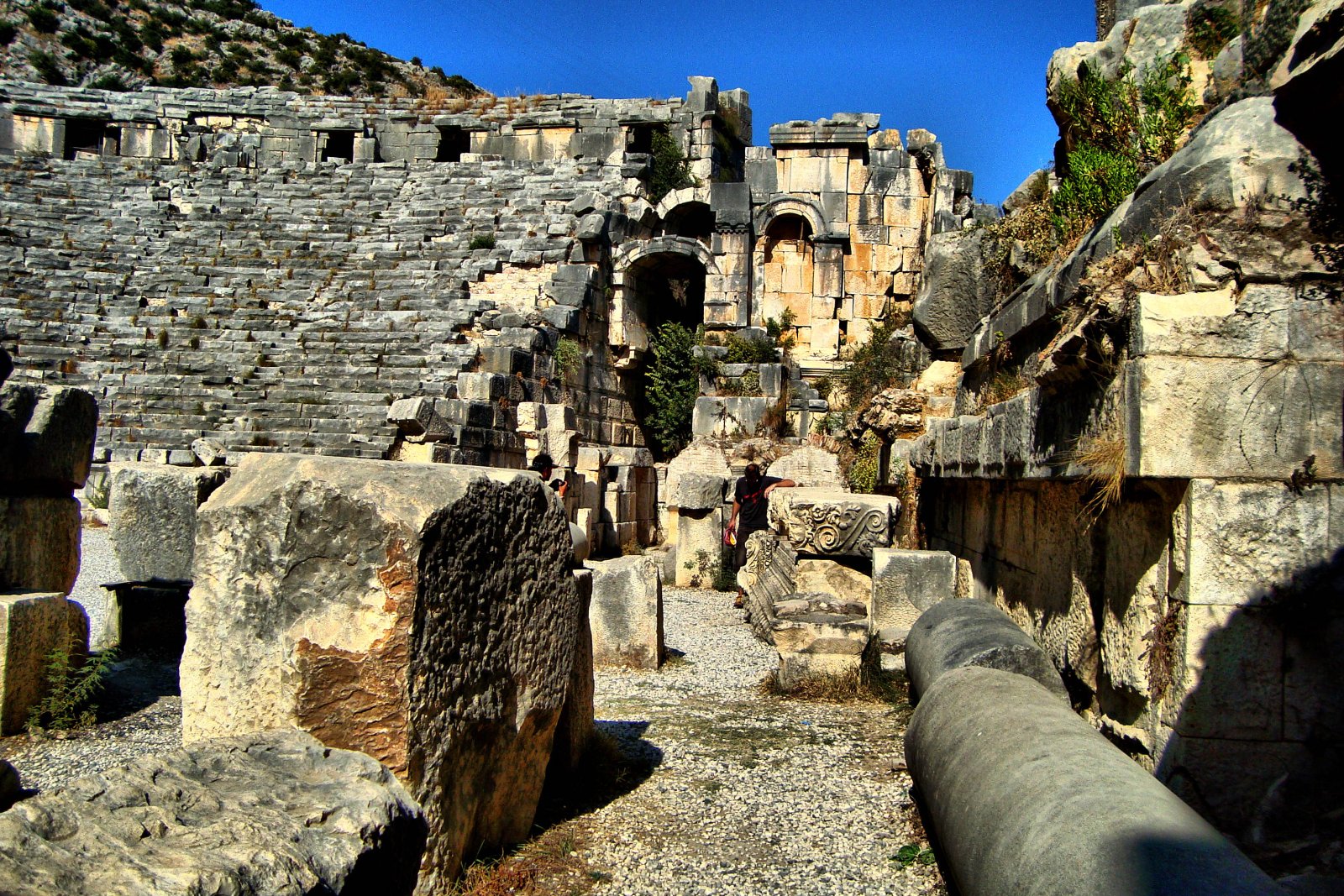
Nestled in the heart of Turkey, the ancient city of Myra, now known as Demre, offers a captivating glimpse into the Lycian civilization, intertwined with the legend of St. Nicholas. The breathtaking Lycian tombs, with their distinctive square columns hewn from the limestone cliffs, stand as a testament to the architectural ingenuity of the fourth century B.C. These tombs, resembling houses clustered together, are a striking sight against the backdrop of a well-preserved Roman theater that dates back to the second century A.D. The theater features a double-vaulted corridor and a capacity of around 10,000 spectators, showcasing the cultural vibrancy of this ancient city.
History and Origins The history of Myra is rich and layered, dating back to its founding in the 5th century B.C. Originally a Lycian settlement, it became a significant port city due to its strategic location along the Mediterranean coast. Over the centuries, Myra witnessed the rise and fall of various empires, including the Roman and later the Byzantine. It was during this period that Myra became renowned for its connection to St. Nicholas, who served as the Bishop of Myra in the 4th century. His legacy as a benefactor and protector of children later morphed into the global figure of Santa Claus, making Myra a site of both historical and religious significance.
Art and Architecture The artistic heritage of Myra is encapsulated in its Lycian tombs, which are intricately designed with decorative elements that reflect the fusion of Greek and Lycian influences. The most notable of these is the Tomb of Amyntas, a grand example of Lycian rock-cut architecture with a façade that resembles a temple. In addition to the tombs, the Roman theater is a marvel of engineering, featuring beautifully preserved columns and elaborate stage decorations. The 9th–11th century church dedicated to St. Nicholas is another architectural highlight, showcasing Byzantine influences and an array of stunning frescoes that depict scenes from the saint’s life and the Christian faith.

Local Culture and Traditions Demre’s culture is a vibrant tapestry woven from its historical threads. Each December 6, the town celebrates the feast day of St. Nicholas with a lively festival that attracts locals and visitors alike. The festivities include processions, music, and traditional foods, reflecting the community’s deep-rooted connection to their patron saint. The town also embodies a blend of Turkish and Lycian customs, which are evident in local handicrafts, dance, and music. Visitors can often witness traditional dances that have been passed down through generations, offering an authentic glimpse into the region's rich cultural heritage.
Gastronomy No visit to Demre is complete without indulging in the local cuisine, which is a delightful blend of Mediterranean flavors and Turkish culinary traditions. Visitors can enjoy dishes such as pide, a Turkish-style flatbread topped with various ingredients, and kebabs grilled to perfection. A specialty of the region is seafood, particularly fresh fish, thanks to its coastal location. Don't miss trying Çılbır, a traditional Turkish breakfast dish made of poached eggs and yogurt, or Simit, a sesame-covered bread that is a popular snack among locals.
Lesser-known Curiosities While many tourists flock to the well-known sites, there are hidden gems in Myra that are often overlooked. One such curiosity is the ancient aqueducts, remnants of an advanced water system that once supplied the city. Additionally, the Lycian rock tombs are not just burial sites; they often contain fascinating inscriptions and carvings that tell stories of the deceased and their status in society. Furthermore, the nearby Myra River is said to have been a crucial transport route for trade, linking the city to other parts of the ancient world.
Practical Visitor Information The best time to visit Myra is during the spring (April to June) or autumn (September to October) when the weather is mild and comfortable for exploring the ruins. Be sure to wear comfortable shoes, as the terrain can be uneven. When visiting, take the time to explore both the Lycian tombs and the Roman theater, and don’t forget to stop by the Church of St. Nicholas. Engage with local guides who can provide deeper insights into the history and significance of the sites.
In a place where ancient history meets vibrant local culture, Myra is a treasure trove waiting to be explored. Plan your visit to this enchanting destination using the Secret World app for a personalized itinerary that caters to your interests.
