



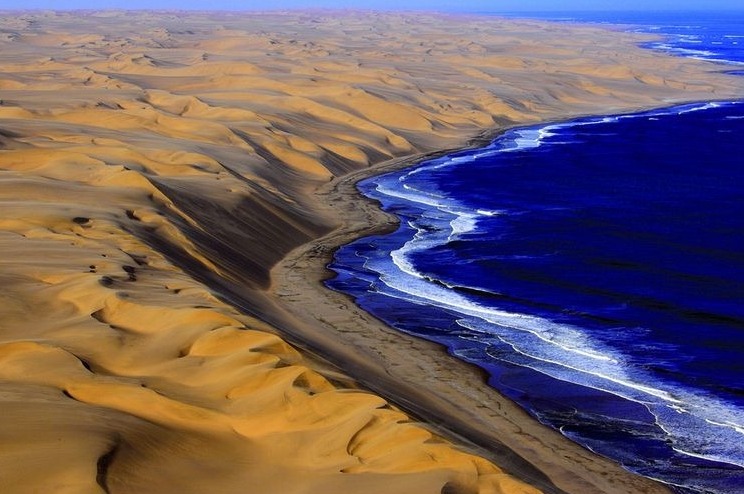
As the sun rises over the Namib Desert, its golden light ignites the towering dunes, painting them in hues of deep orange and pink—a breathtaking spectacle that feels almost otherworldly. This ancient desert, which stretches majestically to meet the chilly waters of the Atlantic Ocean, offers a unique and surreal landscape found nowhere else on Earth.
History and Origins The Namib Desert is believed to be the world's oldest desert, with its origins tracing back over 55 million years. It has been shaped by millennia of wind and time, its dunes standing as silent witnesses to the earth's geological history. The area around Swakopmund was first inhabited by the indigenous San people, known for their deep connection and understanding of this harsh environment. The town itself was founded in 1892 by Captain Curt von François as a harbor for German South West Africa during the colonial era, a strategic point for trade and supply.
Art and Architecture The architecture of Swakopmund is a charming blend of colonial German styles and indigenous influences. The town is dotted with well-preserved buildings from the early 20th century, such as the Woermannhaus, a notable structure distinguished by its iconic tower. Art in the region often draws inspiration from the desert's vast landscapes, with local artists crafting pieces that reflect the intricate beauty and stark contrasts of their surroundings.
Local Culture and Traditions Cultural life in Swakopmund is vibrant and deeply rooted in the traditions of the indigenous communities, such as the Herero and Nama people. Traditional music and dance are integral parts of local festivals, with events like the Swakopmund Arts Festival showcasing the rich cultural tapestry of Namibia. Visitors often have the opportunity to witness and participate in these cultural expressions, offering a deeper understanding of the local heritage.
Gastronomy Namibian cuisine offers a unique blend of African and German influences. A staple dish is Kapana, a street food favorite consisting of grilled beef served with spicy sauces. Seafood is also prominent, given the proximity to the Atlantic, with fresh oysters and fish like Kingklip gracing many menus. To drink, try the local beer or the unique Amarula, a creamy liqueur made from the fruit of the marula tree.
Lesser-known Curiosities One lesser-known fact about the Namib Desert is its role in the preservation of ancient human history. Sossusvlei, a salt and clay pan surrounded by high red dunes, is a site where ancient fossilized footprints have been discovered, offering glimpses into early human life. The Welwitschia mirabilis, a plant endemic to the Namib Desert, can live for over a thousand years and is often called a "living fossil."
Practical Visitor Information The best time to visit the Namib Desert is during the cooler months from April to October. Early morning or late afternoon visits are ideal for witnessing the dunes at their most vibrant. While exploring, look out for the Oryx, a symbol of the Namib, often seen gracefully traversing the dunes. It's essential to carry plenty of water and sun protection, as the desert can be unforgiving.
For a truly personalized adventure in Swakopmund and the Namib Desert, let the Secret World app craft your ideal itinerary.
