
🎄 Win a month in Italy for two — €10,000 · The Secret Italy Prize GO →
← Back

National Archaeological Museum of Amendolara

National Archaeological Museum of Amendolara — Amendolara, Italia.

Piazza Giovanni XXIII, 87071 Amendolara CS, Italia ★★★★☆ 206 views
Klaira Tanya
Amendolara
🏆 AI Trip Planner 2026

Get the free app

Discover the best of Amendolara with Secret World — the AI trip planner with 1M+ destinations. Get personalized itineraries, hidden gems and local tips. Free on iOS & Android.

🧠 AI Itineraries 🎒 Trip Toolkit 🎮 KnowWhere Game 🎧 Audio Guides 📹 Videos
Scan to download iOS / Android
Scan for AppGallery Huawei users

About National Archaeological Museum of Amendolara

National Archaeological Museum of Amendolara - Amendolara | Secret World Trip Planner

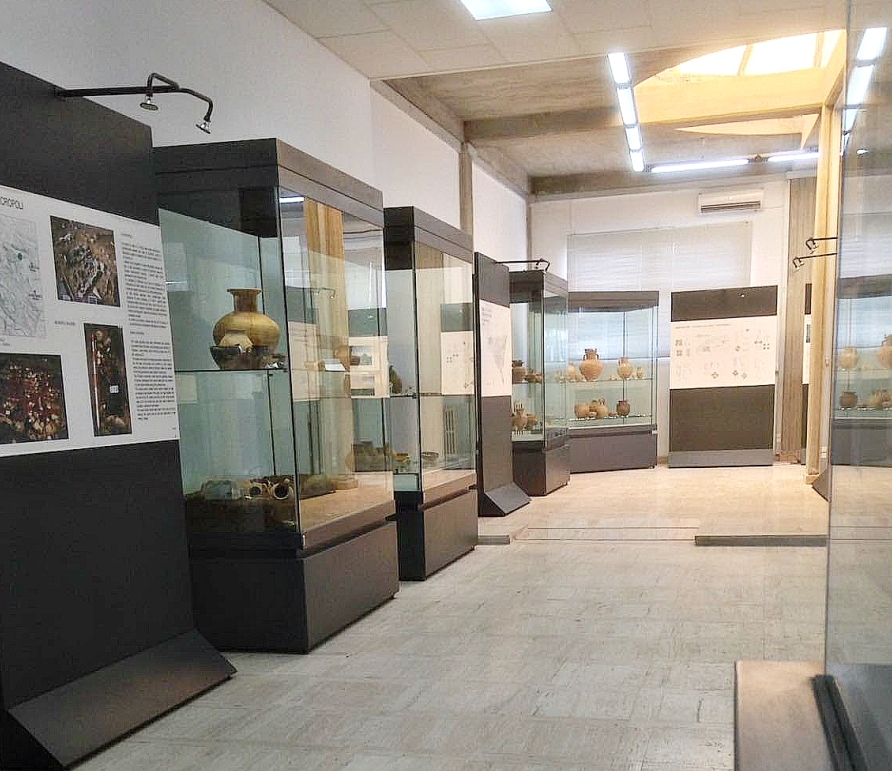
National Archaeological Museum of Amendolara is dedicated to Vincenzo Laviola, doctor of Amendolara, scholar and passionate about antiquities, also committed to the preservation and custody of the historical and archaeological heritage of his land.

The Laviola collection consists mainly of metal finds and ceramic fragments from the protohistoric period (12th-8th centuries B.C.), already preserved in the small Civic Museum, established in the sixties of the last century.

The core of the collection is enriched by finds from excavations carried out between the end of the sixties and the seventies by the Superintendence of Calabria and coordinated by Professor Juliette de la Genière, which brought to light the burial areas located in Paladino and Mangosa and the related archaic settlement of St. Nicholas.

The museum itinerary winds through the various phases of the visit of one of the most important and significant sites of the Upper Ionian Sea, where the indigenous civilization of the Bronze Age, first, and then the Iron Age, was succeeded by the civilization of the Greek people. The colonization did not involve a tearing fracture, as is evident in other sites in the area, which completely disappeared with the advent of the Greeks.

In the Museum are documented to a lesser extent, since they are not investigated by regular archaeological research but are the result of random discoveries, the subsequent phases of life until the most recent eras.

Two multimedia informers, available in four languages, through films, comments and texts retrace the stages of the population of the Amendolara area from prehistory to the present day.

🗺 AI Trip Planner 2026 🎄 Win a month in Italy — €10,000 →

Plan your visit to Amendolara

Suggested itinerary near National Archaeological Museum of Amendolara

MAJ+
500.000+ travelers worldwide
  1. 🌅
    Morning
    National Archaeological Museum of Amendolara
    📍 Amendolara
  2. ☀️
    Afternoon
    The castle of Monte Giordano: a leap into history
    📍 9.4 km · Amendolara
  3. 🌆
    Evening
    The Castle of Oriolo
    📍 15.6 km · Amendolara

Buy Unique Travel Experiences

Powered by Viator

See more on Viator.com

Explore nearby · Amendolara

Frequently Asked Questions

The museum is dedicated to Vincenzo Laviola, a local doctor and antiquities scholar, and showcases one of the most important archaeological sites of the Upper Ionian Sea. It documents the transition from indigenous Bronze and Iron Age civilizations to Greek colonization, with a primary focus on protohistoric metal finds and ceramic fragments from the 12th-8th centuries B.C.
The museum features the Laviola collection, which consists mainly of metal finds and ceramic fragments from the protohistoric period, along with discoveries from excavations at burial areas in Paladino and Mangosa and the archaic settlement of St. Nicholas. Additional exhibits document later historical phases through random archaeological discoveries up to recent eras.
The core archaeological discoveries were made through excavations carried out between the late 1960s and 1970s by the Superintendence of Calabria, coordinated by the renowned Professor Juliette de la Genière. These systematic digs revealed the burial areas and settlements that form the foundation of the museum's collection.
Yes, the museum features two multimedia informers that are available in four languages, providing films, comments, and texts that trace the population history of the Amendolara area from prehistory to the present day. This makes it accessible to international visitors interested in understanding the region's archaeological significance.
Unlike many other sites in the Upper Ionian region that completely disappeared with Greek arrival, Amendolara shows a continuous occupation pattern where Greek colonization did not create a complete cultural break. The museum's exhibits clearly demonstrate how indigenous Bronze and Iron Age civilizations coexisted and blended with subsequent Greek settlement rather than being entirely displaced.
Secret World Hidden places, real stories — plan your trip
Get the app
