
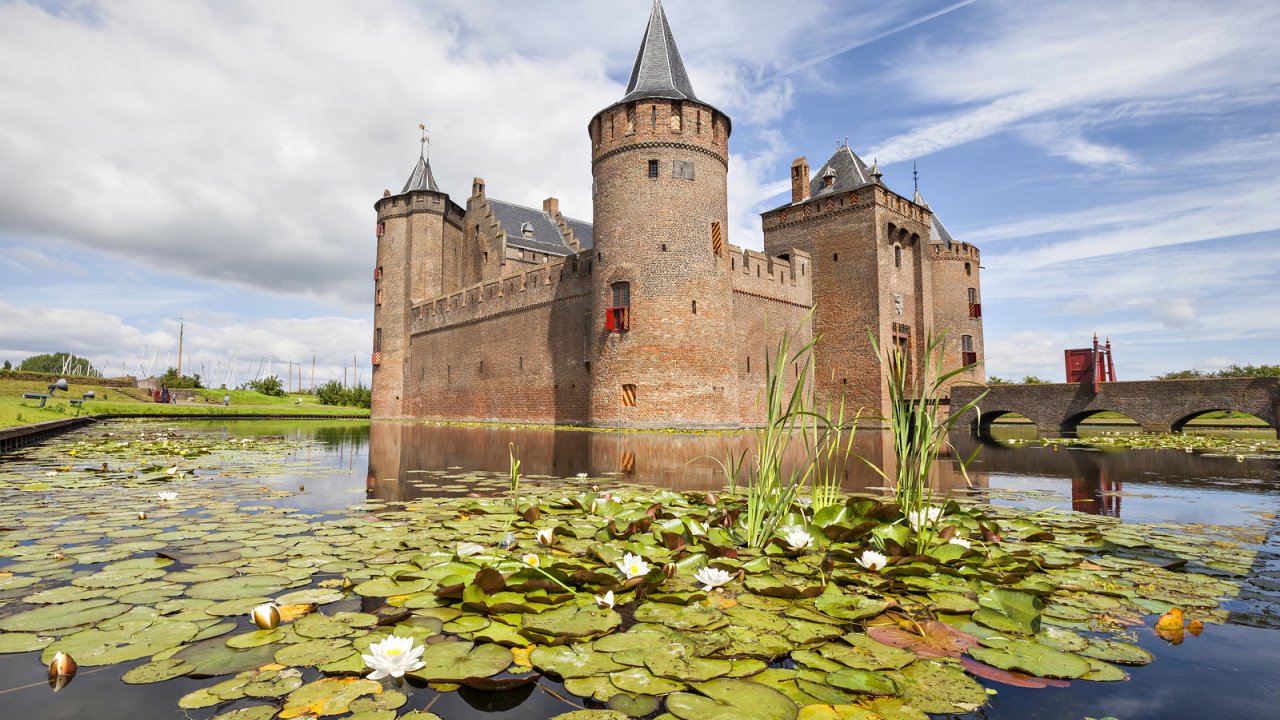

Nestled in the picturesque town of Muiden, the National Museum Muiderslot stands as a testament to the rich tapestry of Dutch history. This medieval fortress, a striking blend of defense and beauty, invites visitors to step back in time to an era of knights and nobility.
The origins of the Muiderslot date back to around 1280, when it was commissioned by Count Floris V as a strategic fortification at the mouth of the River Vecht. Its initial purpose was to protect the vital trade routes and serve as a royal residence. However, the castle's fate took a dramatic turn in 1296, when it was destroyed by Bishop Willem van Mechelen in a political power struggle. The ruins lay dormant until 1380, when the castle was rebuilt, incorporating the remnants of the earlier structure. The Muiderslot has since witnessed centuries of history, serving not only as a royal residence but also as a court of justice and a prison.
Architecturally, the Muiderslot is a stunning example of Gothic and Renaissance styles. Its imposing towers and thick stone walls are complemented by a beautifully landscaped garden, which was designed in the style of the 17th century, featuring herbs and flowers that were once used for medicinal purposes. The castle's interior boasts an impressive collection of artworks and artifacts that reflect its storied past. Among these are portraits of historical figures associated with the castle, including the illustrious P.C. Hooft, a prominent poet and playwright who resided at the Muiderslot from 1609 until 1674. Under his influence, the castle became a cultural hub, nurturing the Muiderkring (Muider Circle), a group of intellectuals who gathered to discuss literature, philosophy, and the arts.
The cultural significance of the Muiderslot extends beyond its walls and into the heart of the local community. Festivals and events throughout the year celebrate the castle's heritage, with reenactments of medieval life, traditional crafts, and performances that bring history to life. One such event is the Muiderslot Fair, which usually takes place in July, attracting families and history enthusiasts alike. Visitors can immerse themselves in the vibrant atmosphere, enjoying local music, artisan goods, and the delectable flavors of Dutch cuisine.
Speaking of gastronomy, the region surrounding the Muiderslot is rich in culinary traditions. Local specialties include Stroopwafels, a delightful treat of thin waffle cookies filled with caramel syrup, and Haring, raw herring fish served with onions and pickles, often enjoyed by locals at outdoor markets. Pair your meal with a glass of Jenever, a traditional Dutch gin, or a locally brewed craft beer to complete your culinary experience.
While many tourists flock to the Muiderslot for its historical significance, several lesser-known curiosities await the curious traveler. For instance, did you know that the Muiderslot is said to be haunted? Legend has it that the ghost of Count Floris V himself roams the castle, keeping watch over his beloved fortress. Additionally, the castle's moat is home to a variety of wildlife, including swans and ducks, which can often be seen gliding gracefully across the water.
Visiting the Muiderslot is a remarkable experience, but timing your trip can enhance your enjoyment. The best time to visit is during the spring and early autumn months when the gardens bloom beautifully, creating a stunning backdrop for exploration. To make the most of your visit, consider joining one of the guided tours, which provide deeper insights into the castle's history and architecture. Don’t miss the impressive collection of medieval weapons in the castle’s armory, and be sure to wander through the lush gardens that reflect the castle's storied past.
To plan your visit to this enchanting fortress, consider using the Secret World app to create a personalized itinerary tailored to your interests in Muiden.


