
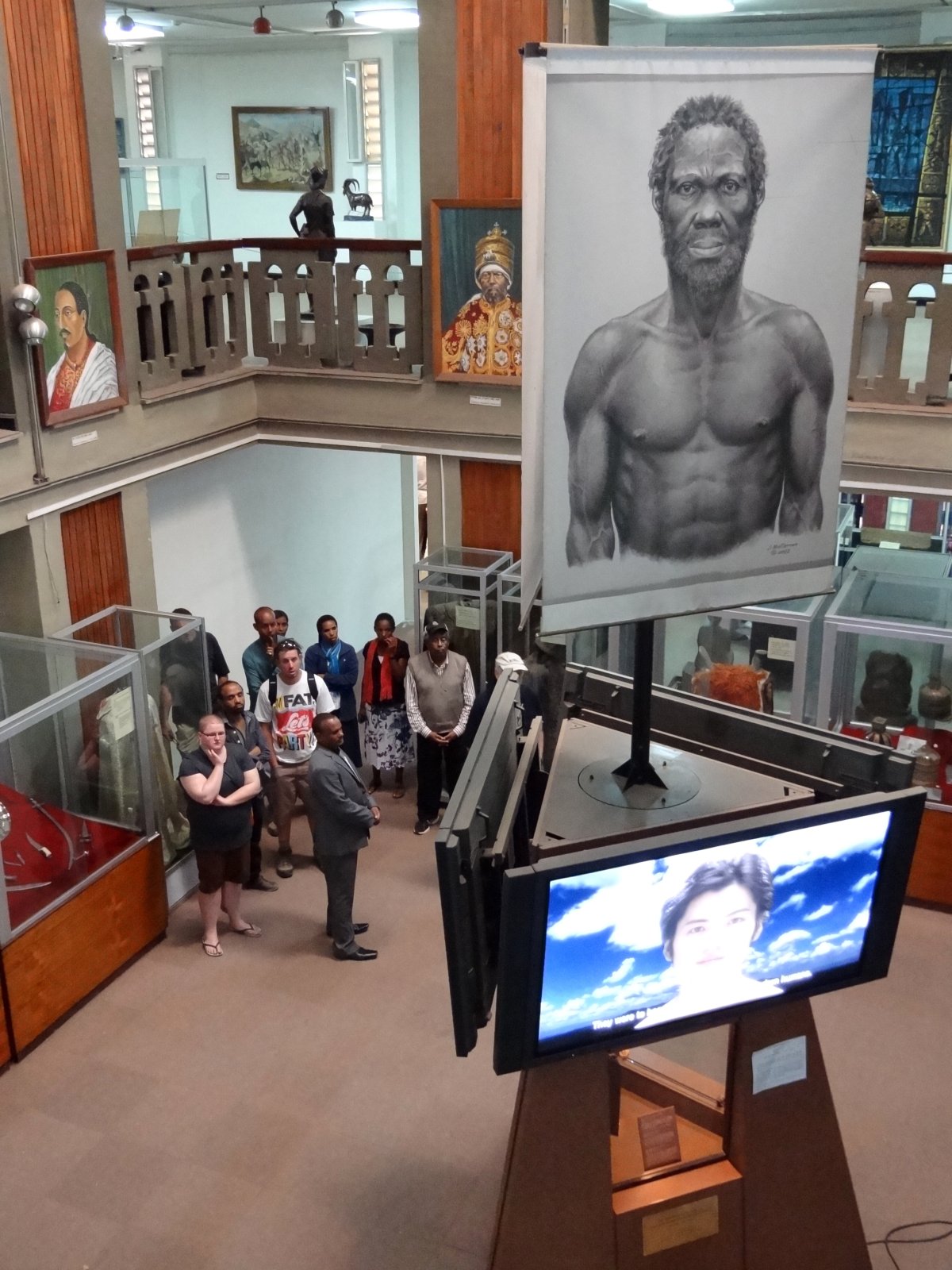

In the basement of the National Museum of Ethiopia in Addis Ababa, a small glass case houses what many consider to be the most important paleontological find ever discovered: the fossilized remains of Lucy, a skeleton of Australopithecus afarensis who lived about 3.2 million years ago. Discovered in 1974 in the Afar region by anthropologist Donald Johanson and his team, Lucy represents about 40% of a complete skeleton — an extraordinary percentage for a fossil of that antiquity. Her scientific name in Amharic is Dinkinesh, which means "you are wonderful," and this detail alone tells how deeply Ethiopia feels the connection with this ancestor of humanity.
The museum is located in the Sidist Kilo neighborhood, in the heart of Addis Ababa, within the campus of Addis Ababa University. The building, which dates back to the imperial era, houses collections that span from prehistory to the modern era, spread over four floors that follow a chronological path. Entering means traversing millions of years of human history in just a few hours, moving from the paleontological finds on the lower floor to the objects of the Ethiopian imperial court on the upper floors.
The Paleontological Collection and the Remains of Lucy
The lower floor is entirely dedicated to paleontology and prehistory. Here, in addition to the remains of Lucy, casts and reconstructions are displayed that help contextualize the importance of the discovery. Visitors can observe the original bones up close — or their faithful replicas, as the originals are periodically kept in controlled conditions — and read explanatory panels that describe the anatomical features that make Lucy a fundamental link in understanding human evolution. Her skeletal structure demonstrates that she walked upright, anticipating the development of the modern human brain by millions of years.
Next to the remains of Lucy, the section displays stone tools from the Stone Age found in various Ethiopian regions, as well as fossils of prehistoric African fauna. For those with even a superficial interest in anthropology, this section requires at least forty minutes of attention to be fully appreciated.
Aksumite artifacts and the legacy of the Christian kingdom
Ascending to the next floor, the museum introduces visitors to the Aksumite civilization, one of the great kingdoms of ancient Africa that reached its peak between the 1st and 7th centuries AD. The display cases contain Aksumite coins in gold, silver, and bronze — some of the first coins minted in sub-Saharan Africa — along with inscriptions in Ge'ez, the ancient liturgical language of Ethiopia still in use in the Orthodox Church. Ritual objects, ceramics, and architectural decorations are also exhibited, documenting a civilization capable of trading with Rome, Arabia, and India.
Particularly noteworthy are the miniature stelae and models that reproduce the famous obelisks of Aksum, allowing visitors to understand the grandeur of monumental architecture that still characterizes the city of Aksum in the north of the country today. These objects are displayed with captions in Amharic and English, making the visit accessible to foreign tourists as well.
The rooms of the imperial court
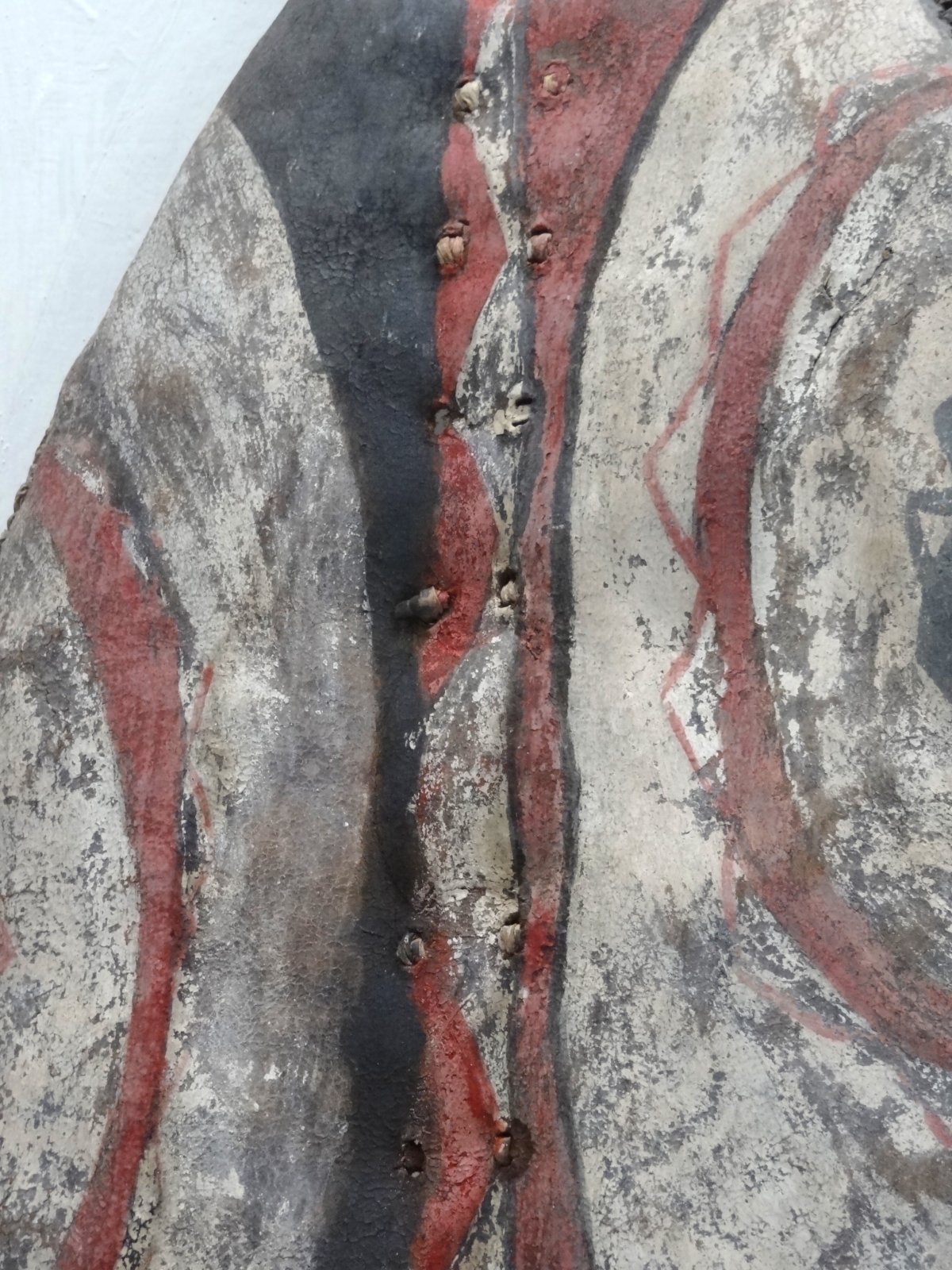
The upper floors house the ethnographic collection and the imperial regalia, that is, the objects that belonged to the court of the Ethiopian emperors, including items associated with Haile Selassie I, who reigned until 1974. Upholstered thrones, ceremonial garments, decorated weapons, and official portraits create an environment that conveys the symbolic weight of the Ethiopian monarchy, one of the oldest royal institutions in the world. The ethnographic rooms instead contain traditional costumes, musical instruments, and everyday objects from the numerous ethnic groups that make up Ethiopian society, from the Oromo communities to the Afar, from the Amhara to the Tigrinya.
This section requires time and attention because the variety of objects on display is considerable: those who rush risk missing significant details, such as the hand-embroidered fabrics or the silver jewelry of the southern populations of the country.
Practical tips for the visit
The museum is open every day, with hours typically ranging from morning to late afternoon — it is advisable to check the updated hours directly on site or through local contacts, as they may vary. The best time to visit is early in the morning, when school groups have not yet filled the halls and natural light better illuminates the displays. The entrance ticket is reasonably priced, with differentiated rates for foreigners and Ethiopian citizens. To reach the museum, blue taxis and local minibuses that pass through Sidist Kilo are the most practical options from the city center. Allowing at least two and a half hours for a complete visit is realistic; those who want to linger in the paleontological section could easily spend half a day there.
It is advisable to bring a bottle of water, as a cafeteria is not always available inside. Finally, photography is generally allowed in the main exhibition areas, but it is good practice to ask for confirmation from the staff before photographing the more delicate artifacts.


