
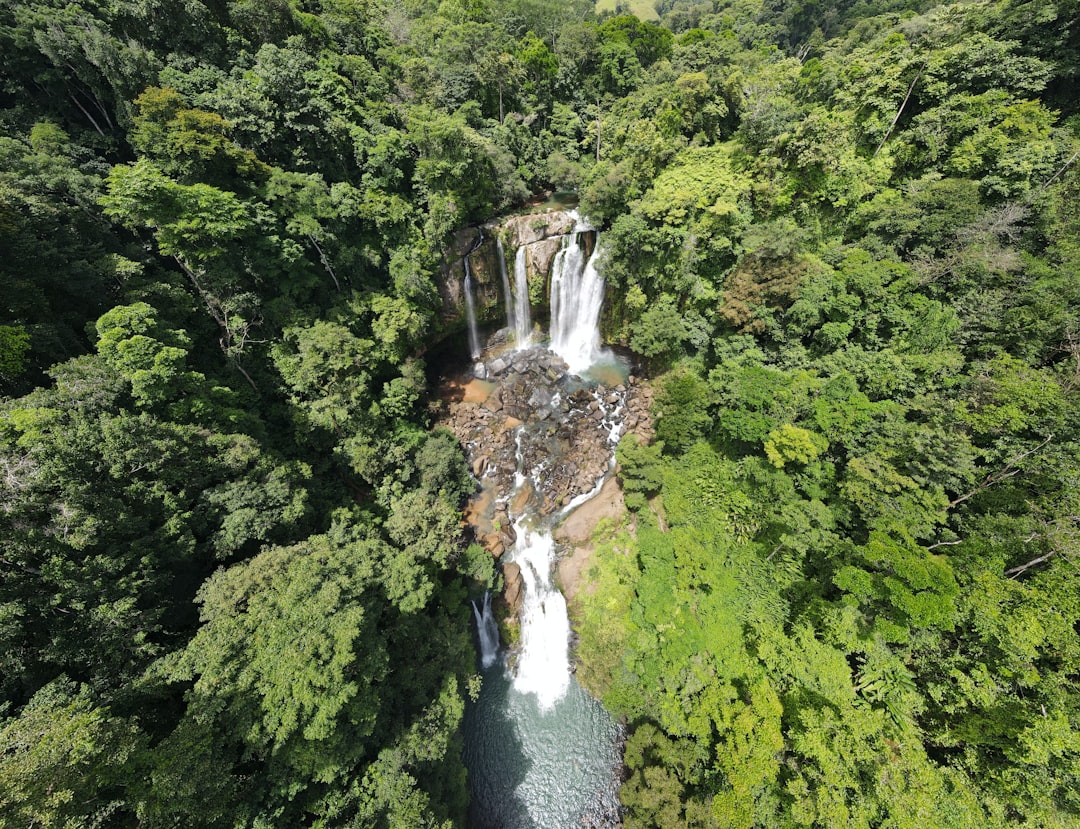

The noise arrives before the waterfalls. As the path winds between the roots of the trees and the greenery becomes denser, a dull roar grows until it becomes a clamor that drowns out the song of the birds and the call of the howler monkeys in the trees. Then, suddenly, the vegetation opens up and the Nauyaca Waterfalls reveal themselves in their double structure: a first drop of about 45 meters and, just below, a second lower one that pours the water into a large natural pool with turquoise-green waters.

We are in the Pérez Zeledón region, in the southern Pacific of Costa Rica, in an area of rainforest where biodiversity is palpable at every step. The Nauyaca are among the most imposing waterfalls in the country and their uniqueness is precisely this double drop, which creates a rare vertical scenery: two distinct levels of water power, separated by a basalt rock on which the water splashes and disperses into clouds of fine mist that settle on the skin like light rain.
The sound and the force of water

Standing in front of the upper waterfall means accepting to get wet. The mist produced by the impact of the water on the rock spreads out in a radius of several meters, tinting the air with freshness even on the hottest days. The main drop has a flow that varies significantly between the dry season and the rainy season: in the months of October and November, at the peak of the rains, the volume of water doubles and the roar becomes almost deafening, while the color of the pool darkens towards deep green.
The lower pool is sufficiently wide and deep to allow swimming, and many visitors dive directly under the smaller waterfall to feel the pressure of the water on their shoulders. It is a physical experience, not just a visual one: the cold water — coming from the heights of the forest — contrasts sharply with the humid warmth of the surrounding environment. The rocks around the pool are smooth and slippery, a detail that those who visit the place quickly learn to respect.

The path through the forest
To reach the waterfalls, there are two main options: hiking on foot or horseback transfer. The most common trail starts from the Dominical area, in the province of Puntarenas, and takes about three hours of walking one way through a dense rainforest. The path crosses several fords of small streams, passes through abandoned plantations, and delves into areas where the tree cover is so thick that it almost completely filters sunlight.
Along the way, it is common to spot groups of howler monkeys — the howler monkey — moving between the treetops while emitting deep, guttural vocalizations audible from a great distance. Toucans, with their disproportionate beaks and bright colors, often appear on the more exposed branches. Those who choose to ride a horse travel the same route in about two hours, with local guides organizing the service from the Dominical area. The cost for the guided horseback tour typically ranges around 65-80 dollars per person, but prices vary among local operators.
What to observe on site
Upon arriving at the waterfall, it is worth stopping to look at the geological structure of the rock face. The rock is of volcanic origin, with layers of basalt that are clearly distinguishable in the sections where the water has eroded the surface over the centuries. In certain points of the wall, moss of almost fluorescent color is visible, favored by the constant humidity produced by the waterfall.
The lower pool is home to small fish that approach the legs of bathers without particular fear. The flora around the area is characterized by large tree ferns and epiphytic plants that grow directly on the trunks of the surrounding trees. The entire scenery has remained substantially free of invasive tourist infrastructure: there are no bars, kiosks, or fixed structures in the area immediately around the waterfalls.
Practical tips for the visit
The best time to leave is early in the morning, by 7:00 AM, both to avoid the heat during the central hours of the day and to arrive at the waterfalls before the larger groups occupy the pool. Bringing at least two liters of water per person is essential: the trail is physically demanding and the humidity of the forest promotes dehydration even without excessive sweating being perceived.
Waterproof footwear or trekking sandals with non-slip soles are essential for the crossings. Those visiting during the rainy season — from May to November — should expect muddy trails and streams with higher flow. In any case, it is advisable to check the weather conditions the day before and rely on local guides who are familiar with the area, as they know the most treacherous parts of the trail.


