
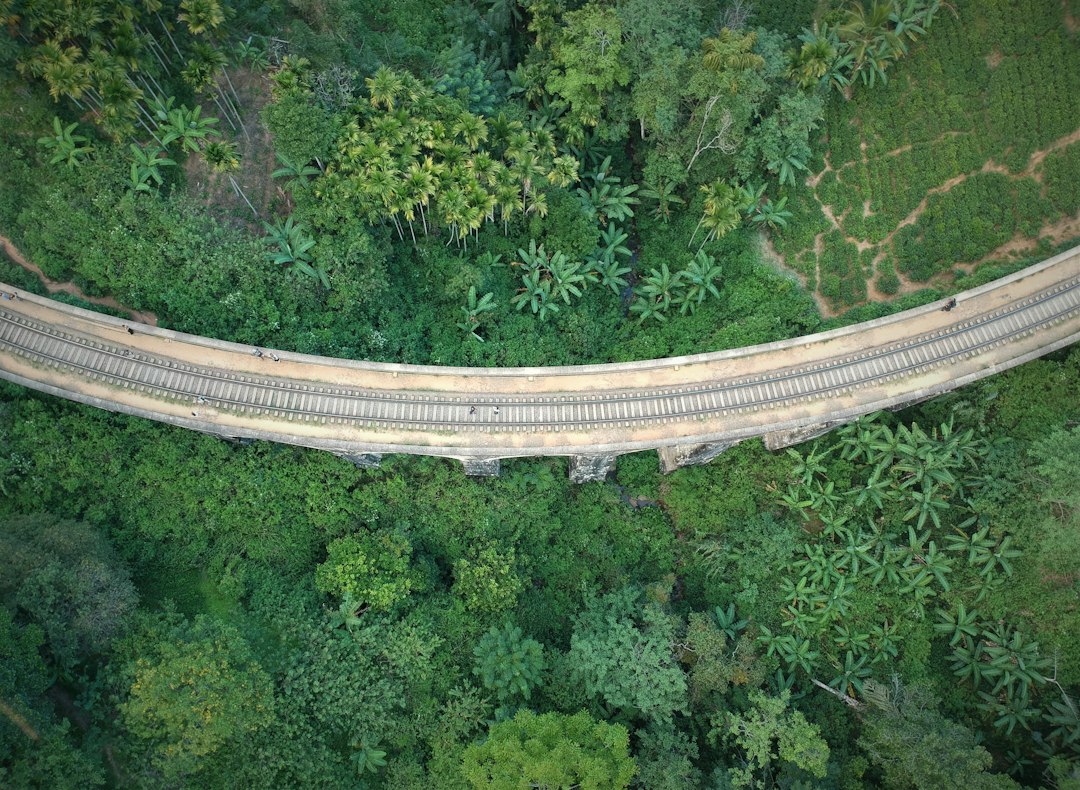

A train slowly emerges from the vegetation, crosses nine perfect arches of red bricks, and disappears back into the tea jungle. This is the spectacle that attracts dozens of visitors every day to Demodara, in the highlands of Sri Lanka, where the Nine Arch Bridge stands with silent grace among the green plantations and morning mists. It is not an attraction built for tourists: it is a railway infrastructure that is still fully operational, and this is what makes it extraordinary.
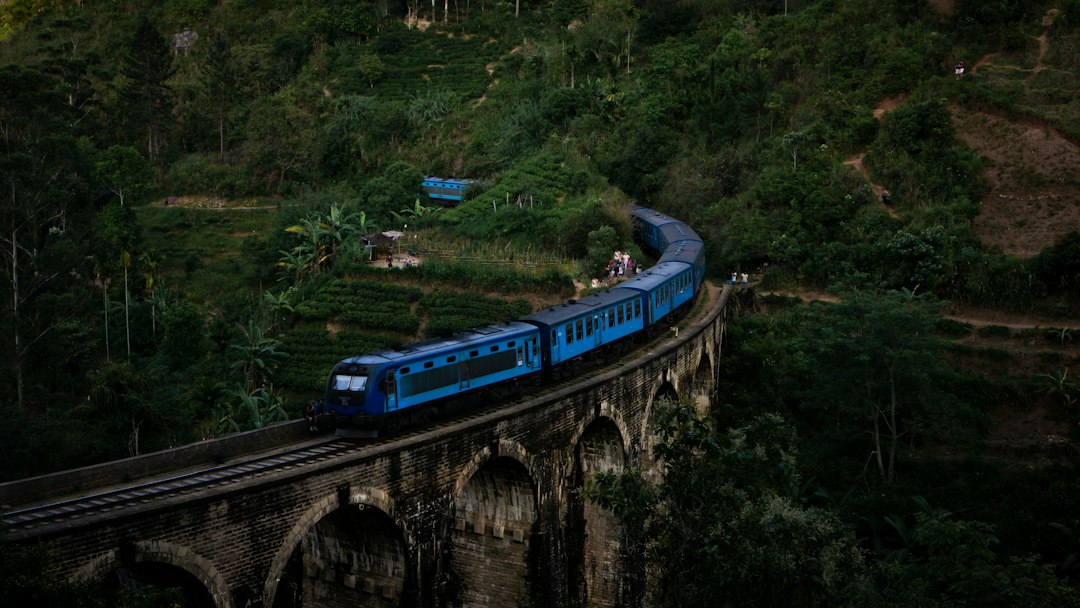
The viaduct was completed in 1921 during the British colonial period, when the Highland railway connected the cities of the Sinhalese interior. The construction is entirely made of bricks and local stone, without the use of steel or reinforced concrete — a choice dictated, according to local tradition, by the scarcity of metal materials during World War I. Approximately 91 meters long and up to 24 meters high at its highest point, the bridge spans a wooded gorge with an engineering precision that still amazes those who observe it up close.
A masterpiece of bricks among the plantations
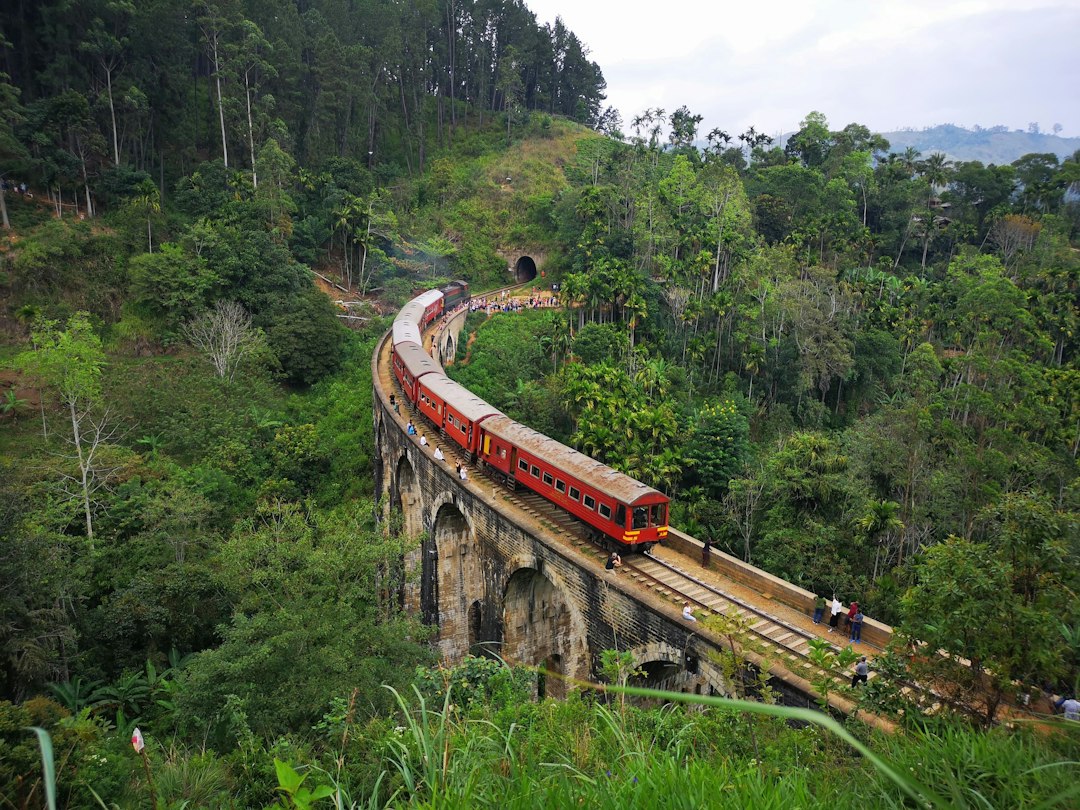
Approaching the Nine Arch Bridge means walking on red dirt paths that descend from the village of Ella, the nearest town, located about 3 kilometers away. The walking route takes between 30 and 45 minutes and passes through well-tended tea plantations, where pickers work with baskets on their backs in the morning hours. The contrast between the intense green of the leaves and the ancient red of the bridge's bricks creates a color composition that is hard to forget.
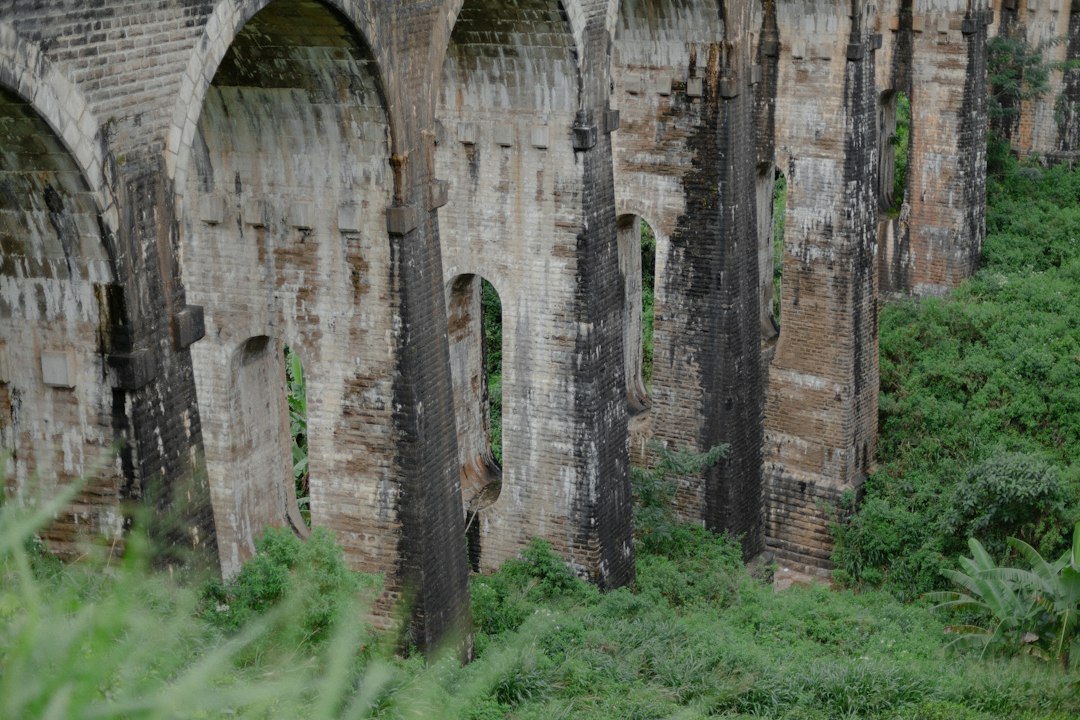
Looking closely at the viaduct, one can observe the quality of the masonry: each arch is built with bricks arranged to evenly distribute the weight of the passing train. There are no visible metal joints, no modern reinforcing beams — just stone on stone, held together by a century-old mortar that has withstood decades of monsoons and railway vibrations. The nine arches that give the structure its name are all identical in proportions, and this repeated symmetry is one of the details that impresses those who photograph the bridge from below.
The moment of the train: when the bridge comes to life
The real spectacle occurs when a train from Sri Lanka Railways crosses the viaduct. Trains on the Kandy-Badulla line pass several times a day, and the moment of transit — with the whistle of the locomotive echoing in the valley — transforms the bridge from a static monument to a living scene. Visitors position themselves on the side paths or on the terraces of the plantations to photograph the train in motion on the arches.
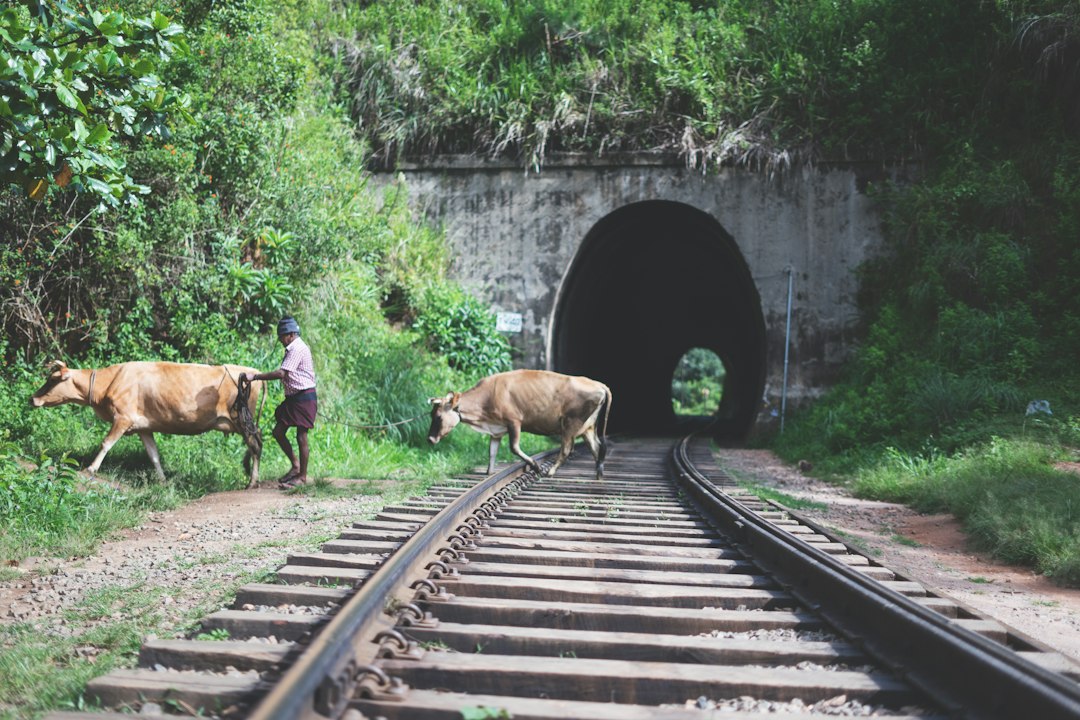
To know the approximate train schedules, it is useful to check the Sri Lanka Railways website in advance or ask the hotels in Ella, which often keep guests updated on the most scenic passages of the day. Schedules can vary and delays are frequent, so it is advisable to arrive with enough time to spare and enjoy the wait immersed in the vegetation.
How to get there and when to visit
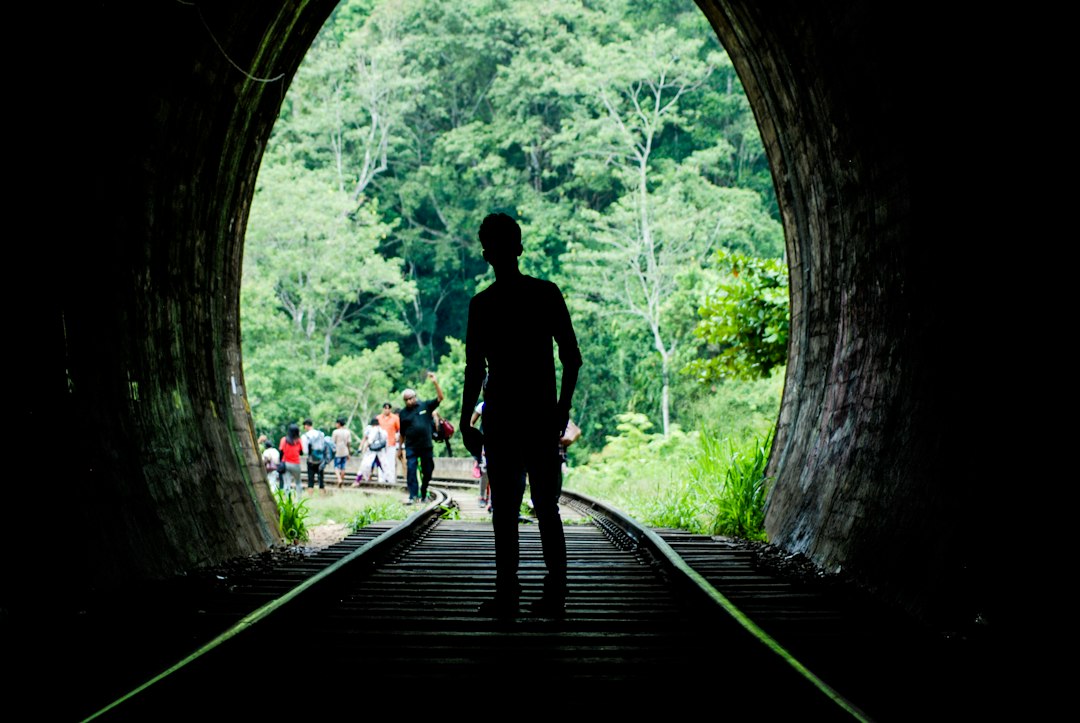
The best logistical base for visiting the Nine Arch Bridge is the city of Ella, accessible by train from Kandy or Colombo. The train journey through the Highlands is considered one of the most scenic on the island, and arriving in Ella by train is part of the experience. From Ella, the bridge can be reached on foot by following the signs to Demodara, or by tuk-tuk to get closer to the starting point of the trail.
The best time to visit is in the early morning, between 6:30 and 9:00, when the light is soft, the fog slowly lifts over the plantations, and the groups of tourists are still few. In the late afternoon, the bridge is often crowded, especially on weekends. There is no need to pay an entrance fee to access the public trails leading to the viaduct, but it is good practice to respect the private properties of the surrounding plantations and not to venture onto the railway tracks, which are active and dangerous.
Why the trip is worth it
The Nine Arch Bridge is not just a beautiful bridge to photograph. It is concrete proof that an infrastructure built over a century ago, using traditional techniques and local materials, can withstand the test of time and continue to serve its original purpose. Every train that crosses it is a reminder of this continuity.
For those traveling in Sri Lanka and finding themselves in the Highlands — perhaps after a visit to the tea plantations of Nuwara Eliya or the temples of Kandy — Ella and its viaduct represent a stop that combines landscape, history, and engineering into one unforgettable image. Bring comfortable shoes, a good dose of patience for train schedules, and, if possible, a morning free from other commitments.


