



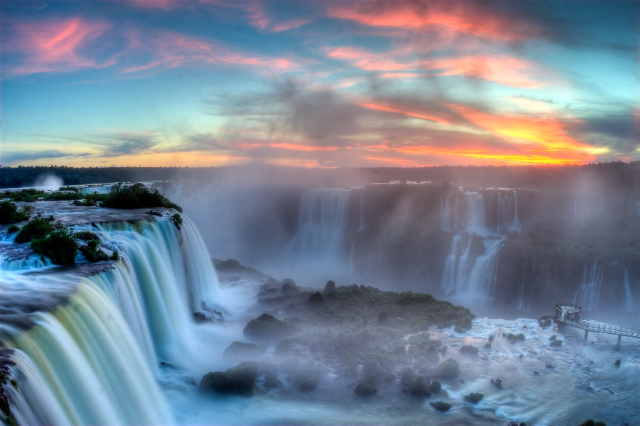
A symphony of water, crashing and cascading through lush, tropical forests, Iguazu Falls is a breathtaking marvel of nature that commands attention and admiration. Straddling the border between Brazil and Argentina, this majestic series of waterfalls is not just a geographical wonder but a tapestry woven with history, culture, and natural beauty.
The origins of Iguazu Falls trace back to an ancient geological shift that occurred millions of years ago. The name itself comes from the Guarani words "y" meaning "water" and "ûasú" meaning "big," a fitting description for the awe-inspiring scale of these falls. According to local Guarani legend, the falls were created when a jealous deity, enraged by a mortal's love for a beautiful woman named Naipí, split the river to create the tumultuous cascade. The first European to document the falls was Spanish explorer Álvar Núñez Cabeza de Vaca in 1541, and his encounter with this natural wonder marked the beginning of its storied history with the outside world.
While Iguazu Falls is a masterpiece of nature, the surrounding region is also a canvas for human creativity. The architecture of the nearby towns and the visitor centers at the falls reflect a harmonious blend of modern functionality and traditional styles. The Parque Nacional Iguazú on the Argentine side and the Parque Nacional do Iguaçu in Brazil are UNESCO World Heritage Sites, designed to preserve both the natural wonder and the cultural significance of the area. Artifacts and exhibitions within the parks provide insights into the indigenous and colonial histories, offering a deeper connection to the land.
Cultural richness in the Iguazu region is palpable. The falls are a symbol of the Guarani people's deep spiritual connection to nature. Local traditions emphasize respect and reverence for the environment, celebrating this bond through various festivals. One such event is the annual Fiesta Nacional del Turismo, where both locals and visitors engage in cultural dances, music, and storytelling, celebrating the unique heritage of the Misiones Province.
No visit to Iguazu is complete without indulging in its gastronomy, which offers a taste of the region's diverse cultural influences. The area is renowned for its asado, a traditional Argentine barbecue that features a variety of meats cooked over an open flame. Pairing perfectly with this are empanadas, pastry-filled delights that can be stuffed with anything from savory meats to sweet quince paste. For a refreshing drink, locals often enjoy tereré, a cold variant of yerba mate, particularly suited for the subtropical climate.
Beyond the well-trodden paths, Iguazu holds secrets that many visitors overlook. The Garganta del Diablo, or "Devil's Throat," is the most dramatic of the falls, where the roar of the water is both thunderous and meditative. Yet, few know of the Moonlight Walks, held during the full moon, offering a surreal experience of the falls bathed in silvery light. Additionally, the Bird Park near the Brazilian entrance is a sanctuary for rare and endangered species, providing an intimate glimpse into the region's biodiversity.
For those planning a visit, timing is key. The falls are most vibrant from December to February, during the rainy season when the water flow is at its peak. However, this is also the busiest period. For a less crowded experience, visiting in April or September offers a balance of impressive water levels and comfortable weather. Wear waterproof clothing and sturdy shoes, as the mist from the falls can be surprisingly drenching. Don't miss the boat rides that take you close to the base of the falls, offering an exhilarating perspective.
Iguazu Falls is more than a natural wonder; it is a gateway into a world where history, culture, and nature coalesce into an unforgettable experience. Whether basking in the powerful presence of the falls or exploring the cultural tapestry of the region, visitors leave with memories etched as deeply as the falls are into the earth.
