



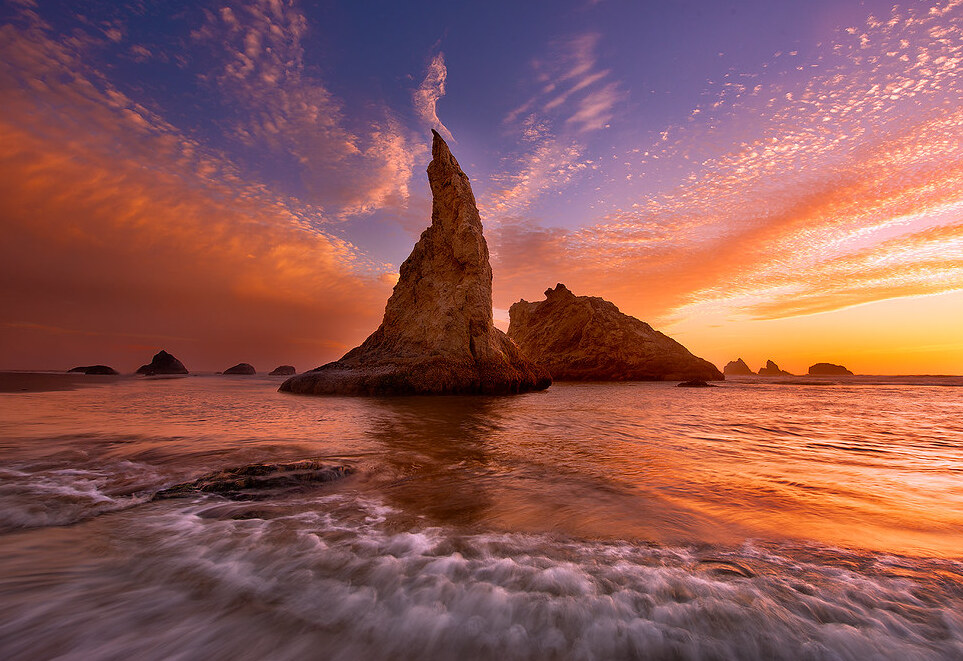
Nestled along the rugged coastline of Bandon, Oregon, the Wizard’s Hat is a majestic rock formation that captivates visitors with its enchanting silhouette. Resembling the pointed cap of a sorcerer, this natural wonder stands as a testament to the enduring power of nature’s artistry. As the sea breeze whispers stories of the past, the Wizard’s Hat invites explorers to delve into the rich tapestry of history, art, and culture that surrounds it.
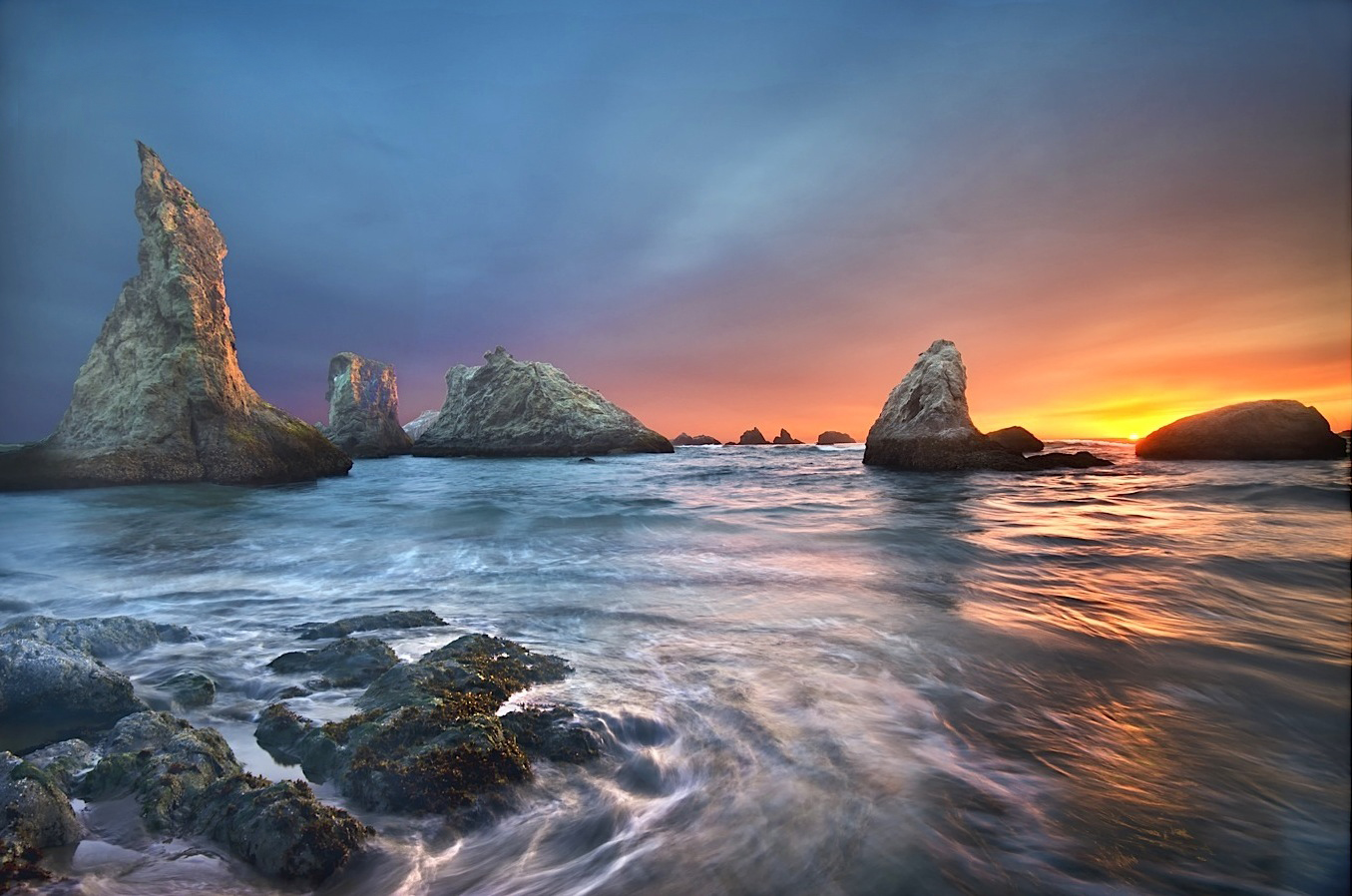
The origins of the Wizard’s Hat stretch back millions of years when volcanic activity and relentless ocean waves sculpted the intricate landscape of Oregon’s coast. Over time, erosion carved this striking sea stack, leaving behind a geological marvel that has become a symbol of the region's wild beauty. Bandon, founded in 1873 by George Bennett, a native of Bandon, Ireland, has a history deeply intertwined with the sea. The town developed as a hub for the timber and fishing industries, which brought prosperity and growth to the area. Yet, it is perhaps the natural formations like the Wizard's Hat that have truly cemented Bandon's place in the hearts of visitors and locals alike.
The artistic allure of the Wizard’s Hat lies not just in its form but in its setting. The surrounding coastline is dotted with other intriguing rock formations, including the nearby Face Rock, which according to Native American legend, is the face of a princess turned to stone. The interplay of light and shadow on these ancient stones has inspired countless artists and photographers. The dramatic sunsets paint the rocks in hues of orange and purple, creating a living canvas that changes with the weather and tides. This natural artistry echoes the broader cultural appreciation for nature in Oregon, where the landscape itself is often the most significant artwork.

In tune with its coastal surroundings, Bandon’s cultural traditions are deeply rooted in its maritime heritage. The Bandon Cranberry Festival, held every September, is a vibrant celebration of the area's rich agricultural history, particularly its cranberries, which are among the finest in the world. This festival offers a taste of local life, featuring parades, live music, and, of course, an array of cranberry-infused delicacies. Traditional crafts and art are also showcased, reflecting the community's commitment to preserving its unique cultural identity.
The gastronomy of Bandon is a delightful blend of sea and land. Freshly caught seafood, including salmon and Dungeness crab, is a staple in local cuisine. The town's eateries offer dishes that highlight the bounty of the Pacific, often paired with the region’s renowned Oregon wines. For a true taste of Bandon, visitors should try the cranberry scones, a nod to the area’s fruit-growing prowess, and indulge in a pint of locally brewed craft beer, which captures the spirit of the Pacific Northwest.
Beyond its well-known features, the Wizard’s Hat harbors lesser-known curiosities that intrigue the more observant traveler. At low tide, the surrounding tide pools reveal a hidden world teeming with starfish, anemones, and other marine life. This vibrant ecosystem offers a glimpse into the delicate balance of coastal life, often overlooked by those simply passing by. Moreover, local folklore speaks of the Wizard’s Hat as a place of mystical energy, a notion that resonates with those drawn to the esoteric and mysterious.
For those planning a visit, the best time to experience the Wizard’s Hat is during the late spring or early fall, when the weather is mild and the crowds are smaller. Early morning and late afternoon offer the most spectacular light for photography, with the added bonus of quieter beaches. It's advisable to check tide schedules in advance to explore the tide pools safely and fully. Visitors should wear sturdy shoes suitable for rocky terrain and bring a windbreaker, as the coastal breeze can be brisk.
As you wander the shores of Bandon, let the Wizard’s Hat guide your journey into a world where nature’s history, artistic expression, and cultural heritage converge. Here, amidst the whisper of waves and the call of seabirds, the past and present intertwine, offering a timeless experience that remains long after the tide has retreated.
