



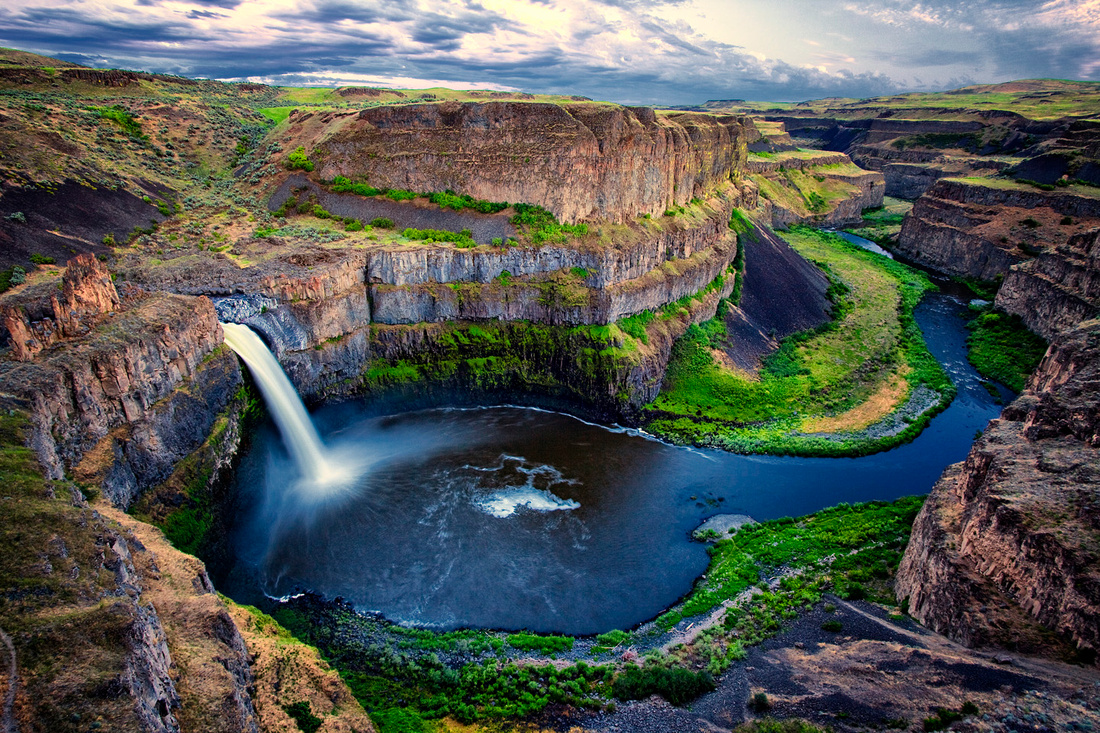
In the heart of southeast Washington, Palouse Falls stands as a breathtaking testament to the power of nature. This magnificent waterfall, located near LaCrosse, is not merely a geological wonder, but also a site steeped in history and culture.
History and Origins The story of Palouse Falls begins with its Native American origins, where it was an important site for the Palouse Tribe. According to local legend, the falls were named after a beautiful girl who plunged into the waters, forever becoming part of the landscape. The region was largely untouched until the arrival of European settlers in the 19th century, with the falls first being documented in 1853 by the American explorer George B. McClellan. During the late 1800s, the falls became a popular destination for those seeking the rugged beauty of the Pacific Northwest, and it was eventually designated as a state park in 1951.
Art and Architecture While Palouse Falls is primarily a natural feature, its surrounding landscape has inspired many artists and photographers. The dramatic cliffs and lush greenery create a stunning backdrop for capturing the essence of the Pacific Northwest. The Palouse Falls State Park visitor center, though modest, serves as a hub for visitors to learn about the geology and ecology of the area. This commitment to conservation and education reflects the region’s dedication to preserving its natural heritage.
Local Culture and Traditions The culture surrounding Palouse Falls is deeply rooted in the traditions of the Palouse Tribe, who have lived in harmony with the land for generations. Today, visitors may encounter local customs celebrating the relationship between the community and the natural world. Seasonal events, such as Native American dances and storytelling festivals, offer a glimpse into the vibrant traditions that continue to thrive in the region. Additionally, the Palouse Region is known for its agricultural heritage, with local farms producing lentils, wheat, and other crops that hold cultural significance.
Gastronomy When it comes to gastronomy, the Palouse region boasts a variety of local flavors that reflect its agricultural roots. Walla Walla sweet onions and Palouse lentils are staples in the area’s cuisine, often featured in dishes at local restaurants and markets. A visit to nearby towns, such as Pullman and Colfax, offers opportunities to sample farm-to-table dining experiences, showcasing the best of southeastern Washington’s produce. Don’t miss the chance to try a hearty bowl of lentil soup, a dish that pays homage to the region's rich farming history.
Lesser-Known Curiosities While many tourists flock to the falls for the stunning views, there are hidden gems that often go unnoticed. The Palouse River has cut deep canyons in the surrounding landscape, creating unique geological formations that are fascinating to explore. Additionally, the area is home to diverse wildlife; keep an eye out for bald eagles and other birds of prey that nest in the cliffs above the falls. Many visitors are also surprised to learn that the falls were featured in the **1939 film
