
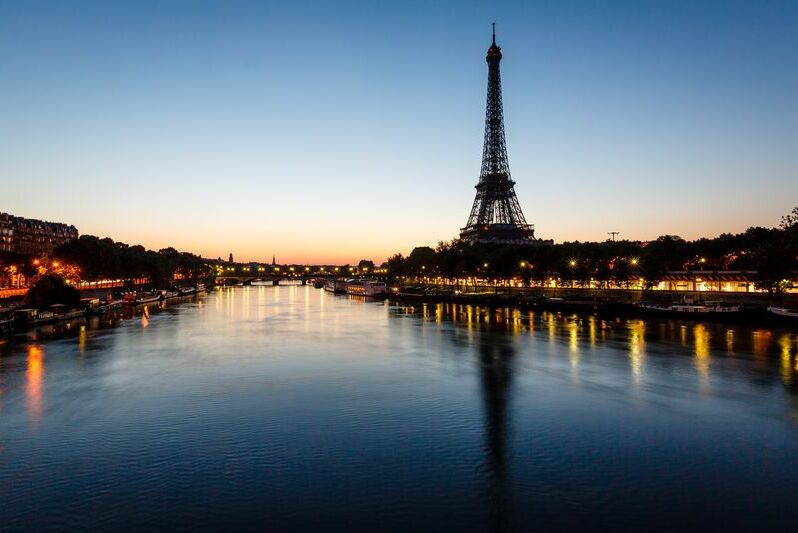

{ "title": "Enchanting Seine: Romance and Heritage in Paris, France", "description": "It is difficult to evoke all the seasons of the Seine, almost impossible to narrate the illustrious story of the riverside, bridges, and the most beautiful road in the French capital. The Seine River, winding through the heart of Paris, is not just a body of water; it is the lifeblood of a city that has inspired poets, artists, and lovers for centuries. Spanning 15 kilometers and flanked by 36 bridges, the Seine showcases exquisite monuments that have earned UNESCO recognition as part of the world’s heritage. Its banks, adorned with historic buildings, lively quays, and lush gardens, tell tales of romanticism that are palpable at every turn.\n\n### History and Origins\nThe history of the Seine is as rich as the city it flows through. Paris was founded in the 3rd century BC by the Parisii, a Celtic tribe who settled on the Île de la Cité. From its early days as a trading post, Paris grew in prominence, particularly during the Middle Ages, when it became the capital of the Frankish Empire. The Seine has witnessed pivotal moments in history, from the French Revolution to the World Wars, each leaving an indelible mark on the city’s landscape and culture.\n\n### Art and Architecture\nThe banks of the Seine are a canvas painted with architectural marvels. The iconic Notre-Dame Cathedral, a masterpiece of Gothic architecture, stands proudly on the Île de la Cité, while the Louvre Museum, originally a royal palace, houses thousands of artworks, including the Mona Lisa. The Pont Alexandre III, often regarded as the most opulent bridge in Paris, features ornate sculptures and gilded details that reflect the artistic elegance of the Belle Époque. Each bridge, from the historic Pont Neuf to the modern Pont de Bercy, tells a story of architectural evolution and artistic vision.\n\n### Local Culture and Traditions\nThe Seine is not only a geographical feature but a vital part of Parisian culture. The banks serve as a gathering place for locals and tourists alike, especially during the warm months. The Paris Plages festival transforms the banks into sandy beaches every summer, complete with deck chairs and entertainment. Additionally, the Fête de la Musique, celebrated annually on June 21st, sees musicians of all genres performing along the river, creating a vibrant atmosphere that encapsulates the spirit of Paris. Street artists and performers also add to the tapestry of local culture, offering spontaneous performances that enchant passersby.\n\n### Gastronomy\nNo visit to the Seine is complete without indulging in the local gastronomy. The area is dotted with charming bistros and cafés where one can savor traditional French cuisine. Try the crêpes from street vendors, or indulge in a bouillabaisse, a hearty fish stew that reflects the river’s bounty. Pair your meal with a glass of Bordeaux or a refreshing cider for an authentic taste of France. Don’t forget to stop by the Marché des Enfants Rouges, the oldest covered market in Paris, to experience local produce and artisanal foods.\n\n### Lesser-Known Curiosities\nBeyond the well-trodden paths, the Seine holds many secrets. For instance, few know that the river is home to the **"
, "description": "It is difficult to evoke all the seasons of the Seine, almost impossible to narrate the illustrious story of the riverside, bridges, and the most beautiful road in the French capital. The Seine River, winding through the heart of Paris, is not just a body of water; it is the lifeblood of a city that has inspired poets, artists, and lovers for centuries. Spanning 15 kilometers and flanked by 36 bridges, the Seine showcases exquisite monuments that have earned UNESCO recognition as part of the world’s heritage. Its banks, adorned with historic buildings, lively quays, and lush gardens, tell tales of romanticism that are palpable at every turn.\n\n### History and Origins\nThe history of the Seine is as rich as the city it flows through. Paris was founded in the 3rd century BC by the Parisii, a Celtic tribe who settled on the Île de la Cité. From its early days as a trading post, Paris grew in prominence, particularly during the Middle Ages, when it became the capital of the Frankish Empire. The Seine has witnessed pivotal moments in history, from the French Revolution to the World Wars, each leaving an indelible mark on the city’s landscape and culture.\n\n### Art and Architecture\nThe banks of the Seine are a canvas painted with architectural marvels. The iconic Notre-Dame Cathedral, a masterpiece of Gothic architecture, stands proudly on the Île de la Cité, while the Louvre Museum, originally a royal palace, houses thousands of artworks, including the Mona Lisa. The Pont Alexandre III, often regarded as the most opulent bridge in Paris, features ornate sculptures and gilded details that reflect the artistic elegance of the Belle Époque. Each bridge, from the historic Pont Neuf to the modern Pont de Bercy, tells a story of architectural evolution and artistic vision.\n\n### Local Culture and Traditions\nThe Seine is not only a geographical feature but a vital part of Parisian culture. The banks serve as a gathering place for locals and tourists alike, especially during the warm months. The Paris Plages festival transforms the banks into sandy beaches every summer, complete with deck chairs and entertainment. Additionally, the Fête de la Musique, celebrated annually on June 21st, sees musicians of all genres performing along the river, creating a vibrant atmosphere that encapsulates the spirit of Paris. Street artists and performers also add to the tapestry of local culture, offering spontaneous performances that enchant passersby.\n\n### Gastronomy\nNo visit to the Seine is complete without indulging in the local gastronomy. The area is dotted with charming bistros and cafés where one can savor traditional French cuisine. Try the crêpes from street vendors, or indulge in a bouillabaisse, a hearty fish stew that reflects the river’s bounty. Pair your meal with a glass of Bordeaux or a refreshing cider for an authentic taste of France. Don’t forget to stop by the Marché des Enfants Rouges, the oldest covered market in Paris, to experience local produce and artisanal foods.\n\n###


