
← Back

Pavia Covered Bridge

Piazzale Ferruccio Ghinaglia, 27100 Pavia PV, Italia ★★★★☆ 125 views
Katrina Colemann
Pavia
🏆 AI Trip Planner 2026

Get the free app

Discover the best of Pavia with Secret World — the AI trip planner with 1M+ destinations. Get personalized itineraries, hidden gems and local tips. Free on iOS & Android.

🧠 AI Itineraries 🎒 Trip Toolkit 🎮 KnowWhere Game 🎧 Audio Guides 📹 Videos
Scan to download iOS / Android
Scan for AppGallery Huawei users

About Pavia Covered Bridge

Pavia Covered Bridge - Pavia | Secret World Trip Planner

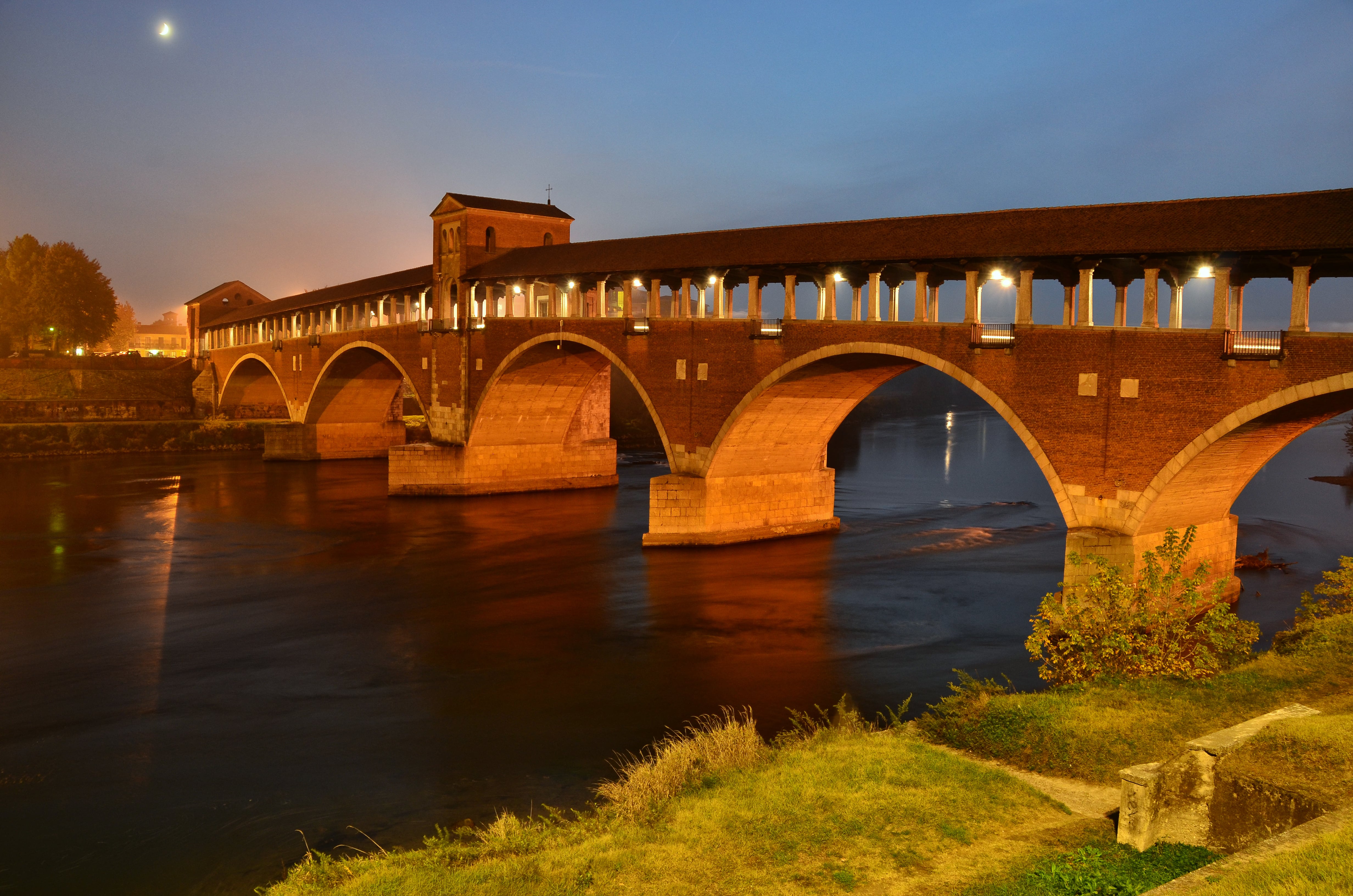
Already in Roman times, in the ancient city of Ticinum, there was an early bridge connecting the two banks of the river at the height of the modern Covered Bridge. Of this bridge remains, easily visible during lean periods, the base of a central pier, made of trachyte from the Euganean Hills. The construction of the Roman bridge dates back to the time of Augustus.
Pavia Covered Bridge - Pavia | Secret World Trip Planner

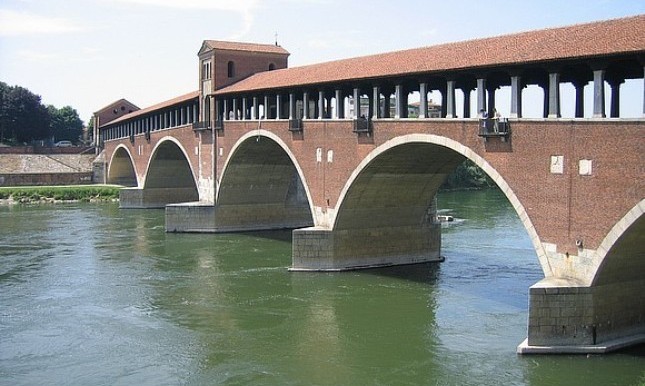
In 1352 construction began on the ruins of the Roman bridge on a new bridge, designed by Giovanni da Ferrara and Jacopo da Cozzo. The bridge, completed in 1354, was covered and had ten irregular arches and two towers at either end, which served for defense; the appearance of this bridge can be seen in Bernardino Lanzani's frescoes (c. 1525/26) inside the church of San Teodoro.

In 1583 the roof was replaced with a new roof supported by one hundred granite pillars according to the wishes of the Visconti family.

During the construction of the Spanish walls in the 17th century, the first arch and a half toward the city and the first arch on the borough side were included in the ramparts and, therefore, closed.

Later an entrance portal on the Borgo Ticino side (1599), a chapel in the middle of the bridge in honor of St. John of Nepomuk (18th century) were added. Finally, in 1882 an entrance portal was erected by Amati on the old town side. Bombing by Allied forces in September 1944 during World War II damaged the ancient 14th-century bridge and caused one archway to collapse. In 1949 construction of the new bridge began, and it was inagurated in 1951. On the portal on the city side an epigraph reads, "On the ancient crossing of the cerulean Ticino, in the image of the ancient Ponte Coperto, demolished by the fury of war, the Italian Republic rebuilt."

The present bridge was built about 30 meters downstream from the previous one, and is wider and higher than the old one. The arches are wider and fewer in number: five instead of seven. The bridge is now also shorter in that it follows a path perpendicular to the river current, whereas the old one followed the line joining Strada Nuova (on the downtown side) with Via dei Mille (on the Borgo Ticino side.

🗺 AI Trip Planner 2026

Plan your visit to Pavia

Suggested itinerary near Pavia Covered Bridge

MAJ+
500.000+ travelers worldwide
  1. 🌅
    Morning
    Pavia Covered Bridge
    📍 Pavia
  2. ☀️
    Afternoon
    The Pavia Museum of the Italian Risorgimento
    📍 1.3 km · Pavia
  3. 🌆
    Evening
    Discover the Secret Gardens of Cascina Mora Farmstay
    📍 4.3 km · Pavia

Buy Unique Travel Experiences

Powered by Viator

See more on Viator.com

Explore nearby · Pavia

Frequently Asked Questions

The current Pavia Covered Bridge dates back to 1951, but it was rebuilt in the image of the original medieval bridge constructed in 1352-1354 on the ruins of a Roman bridge from the time of Augustus. The original bridge was destroyed during Allied bombing in September 1944 during World War II, and reconstruction began in 1949.
Inside the bridge, you'll find historical elements including an entrance portal on the Borgo Ticino side (built in 1599), a chapel dedicated to St. John of Nepomuk from the 18th century, and another entrance portal on the city side dating from 1882. The roof is supported by one hundred granite pillars that were installed in 1583 according to the Visconti family's wishes.
The new bridge built in 1951 is located about 30 meters downstream from the original and is wider and higher than its predecessor. It features five arches instead of the original seven, and follows a perpendicular path compared to the ancient structure, making it shorter overall while maintaining the covered design of the historic bridge.
The bridge has survived several significant historical periods: it was originally built on Roman foundations in 1352, underwent modifications during the Spanish walls construction in the 17th century when two archways were closed, and was severely damaged by Allied bombing in September 1944. Following its destruction, the Italian Republic undertook reconstruction efforts that resulted in the current bridge inaugurated in 1951.
Yes, during lean periods of the Ticino River, you can easily see the base of a central pier from the original Roman bridge made of trachyte stone from the Euganean Hills. This Roman foundation, dating to the time of Emperor Augustus, lies beneath the current bridge and serves as a visible reminder of the ancient crossing that predates the medieval structure.
