
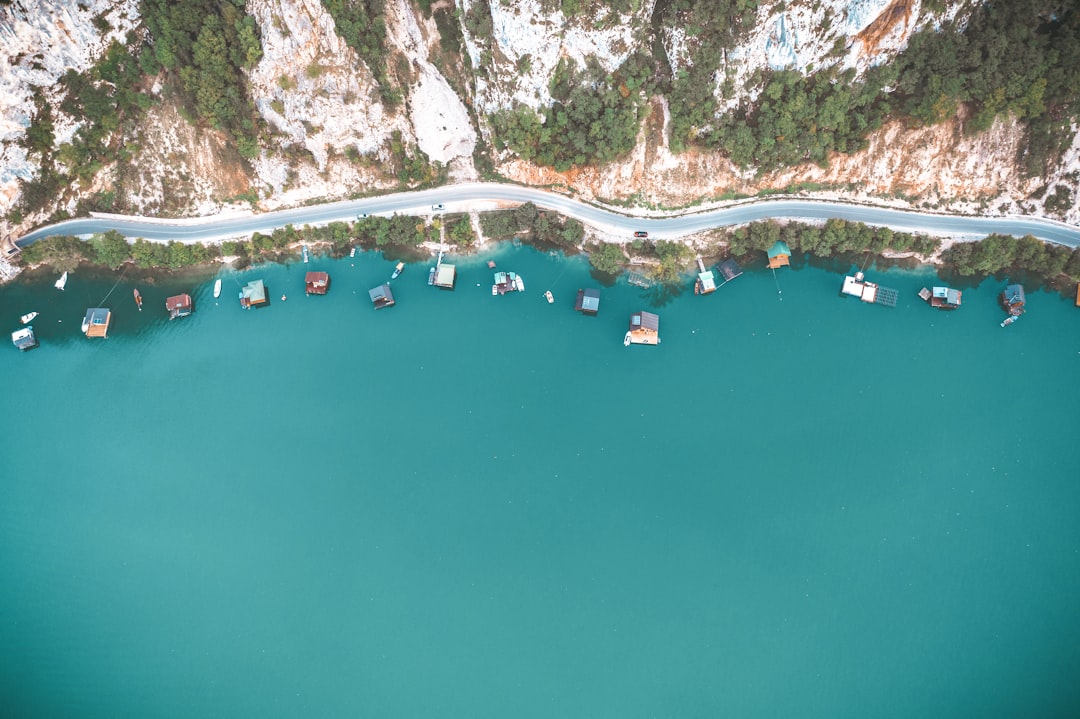

The water is a deep green, almost unreal, as if someone had dissolved malachite in the waters of the Drina River. Lake Perućac suddenly opens up between the rocky walls of the Tara gorge, in the heart of western Serbia, just a few kilometers from the town of Bajina Bašta. It is not a natural lake: it is an artificial reservoir created in the 1960s with the construction of the Bajina Bašta hydroelectric dam, completed in 1966. But its engineering origin does not take away from the wild beauty of the landscape that surrounds it.

The reservoir extends for about 55 kilometers along the course of the Drina, reaching depths of over 50 meters in some places. Its shores are embraced by the Tara National Park, one of the most important protected areas in the western Balkans, where specimens of Serbian spruce (Picea omorika), an endemic species considered a living fossil dating back to the Ice Age, survive. Looking at the banks from the boat, these pointed trees can be seen descending almost to the water, creating a landscape that resembles Scandinavia more than the Balkans.
Navigating the canyon: the boats of the Drina

The most evocative way to discover Lake Perućac is to board one of the tourist boats that depart from the small port near Bajina Bašta. The boat trips ascend the basin to the north, delving into the gorge of the Drina where the limestone walls rise vertically for hundreds of meters above the water's surface. In summer, when the lake level is higher, some of these walls seem to emerge directly from the water with no visible shore.
During the navigation, it is possible to observe the remains of old houses and mills submerged during the creation of the basin: on dry days, when the water level drops, some structures partially re-emerge, reminding visitors that beneath that green surface there existed an entire inhabited valley. Boat trips generally last between two and three hours and represent one of the few ways to reach some areas of the gorge that are otherwise inaccessible by land.

The Rača Monastery: a visit among the woods
Following the eastern shore of the lake, one reaches the Rača Monastery, one of the most significant places in the cultural history of medieval Serbia. Founded in the 13th century, probably during the reign of the Nemanjić dynasty, the monastery is famous for having hosted a manuscript copying school between the 17th and 18th centuries that saved numerous ecclesiastical texts during the Ottoman period. The monks of Rača produced hundreds of manuscripts that contributed to the preservation of the Serbian medieval language and literature.

The monastic complex, immersed in a forest of hornbeams and beeches, houses a church with partially restored original frescoes. The atmosphere is quiet and intimate, far from mass tourist circuits. The path connecting the lake to the monastery passes through dense vegetation and takes about thirty minutes on foot from the boat landing point. Visitors are invited to respect appropriate dress codes for an active place of worship.
When to go and how to organize

The best season to visit Lake Perućac is from May to September. In spring, the melting snow on Tara feeds the basin, bringing the water to its maximum level, and the colors of the vegetation are particularly intense. July and August are the most crowded months, especially with Serbian tourists who fill the campsites and small guesthouses along the shore. For those who prefer less crowd, June and September offer excellent weather conditions with fewer visitors.
Bajina Bašta can be reached by car from Belgrade by traveling about 170 kilometers southwest, with a journey of about two and a half hours. There is no convenient direct train connection to this area, so the car remains the most practical means. The town has accommodations of various types, from family guesthouses to rental apartments. Boat excursions are generally booked with local operators along the riverside of Bajina Bašta, and the prices are affordable compared to Western European standards. Practical advice: bring water and snacks for longer boat trips, as onboard services are often limited, and wear suitable hiking shoes if you plan to reach the Rača monastery on foot.
The Tara National Park: beyond the lake
Those who have time should dedicate at least a day to exploring the Tara National Park, which extends over the hills above the lake. The park, established in 1981, protects one of the last primary forests of the Balkans and is home to wildlife that includes brown bears, wolves, and lynxes. Numerous marked trails start from the equipped areas and allow access to natural viewpoints from which one can overlook the entire Drina gorge with the Perućac lake shining below, green and silent among the rocks.
From the viewpoint of Banjska Stena, one of the most accessible in the park, the view of the canyon is considered among the most spectacular in the entire Balkan region. The road that climbs from the lake to the Tara plateau is itself an experience: tight curves among dense forests, with sporadic glimpses of the water below that make each bend a small visual surprise.


