

Every October, hundreds of black-necked cranes (Grus nigricollis) descend from the Tibetan plateau and land in the Phobjikha Valley, a vast glacial plain located at about 2,900 meters above sea level in the Wangdue Phodrang district of Bhutan. They can be seen gliding over the abandoned rice fields and wet meadows with a silent elegance that contrasts with the biting cold of the Himalayan air. It is not a spectacle built for tourists: it is a migration that has been happening for centuries, and the valley welcomes it every year with the same unchanging tranquility.
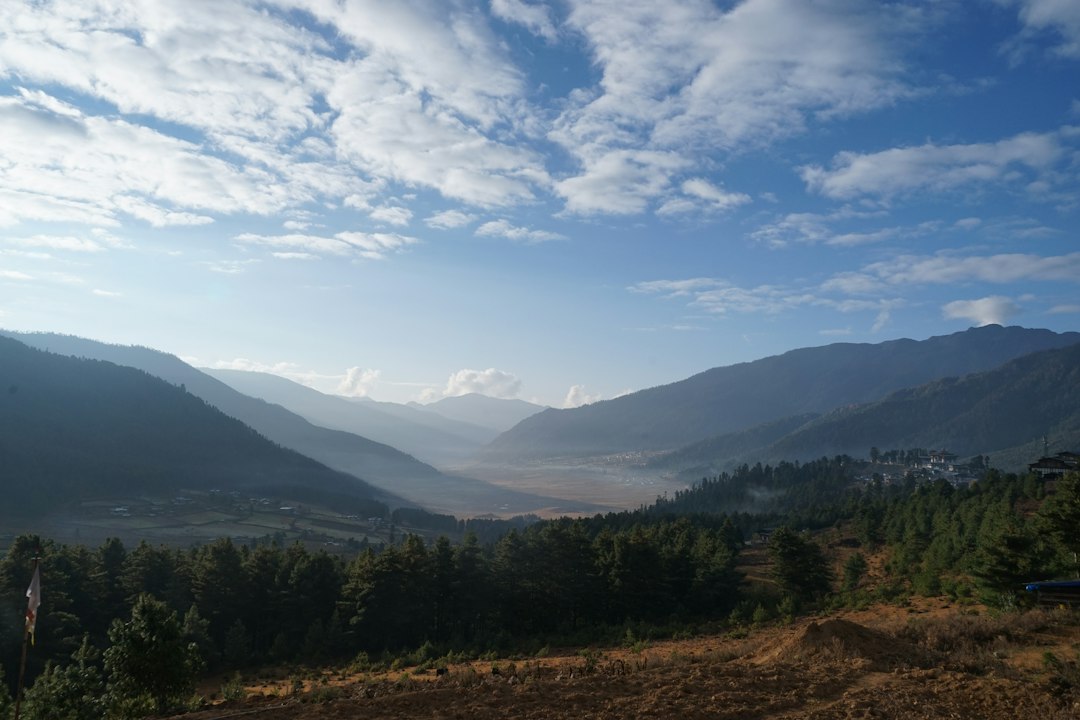
The Phobjikha is one of the few glacial valleys in Bhutan, characterized by a flat and marshy bottom that distinctly sets it apart from the steep gorges typical of the country. This particular ecosystem — made up of peat bogs, open meadows, and forests of fir and rhododendron on the slopes — is what makes the place suitable for both the wintering of cranes and a plant and animal biodiversity that few corners of Bhutan can match.
The black-necked cranes: a rare encounter
The black-necked cranes are classified as a vulnerable species according to the IUCN Red List. The global population is estimated to be around 10,000-15,000 individuals, and the Phobjikha Valley is one of the most important wintering sites in the entire range. Between October and March, when the cranes are present, it is possible to observe them up close in the early morning hours as they feed in the open fields around the village of Gangtey.
The Royal Society for Protection of Nature (RSPN) of Bhutan manages an information center in the valley — the Black-necked Crane Information Centre — where explanatory panels illustrate the migratory cycle, the ecology of the species, and the relationships between the cranes and local Buddhist culture. The cranes are considered sacred animals in Bhutanese tradition, and every year in November, the Crane Festival takes place, a celebration that combines dance, music, and environmental awareness.
The 6-kilometer nature trail
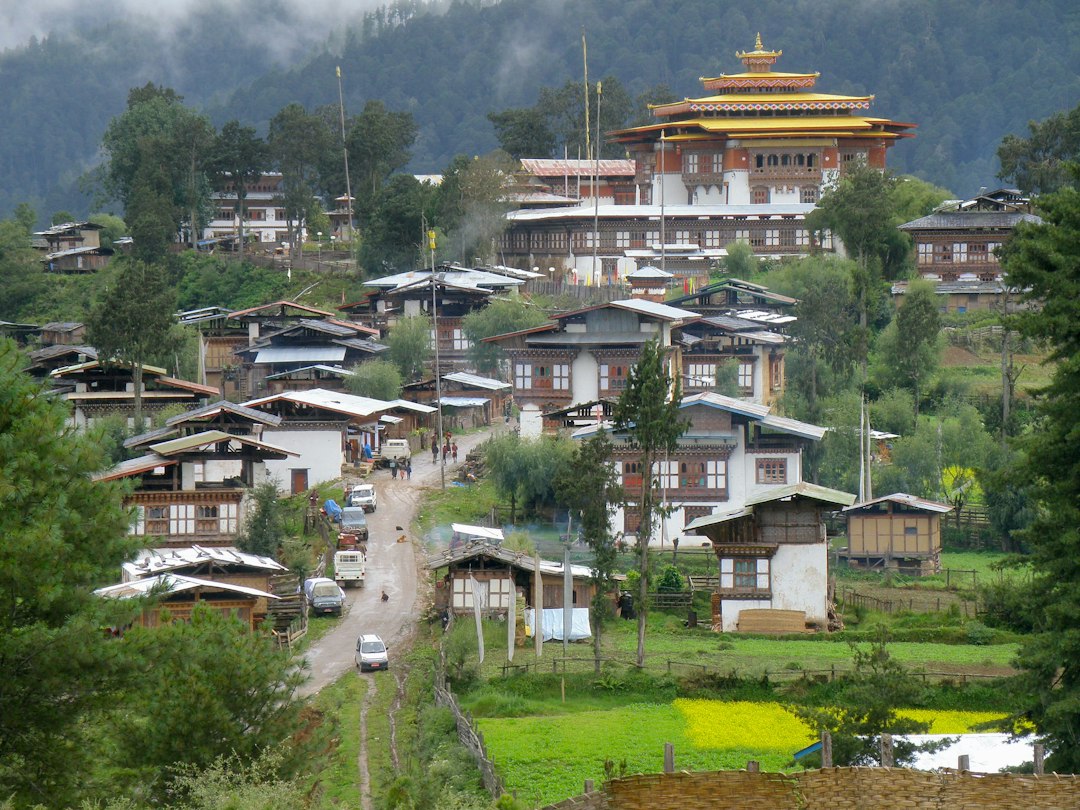
The best way to cross the valley is to walk the Nature Trail of about 6 km that starts from the Gangtey Goemba — the monastery that overlooks the plain from the top of a wooded hill — and winds through traditional villages, fields, and wetlands down to the valley floor. The path is flat for most of the route and takes about two hours at a leisurely pace.
Along the trail, you will encounter Bhutanese houses built with traditional techniques using wood and white plaster, featuring typical painted windows and sloping roofs made of metal or wood. Some farmers still leave rice sheaves at the edges of the fields, and it is not uncommon to see cranes feeding just a few meters away. By walking carefully and quietly, it is possible to get close enough to observe the characteristic red ring around the eye and the black neck that gives the species its name.
Biodiversity Beyond the Cranes
The valley is not just a sanctuary for large migratory birds. The wooded slopes host mixed forests of Himalayan spruce and rhododendron, which turn red and pink in spring. Among the resident fauna, the musk deer, wild boar, and various species of raptors, including the peregrine falcon, are notable. In the wetlands, it is possible to spot diving ducks and waders during the transitional months.
The valley's peat bogs are a rare and fragile habitat, and for this reason, Bhutan has included Phobjikha among the protected areas within the ecological corridor system that connects the country's national parks. Walking on the wooden walkways set up in some sections of the trail helps to avoid damaging the underlying marsh vegetation, a detail that speaks volumes about the country's conservationist approach.
Practical information for visiting the valley
The Phobjikha Valley can be reached from Punakha or Trongsa by traveling on mountain roads that take about 3-4 hours by car. There is no regular public transport, so it is necessary to arrange a vehicle with a local guide, as required by Bhutanese tourism regulations. The best time to visit the valley with the cranes is between November and February, when the presence of the birds is more numerous and the sky tends to be clear.
Those who want to attend the Crane Festival should plan their visit in advance, usually in November, checking the exact dates on the Bhutan Department of Tourism website, as they change every year. Early in the morning — by 7:30 AM — is the ideal time to observe the cranes active in the fields, before the high sun drives them to more sheltered areas. Bringing binoculars and warm clothing is essential: even in October, nighttime temperatures drop below zero.


