



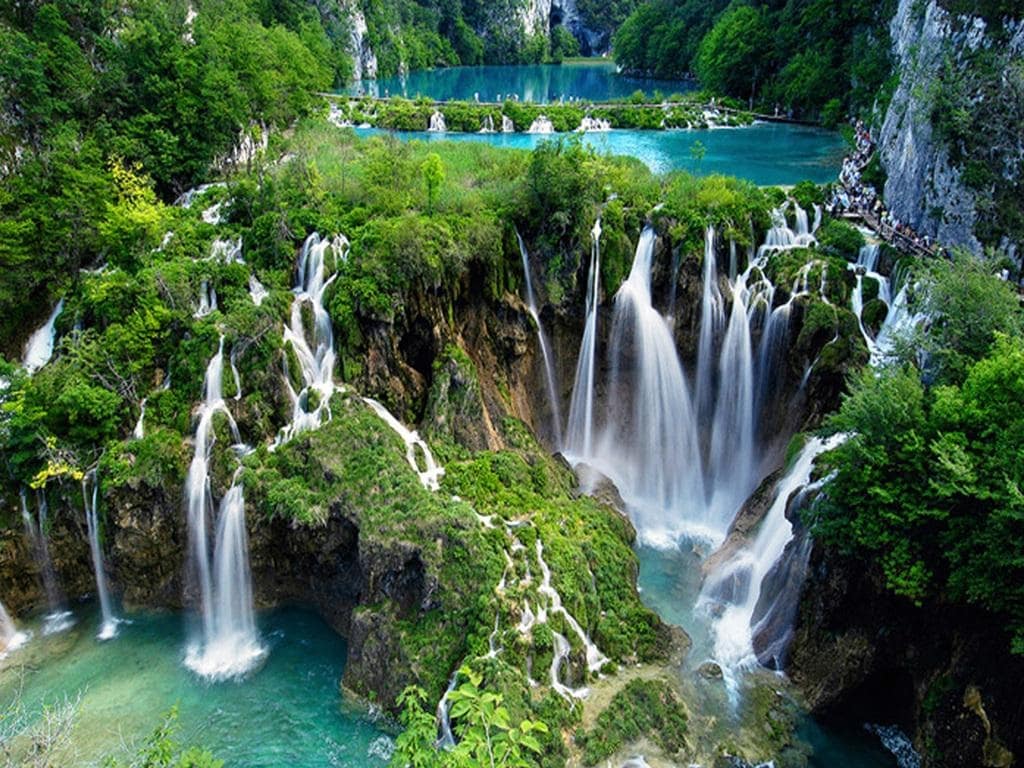
Plitvice Gölleri, or Plitvice Lakes, is a mesmerizing natural wonder nestled in the heart of Croatia, offering an ethereal landscape that seems straight out of a fairy tale. This UNESCO World Heritage site is renowned for its cascading lakes and lush forest surroundings, a testament to the power of nature's artistry over millennia.

The history of Plitvice Lakes is as rich as its landscapes. The area has been inhabited since ancient times, with evidence of human activity dating back to the prehistoric era. The lakes themselves were formed by the confluence of several small rivers and subterranean karst rivers, evolving over thousands of years through the natural processes of travertine deposition. This process continues to this day, constantly reshaping the landscape. The name "Plitvice" is believed to have originated from the Croatian word "pličina," meaning shallow basin, a fitting description of the cascading pools.
Architecturally, Plitvice is less about man-made structures and more about the stunning natural formations. The wooden walkways that meander over the crystalline waters are designed to blend seamlessly with the environment, allowing visitors to experience the lakes' beauty up close without disturbing the delicate ecosystem. While there are no grand buildings or cathedrals here, the true artistry is found in the vibrant hues of the lakes, which change from azure to green, gray, or blue depending on the minerals in the water and the angle of sunlight.

The local culture around Plitvice is deeply connected to the natural world. Traditions here are rooted in the rhythms of nature, with many local festivals celebrating the environment. One such event is the annual Plitvice Marathon, which draws runners from around the world each May to traverse this stunning landscape. The nearby village of Rastovača hosts local gatherings and celebrations, where traditional Croatian music and dance can be enjoyed, offering a glimpse into the region's rich cultural tapestry.
Gastronomy in the Plitvice area is a reflection of Croatia's diverse culinary landscape, with influences from both Central Europe and the Mediterranean. Visitors can indulge in hearty dishes such as peka—meat and vegetables slow-cooked under a bell-like dome—or savor the flavors of štrukli, a pastry filled with cheese and cream. Local wines from the nearby Slunj region complement these meals beautifully, offering a taste of the region's rich terroir.
For those seeking lesser-known curiosities, the Plitvice Lakes hold many secrets. One fascinating aspect is the presence of the endemic species Dinaric karst snails, which are unique to this region. Additionally, the park was a significant filming location for the 1960s Winnetou films, based on the novels by Karl May, which have a cult following in Germany. Many visitors are unaware of the lakes' cinematic history, which adds an intriguing layer to their visit.
When planning a visit to Plitvice Lakes National Park, timing is crucial. Each season offers a unique perspective: spring and summer bring vibrant greens and lively wildlife, autumn paints the landscape in rich hues of red and gold, while winter transforms the scene into a serene snowy wonderland. To avoid the crowds and truly immerse yourself in the tranquility of the lakes, consider visiting in the shoulder seasons of late spring or early fall. Arriving early in the morning or late in the afternoon can also provide a more intimate experience.
Navigating the park requires some preparation: wear comfortable shoes for walking and bring a camera to capture the stunning vistas. Be mindful of the park's rules to preserve its pristine condition for future generations. As our world becomes increasingly fast-paced, places like Plitvice Gölleri offer a rare chance to reconnect with nature, reflect on history, and soak in the serene beauty that only time and the elements can create.
