



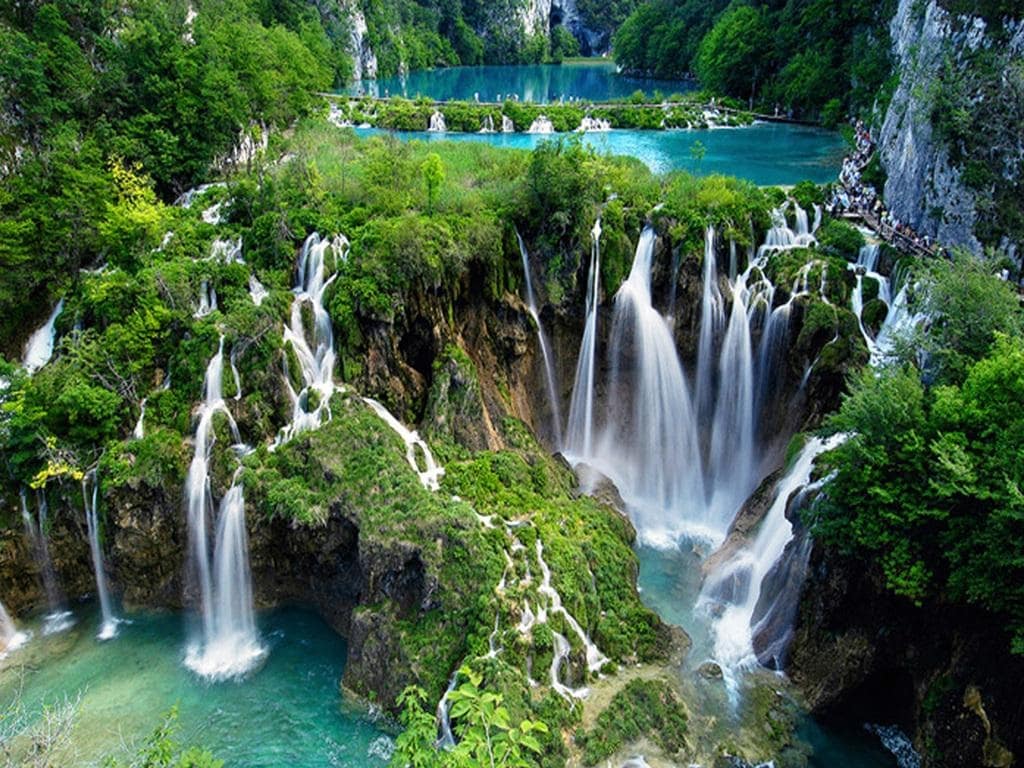
The Plitvice Lakes National Park in Croatia is a mesmerizing natural wonder, attracting nature lovers and wanderers with its cascading lakes and lush landscapes. Nestled in the heart of the Dinaric Alps, this enchanting park is not only a UNESCO World Heritage site but a living testament to the power of nature's artistry.

The origins of Plitvice Lakes date back thousands of years. Formed by the confluence of several small rivers and subterranean karst rivers, the lakes are renowned for their distinctive travertine barriers, which have been forming for over 10,000 years. The name "Plitvice" is said to have been first mentioned in historical texts in 1777 by a priest named Dominik Vukasović, although its natural beauty has likely been admired for far longer. The national park was officially founded in 1949, making it Croatia's oldest national park.
Though the focus is naturally on the stunning landscape, the area around Plitvice Lakes also boasts a rich tapestry of cultural influences. The architecture in nearby villages like Rastovača is characterized by traditional wooden houses that reflect the harmonious blend of local craftsmanship and natural materials. These structures often feature steep roofs designed to handle heavy snowfalls, a testament to the area's adaptation to its environment.

While the lakes themselves are the primary draw, the region's artistic significance is subtly present in the form of local crafts and folklore. The nearby town of Slunj hosts ethnographic exhibits that showcase the traditional arts and crafts of the area, including intricate lace-making and woodcarving. These crafts are not just artistic endeavors but part of the cultural identity that has been passed down through generations.
Local customs and traditions in the Plitvice area are deeply rooted in nature and seasons. The Plitvice Lakes Marathon, held annually, draws runners from all over the world to experience the park's trails in a unique way. Another cultural highlight is the celebration of St. Anthony's Day in nearby villages, where locals gather for folk music, dancing, and traditional feasts. These events offer a glimpse into the communal spirit and hospitality of the local people.
Gastronomy in the region is a delightful exploration of flavors that are both rustic and refined. Visitors can savor dishes like lamb peka, a slow-cooked meat and vegetable dish prepared under a bell-like dome, or štrukli, a baked pastry filled with cheese. The area is also known for its homemade rakija, a potent fruit brandy that is often offered as a welcoming gesture. Sampling these local specialties provides an authentic taste of the region's culinary heritage.
For those seeking lesser-known curiosities, the park holds many secrets. The mysterious Veliki Slap, or "Big Waterfall," is the tallest in the park and offers a breathtaking sight. However, many visitors are unaware of the park's fascinating role during the Croatian War of Independence. The park was the site of the first armed confrontation of the conflict, known as the "Plitvice Lakes incident," on Easter Sunday in 1991. Today, visitors can reflect on this history while enjoying the peaceful surroundings.
When planning a visit, timing is crucial. The best time to visit Plitvice Lakes is during the shoulder seasons of spring and fall when the crowds are thinner, and the natural colors are at their most vibrant. Summer, while beautiful, can be crowded, and winter transforms the park into a snowy wonderland, perfect for those seeking a quieter experience. Practical tips include wearing comfortable walking shoes, as the park's wooden pathways can be slippery, and bringing a raincoat, as the weather can be unpredictable.
To truly appreciate Plitvice Lakes, take the time to explore beyond the well-trodden paths. Engage with the local culture, indulge in the regional cuisine, and allow yourself to be enveloped by the serene beauty of this natural masterpiece. Whether you're a first-time visitor or a seasoned traveler, the enchanting allure of Plitvice Lakes will leave an indelible mark on your soul.
