
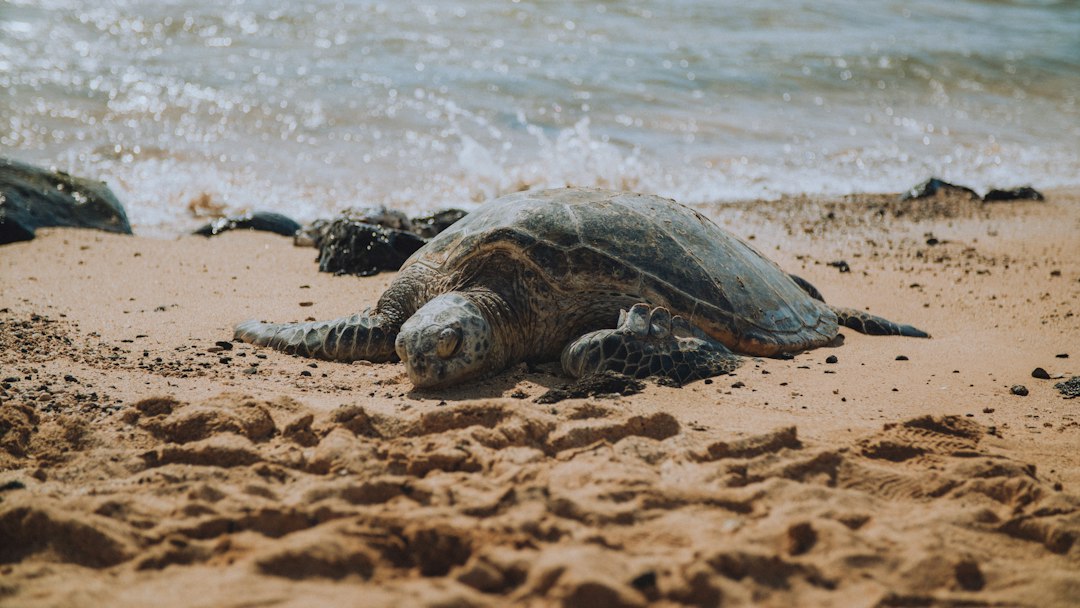

A Hawaiian monk seal sleeps on the golden sand, indifferent to the children splashing just a few meters away in the natural pool created by the coral reef. This is the ordinary scene at Poipu Beach, on the southern coast of Kauai, the oldest island in the Hawaiian archipelago. It is not a spectacle organized for tourists: Hawaiian monk seals (Neomonachus schauinslandi) choose this beach as a spontaneous resting point, and their presence is protected by U.S. federal law.
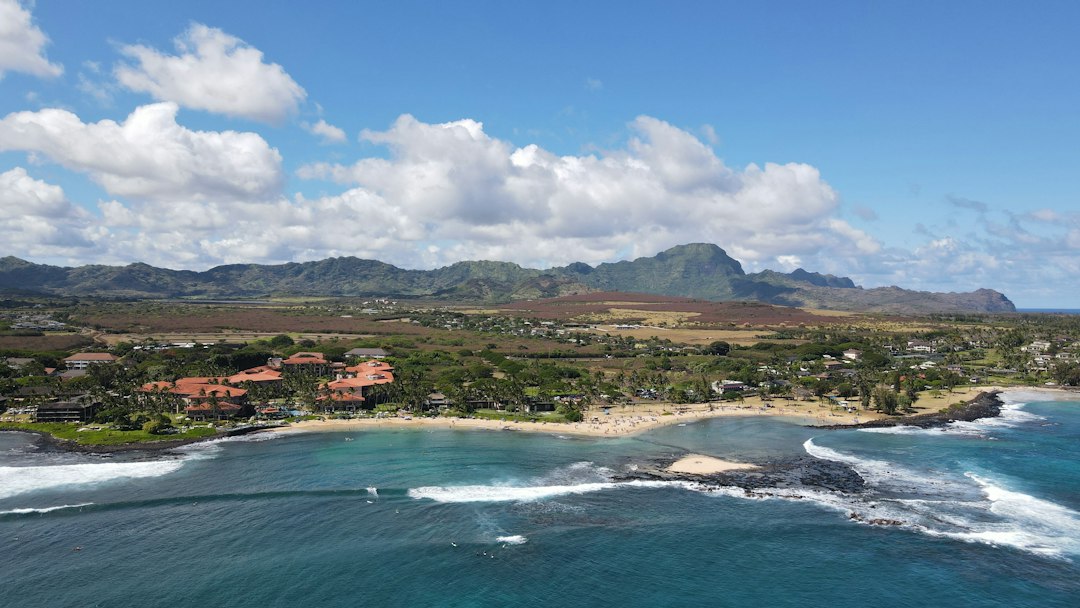
Poipu Beach is located in the Koloa district, in the south of Kauai, and owes its characteristic shape to a double bay separated by a small sand isthmus. The southern coast of the island enjoys a significantly drier climate compared to the rest of Kauai, making it one of the sunniest areas of an island famous for its rain. The water here takes on shades that range from light turquoise in the reef-protected area to a deep, intense blue offshore, where the waves form continuously.
The dual soul of the beach
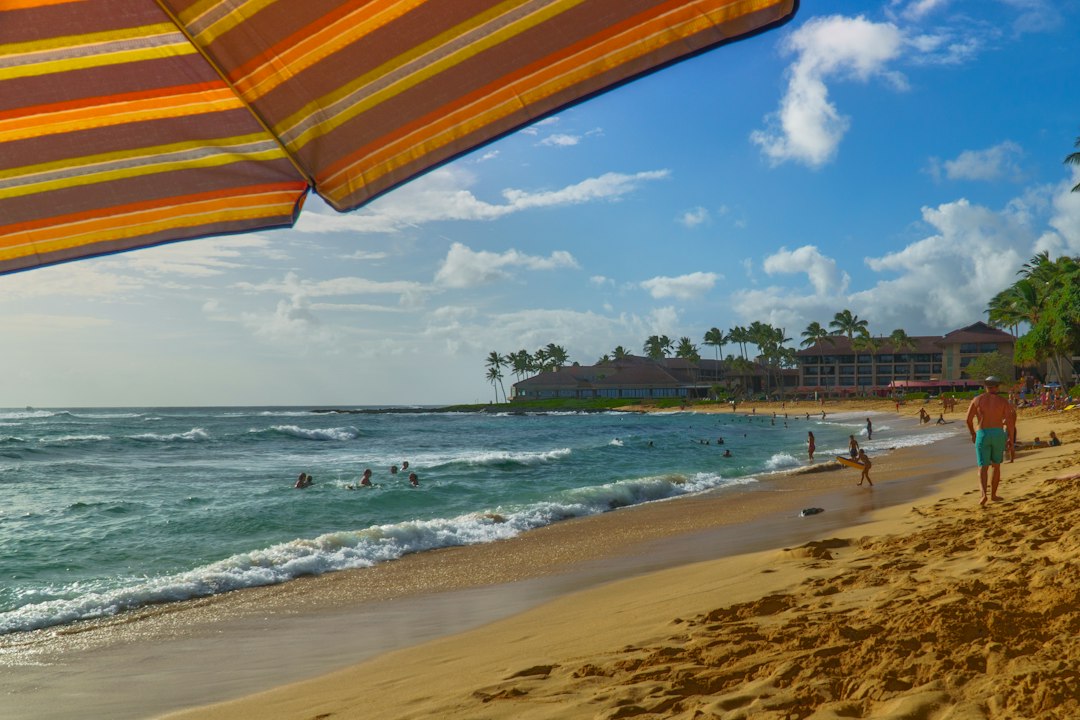
What makes Poipu Beach unique is its natural division into two completely different environments. On the western side of the bay, the coral reef creates a calm and shallow water area, ideal for children and for those who want to snorkel without risks. The water in this area is crystal clear, with emerald-green reflections, and the visibility allows you to observe colorful tropical fish even without professional equipment.
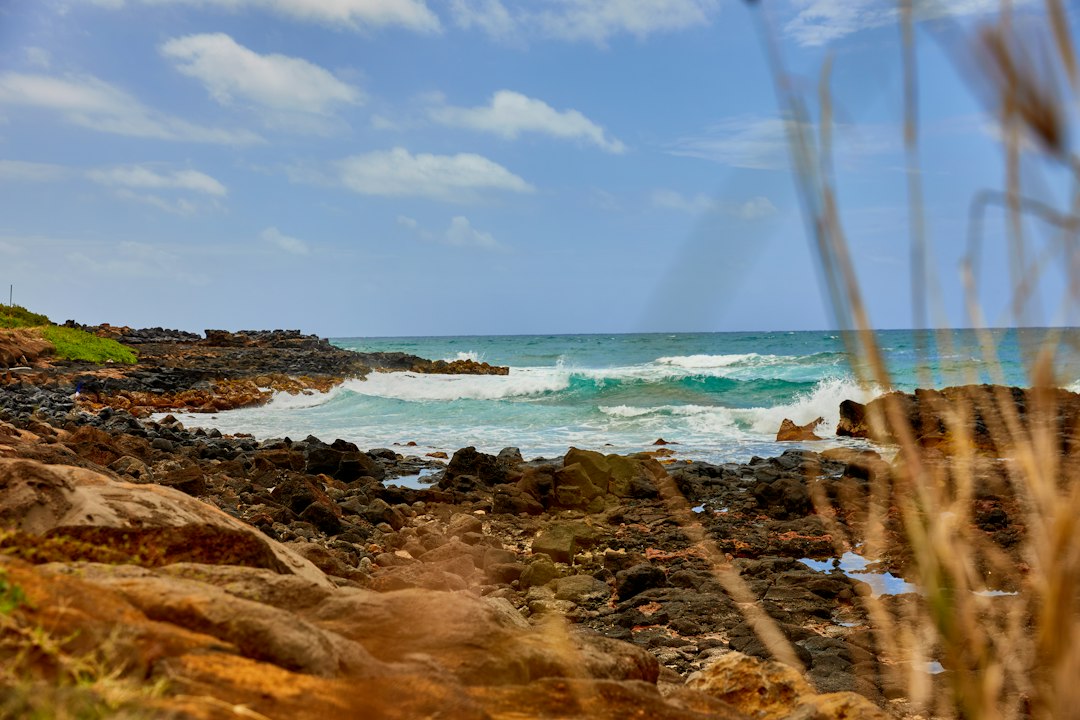
On the eastern side, however, the waves break regularly on a reef that attracts surfers of all levels. These are not monumental waves, but an accessible surf spot that works with any tide. The sand is fine and light golden in color, compact near the water and softer inland where the areas equipped with showers and facilities are located. The visual contrast between the two halves of the beach, clearly observable from the central isthmus, is one of the most photogenic elements of the place.
The Hawaiian monk seals
The presence of monk seals is the detail that distinguishes Poipu from any other beach in Hawaii. The Hawaiian monk seal is one of the most at-risk marine species in the United States: the total population is estimated to be around 1,400 individuals, and spotting one on the beach is a real but not everyday event. When it happens, volunteers from the marine wildlife protection program place yellow cordons around the animal to ensure it has enough space.
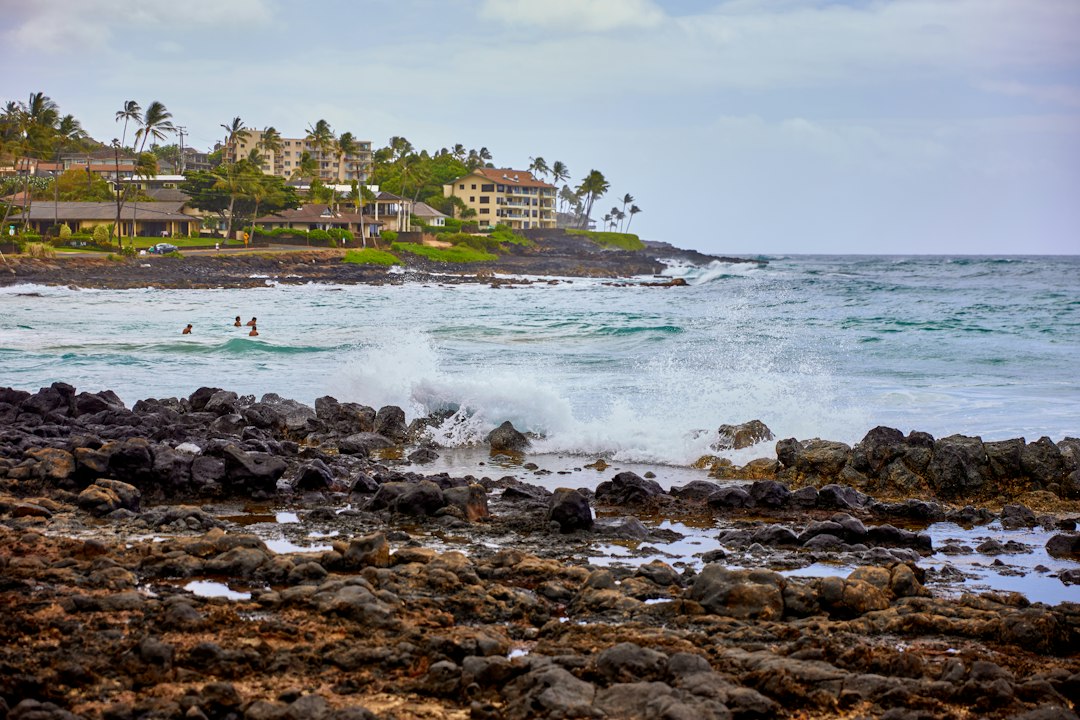
It is illegal to approach within 50 feet (about 15 meters) of a Hawaiian monk seal: violations carry significant federal penalties. Tourists tend to respect these distances, and the atmosphere that forms around the sleeping animal is curiously relaxed, almost reverential. Seals primarily use the beach in the morning hours to warm up in the sun after nighttime dives.
How to visit Poipu Beach in the best way
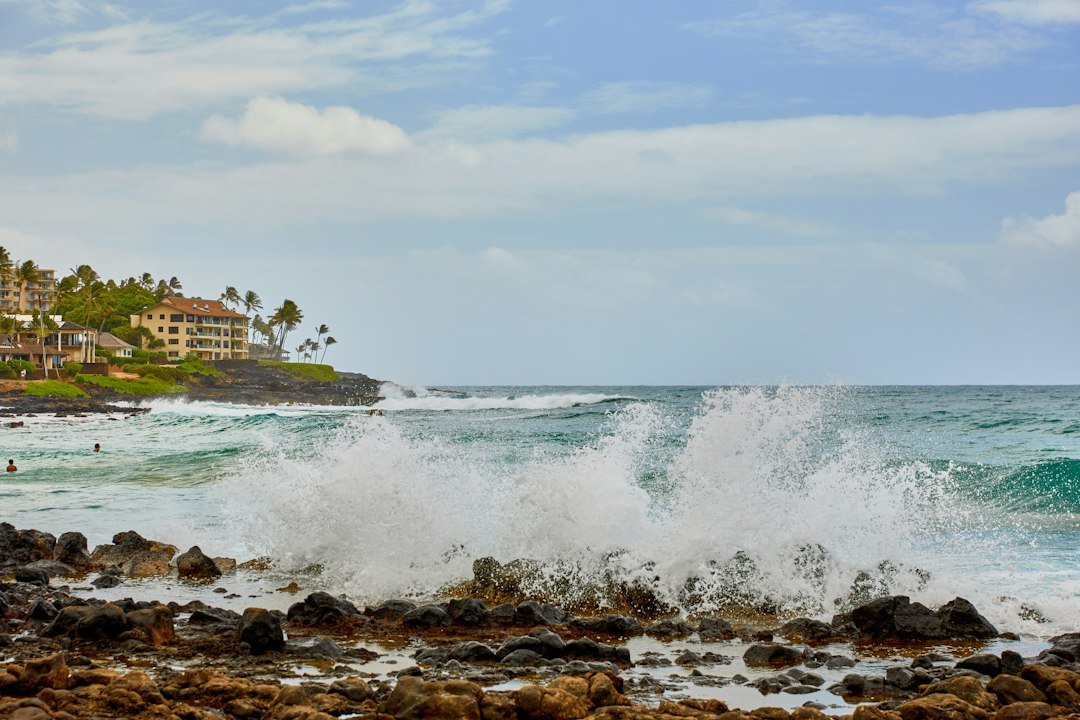
The best time to arrive is early in the morning, preferably by 8:00 AM. At this time, the beach is still quiet, the light is side-lit and enhances the colors of the water, and the chances of spotting a monk seal are higher. Throughout the morning, the parking lots fill up quickly, especially during the American summer months from June to August, when Kauai sees its peak visitors.
The public parking adjacent to the beach is free but limited. Those arriving after 10:00 AM on peak days risk finding it full and having to park on the surrounding streets. The beach is easily accessible by car from downtown Poipu, and several hotels in the area are just a few minutes' walk away. For snorkeling, it is advisable to bring your own equipment, although it is available for rent nearby. The water in the protected area is accessible year-round, but the best visibility is recorded on mornings with light winds, when the surface is flatter.
The atmosphere and colors of Poipu
What strikes you about Poipu Beach is not the grandeur of the landscape, but its human scale. It is not an endless beach nor an isolated place: it is a spot where families with children, surfers, snorkelers, and wild seals coexist in an equilibrium that seems improbable but works. The vegetation lining the beach is mainly composed of naupaka trees, a coastal plant typical of Hawaii with crescent-shaped white flowers.
The sunset viewed from Poipu, with the light changing the color of the water from green to gold to orange, is one of the most accessible spectacles of Kauai. The southern coast is oriented to offer sunsets over the open ocean, with no obstructions on the horizon. Even at this time, however, it is good to remember that any seals present on the beach should be respected at their distance: the island belongs to them as well.


