
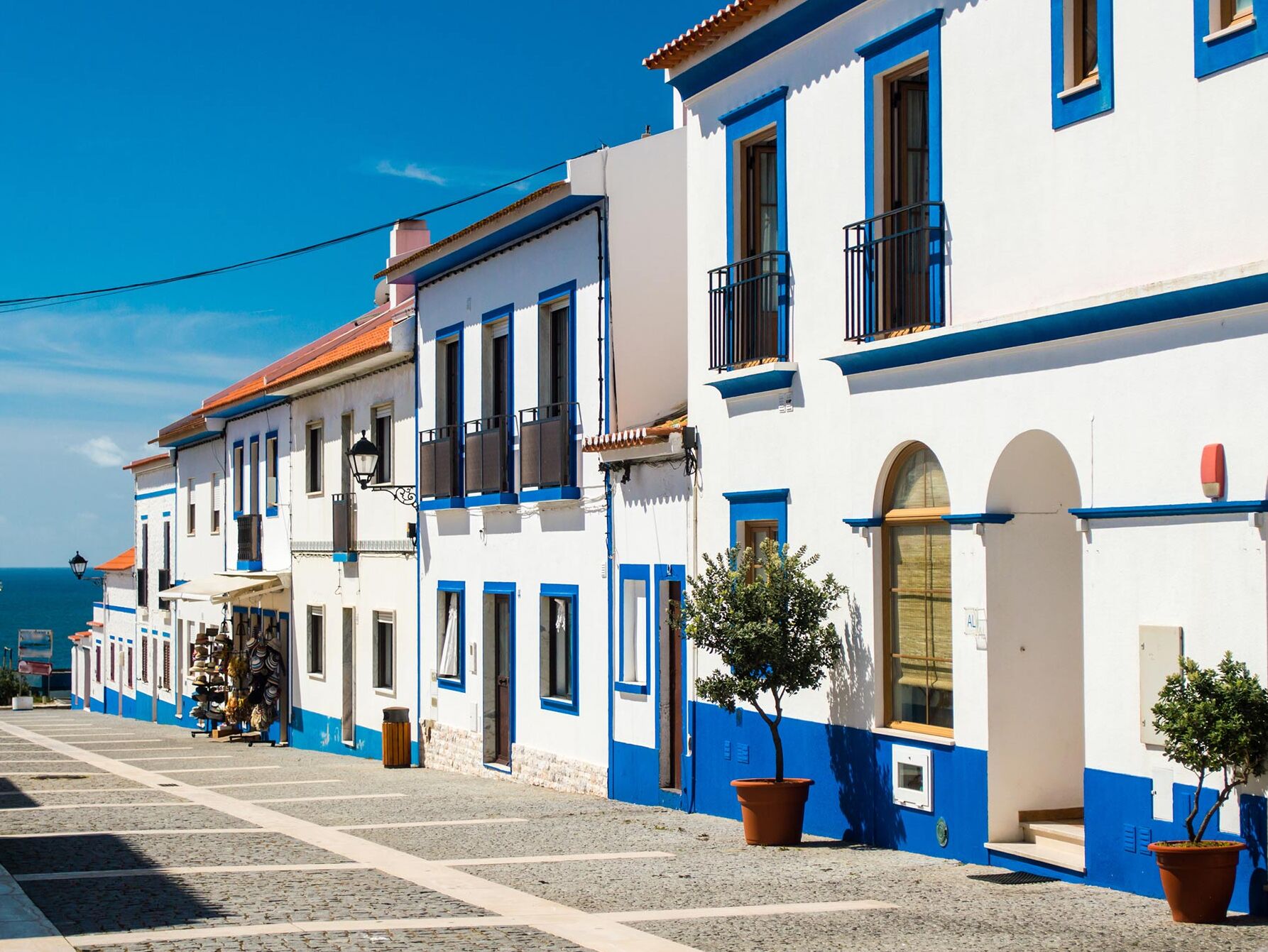

In the heart of Portugal, nestled along the stunning Alentejo coastline, lies the enchanting fishing village of Porto Côvo. This picturesque locale, with its low, whitewashed houses, embodies the charm of a bygone era. Originally rebuilt by the Marquis of Pombal in the wake of the devastating 1755 earthquake, Porto Côvo offers a serene retreat where time seems to stand still.
History and Origins
The history of Porto Côvo is steeped in maritime tradition, its origins dating back to the ancient Carthaginians who occupied the region around the 3rd century B.C.. The village served as a strategic point for fishing and trade, with archaeological evidence revealing remnants of Roman salt-fish containers that hint at the area’s bustling past. For centuries, the rugged coastline provided refuge to pirates, who took advantage of the natural coves, leaving behind tales that still echo in local folklore.
The construction of the 17th-century fortress on the nearby Island of Pessegueiro was pivotal in defending this stretch of coastline. This fortification, along with a twin fortress in Porto Côvo, played a crucial role in safeguarding the village from maritime threats. Today, the ruins of these structures stand as silent witnesses to the village's storied past, inviting visitors to explore their crumbling walls and imagine the lives once lived there.
Art and Architecture
Architecturally, Porto Côvo is a delightful tapestry of whitewashed buildings adorned with vibrant blue and yellow accents, a hallmark of traditional Alentejo style. The simplicity of the village’s architecture complements its natural beauty, creating a harmonious blend with the surrounding landscape. Artistic significance can be found in local craftsmanship, particularly in the decorative azulejos (ceramic tiles) that adorn some of the houses, showcasing intricate designs that reflect the region's rich cultural heritage.
Moreover, the village's artistic flair extends to the nearby beaches, where the interplay of light on the azure waters has inspired countless artists and photographers. The stunning cliffs and hidden coves create a breathtaking backdrop for creativity, making it a favored spot for local painters to capture the essence of coastal life.
Local Culture and Traditions
Life in Porto Côvo is characterized by a deep connection to the sea, which is celebrated through various local customs and festivals. One of the most notable events is the Festa de Nossa Senhora da Graça, held in September, where locals gather to honor their patron saint with processions, music, and traditional dances. This festival is a vibrant showcase of communal spirit, where visitors can immerse themselves in the rhythms of local life.
The village’s fishing heritage remains strong, with many families continuing the age-old practice of fishing using techniques passed down through generations. Visitors can witness fishermen at work, pulling in their nets, and perhaps even join in the age-old tradition of fishing, fostering a deeper appreciation for the local way of life.
Gastronomy
No visit to Porto Côvo would be complete without indulging in its gastronomic delights. The village is renowned for its seafood, particularly fresh sardines, which are often grilled to perfection and served with a drizzle of olive oil. Local specialties such as caldeirada (a traditional fish stew) and arroz de marisco (seafood rice) reflect the region's bountiful marine resources.
Pair your meal with a glass of Vinho Verde, a light and refreshing wine that complements the coastal cuisine perfectly. For dessert, don’t miss out on trying the pão de ló, a fluffy sponge cake that has become a beloved treat among locals and visitors alike.
Lesser-known Curiosities
Despite its beauty, Porto Côvo remains somewhat off the beaten path, allowing for unique discoveries. Just 250 meters off the shore lies the abandoned Island of Pessegueiro, a hauntingly beautiful site that boasts not only stunning views but also a wealth of history. The island is rumored to have been a pirate hideout, and some visitors claim to have spotted remnants of treasure hidden among its rocky shores.
Interestingly, Porto Côvo is also known for its unique geological formations, including dramatic cliffs and secluded beaches that are often overlooked by tourists. Praia dos Buizinhos and Praia da Samouqueira are two hidden gems where soft sands and turquoise waters create a perfect escape for those seeking tranquility.
Practical Visitor Information
The best time to visit Porto Côvo is during the summer months, from June to September, when the weather is warm and inviting. However, for those seeking a quieter experience, late spring or early autumn offers pleasant temperatures with fewer crowds.
When exploring the village, take the time to wander along its charming streets, savoring the local flavors and soaking in the serene atmosphere. Don’t forget to bring your camera; the dramatic coastline and stunning sunsets provide endless opportunities for breathtaking photographs.
For a truly personalized experience, consider using the Secret World app to help you plan your itinerary and uncover the hidden treasures of Porto Côvo.


