
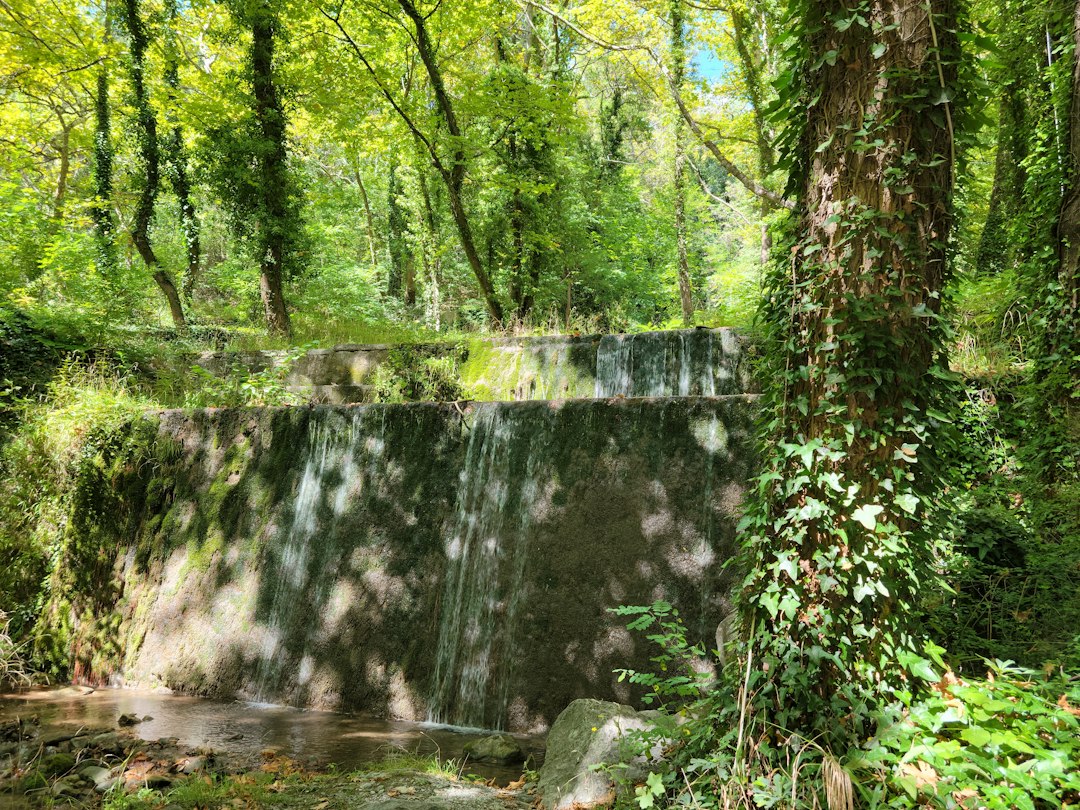

The water arrives warm on the body, almost surprising, while the sound of the waterfall drowns out every other noise. At the Pozar hot springs, in central Greek Macedonia, the thermal springs do not flow into concrete basins or equipped structures: they plunge directly down the rocky walls of a wooded gorge, creating natural waterfalls under which one can stand, letting the mineral water fall on the shoulders with all its weight. It is a physical, noisy, enveloping experience.
The hot springs are located near the village of Loutraki Almopias, in the Pella prefecture, about 130 kilometers from Thessaloniki. The area has been known for centuries for its thermal springs, already frequented during the Ottoman era, and today hosts both organized bathing facilities and natural areas where the water flows freely among the boulders covered in intense green moss. The temperature of the thermal water hovers around 37-38 degrees Celsius, warm enough to create a visible mist in the cold air of the winter months.
The sound and the force of the falling water
Approaching the natural waterfalls of Pozar is first and foremost a sonic experience. The roar of the water cascading over the rocks fills the gorge completely, making any conversation in a normal voice unnecessary. The fine mist that rises from the point of impact spreads in the humid air of the forest, lightly wetting the face even before entering the water. The pines and plane trees that grow along the walls of the gorge filter the light, creating a visual effect of green and gold twilight depending on the time of day.
Those who position themselves directly under the main flow feel considerable pressure on their shoulders and back: it is not a decorative waterfall, but a true thermal watercourse with a flow that varies according to the season. The rocks over which the water flows are covered with green-yellow algae and moss, and the contrast with the white of the steam and the dark brown of the limestone creates a chromatic landscape that continuously changes with the movement of the water.
The organized structures and the free areas
Pozar offers two distinct experiences, and it is worth knowing both before arriving. The organized part includes covered and outdoor thermal pools managed by local accommodation facilities, with paid access typically ranging from 5 to 10 euros per person depending on the season and the type of pool. These pools are more suitable for those seeking controlled relaxation and comfort.
The most interesting part for those who want to experience the waterfalls in their rawest form is found by climbing up the gorge, where the path runs alongside the thermal stream and leads to the natural waterfalls accessible without a ticket. Here there are no changing rooms or services: you need to arrive already prepared. The rocks can be slippery, so footwear with adequate grip is essential to reach the best spots. It is advisable to bring rock sandals or water shoes to wear directly in the water.
When to go and how to get there
The most spectacular time to visit the thermal waterfalls of Pozar is late autumn or winter, when the air temperature is low and the contrast with the warm water produces large amounts of visible steam. In summer, the waterfalls are more crowded and the misty effect is less pronounced, although the water flow can be greater after spring rains. The early hours of the morning, between 8 and 10, guarantee less crowd and better light for photographing the steam rising among the trees.
From Thessaloniki, the area can be reached in about an hour and a half by car, taking the road to Edessa and then following the signs to Loutraki Almopias. There is no direct bus connection from the city, so a car is practically necessary. Parking in the area is available near the entrance to the organized facilities. A complete visit that includes both the pools and the path along the gorge to the natural waterfalls takes on average two to three hours.
What to Observe Carefully
As you approach the rocky walls of the gorge, you can notice the ochre and orange mineral deposits left by iron and sulfur-rich water over the decades. These natural formations accumulate along the preferred flow paths and create vertical streaks on the dark rocks, like a geological map visible to the naked eye. The slightly sulfurous smell of the water is present but not overwhelming, and tends to dissipate after a few minutes of immersion.
The bottom of the thermal stream is composed of gravel and small stones smoothed by the water, with areas of fine light gray sand where the water slows down. In some spots, by gently pressing your foot on the sandy bottom, you can feel the warmth rising from below: a direct reminder of what fuels this entire system, namely the geothermal activity that has been coursing through the subsoil of Greek Macedonia for millennia.


