
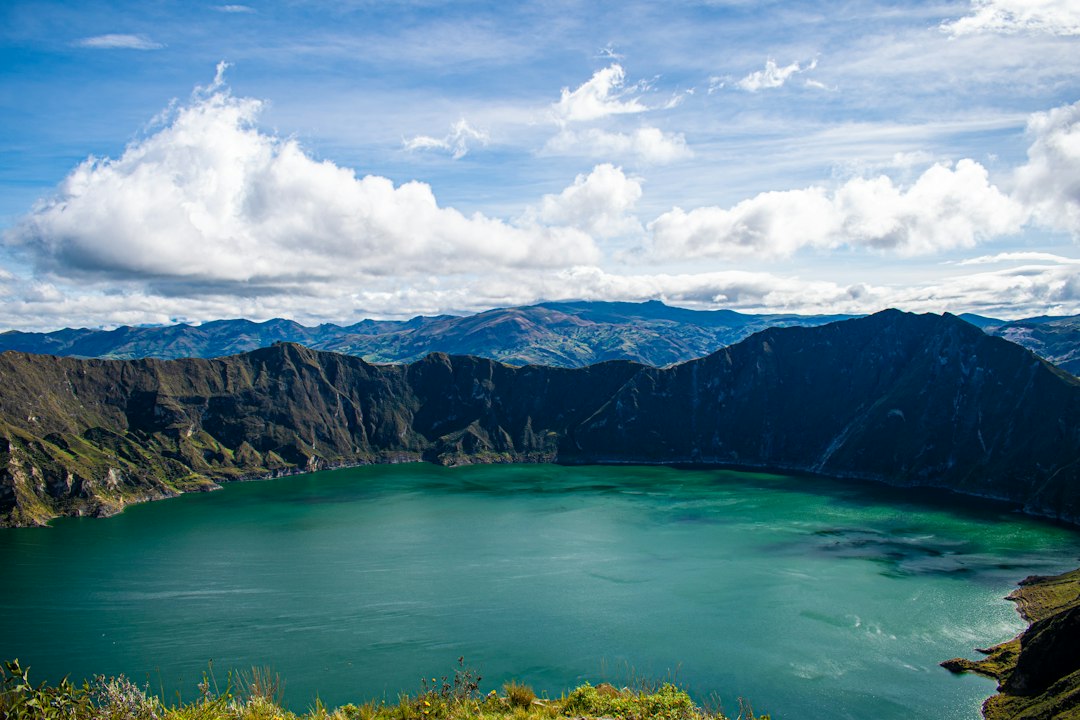

The red mud sticks to the boots after just a few kilometers, and the wind of the Andes cuts through the air at over 3,900 meters above sea level. This is how the Quilotoa Loop begins, one of the most famous hiking trails in Ecuador, a ring of paths that crosses the Kichwa indigenous communities of the Cotopaxi province to culminate in front of one of the most spectacular volcanic lagoons on the South American continent.

The Quilotoa Lagoon is the heart of this itinerary: a mirror of emerald green water that fills the caldera of an extinct volcano, located at 3,914 meters above sea level near Latacunga. The lake has a diameter of about 3 kilometers and an estimated depth of around 250 meters. The last significant eruption occurred about 800 years ago, and since then the waters have accumulated in the crater, taking on that aquamarine hue that changes color with the light of day.
The route: from Sigchos to Quilotoa

The classic Quilotoa Loop is usually completed in three or four days, starting from the town of Sigchos and proceeding south through Isinliví and Chugchilán, finally arriving at the village of Quilotoa. Many hikers choose to travel the route in reverse, from Quilotoa to Sigchos, to tackle the more challenging elevations in the cool early hours of the morning. Daily distances vary between 12 and 18 kilometers, with steep ascents and descents on dirt paths that cross deep canyons called quebradas.
Along the way, you will encounter farmers bringing products to market on muleback, flocks of sheep led by children in colorful ponchos, and fields of corn and potatoes that rise in terraces to unimaginable heights. The landscape is barren and vast, devoid of trees in the higher areas, with the profile of the Cotopaxi volcano standing out on clear days on the northeast horizon.

The villages: Isinliví and Chugchilán
The village of Isinliví is an essential stop for those who want to understand how the local Kichwa community lives. Here you will find the Llullu Llama Hostal, one of the most appreciated accommodations along the route, managed by a local family that offers hot meals and dormitory beds at prices around 15-25 dollars per night with breakfast included. The walls are decorated with traditional fabrics and the fire in the kitchen burns all day long.

Chugchilán is the largest center along the loop, with a weekly market held on Sundays. It is the right place to buy handmade alpaca wool crafts, such as gloves, hats, and blankets, directly from the women who produce them. Here you can also find some family-run guesthouses where you can sleep and eat for similar prices to those in Isinliví.
The arrival at the lagoon: the crater seen up close

The entrance to the edge of the Quilotoa crater requires the payment of a access ticket of about 2 dollars. From the edge, the descent to the lake shore takes about 30-40 minutes on foot along a steep and sandy path. The ascent, on the other hand, can take up to an hour and a half and is challenging even for those who are fit, due to the altitude. Alternatively, it is possible to rent a mule for the ascent by paying directly to the locals who are stationed at the shore.
The surface of the lake changes color throughout the day: oil green in the early morning, intense turquoise in the central hours, almost gray under the afternoon clouds. On the shore, there are some wooden canoes that the locals rent for short excursions on the water. The village of Quilotoa, with its souvenir shops and guesthouses along the main road, is the natural endpoint of the trek.
Practical tips for the Quilotoa Loop
The best time to hike the loop is between June and September, months when rainfall is less frequent and the trails remain passable. From October to April, mud can make some sections slippery and difficult. To reach Sigchos or Quilotoa from Latacunga, there are local buses that depart from the city's bus terminal: the journey takes between 2 and 3 hours depending on the destination and costs a few dollars.
It is essential to bring layered clothing: temperatures during the day can be pleasant, but drop quickly after sunset even in summer. Trekking poles and waterproof shoes with a sturdy sole make a difference on downhill sections. Altitude can cause mountain sickness in the first few days: it is advisable to spend at least one night in Latacunga, at about 2,750 meters, before starting the trek.


