
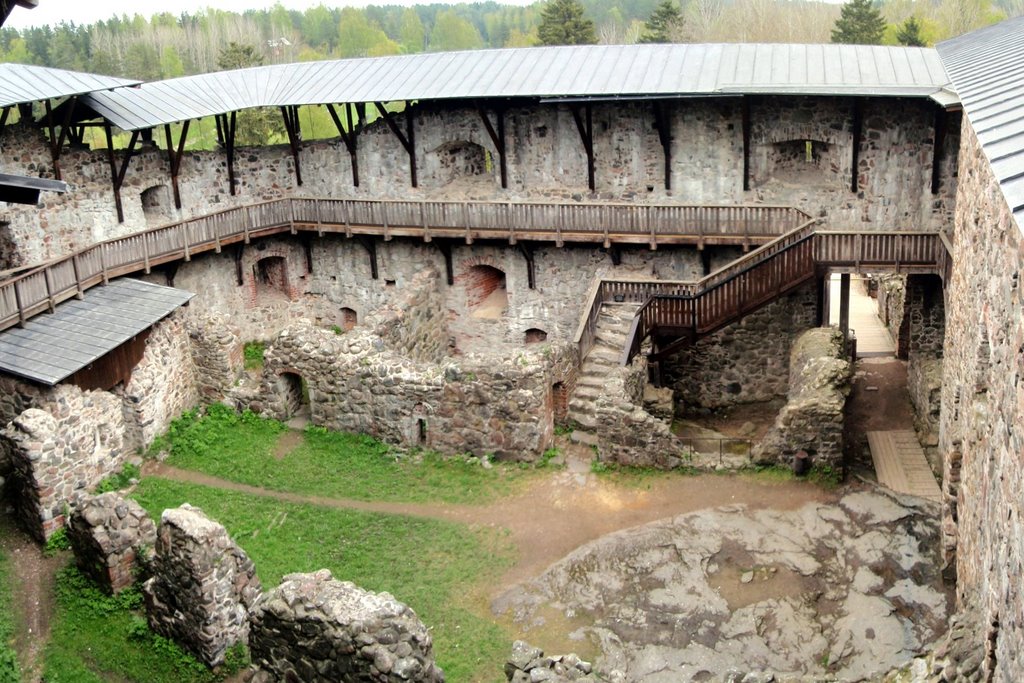

Nestled on a rocky outcrop, Raseborg Castle in Snappertuna, Finland, stands as a testament to the region's tumultuous history and rich cultural tapestry. Established in the 1370s, this medieval fortress was strategically built as the administrative center of Western Uusimaa, designed to oversee the vital shipping routes and trade within the Gulf of Finland. Its origins are steeped in the need for defense against the flourishing Hanseatic League, particularly the town of Reval, now known as Tallinn, Estonia.
The castle reached its zenith during the years 1450-1460, a period when it played a crucial role in regional politics and military strategy. However, by 1558, Raseborg fell into decline as Helsinki and Ekenäs were granted town charters, leading to its abandonment for over three centuries. It wasn't until the 1880s that restoration efforts began, aimed at reclaiming its historical significance. Today, the castle is managed by Metsähallitus, ensuring its preservation for future generations.
Architecturally, Raseborg Castle is a fascinating example of medieval military design. Built from local granite, its robust walls and towering structures reflect the Gothic style prevalent in the late Middle Ages. Visitors can marvel at the remnants of the castle's towers, walls, and the impressive moat that once surrounded it, although the landscape has changed significantly since its establishment. The ruins tell a story of resilience and adaptation, embodying both the artistry and functionality of medieval architecture.
In addition to its historical and architectural significance, Raseborg is deeply embedded in local culture and traditions. The annual Raseborg Medieval Festival, held in July, transforms the castle grounds into a lively celebration of the past. Visitors can immerse themselves in the sights and sounds of medieval life, complete with crafts, jousting, and traditional music. This festival not only honors the castle's legacy but also fosters a sense of community among locals and tourists alike.
Gastronomy in Snappertuna reflects the region’s rich agricultural landscape. Traditional dishes like kalakukko, a fish pie made with rye crust and filled with fish, and poronkäristys, sautéed reindeer, offer a taste of the local flavors. Pair these dishes with a refreshing salmiakki, a Finnish salty licorice, or indulge in local berry desserts, celebrating the region's bountiful nature.
For those intrigued by lesser-known curiosities, the castle is rumored to be haunted. Ghost stories abound, with tales of soldiers and noble figures said to roam the ruins, adding an eerie charm to the historical site. Additionally, the castle's strategic location was not just for defense; it also served as a social hub for the surrounding communities, making it a melting pot of cultures and ideas.
Visiting Raseborg Castle is best during the summer months, specifically from June to August, when the weather is pleasant and the castle grounds are alive with activity. Take the time to explore the castle's extensive ruins, and don’t miss the breathtaking views of the surrounding landscape. A guided tour can enhance your experience, offering deeper insights into the castle’s history and significance.
As you wander through the remnants of this medieval fortress, keep an eye out for the small details — the arrow slits in the walls, the ancient stones, and even the flora that has reclaimed parts of the ruins. Each element tells a part of the castle’s story, echoing the lives that once thrived within its walls.
For a truly personalized experience, consider using the Secret World app to curate an itinerary that highlights the best of Snappertuna’s hidden gems.


