

The sand changes color with the light. In the early morning, when the low sun hits the expanse of Rauðasandur, the grains of crushed shells — mainly scallops and other bivalve mollusks — take on a hue that ranges from brick red to burnt gold. It is not a photographic filter nor an optical effect: it is the mineralogical and biological composition of this remote beach in the West Fjords of Iceland, one of the least populated regions in Europe, that makes Rauðasandur visually unique in the Icelandic landscape, where beaches are almost always made of black volcanic sand.
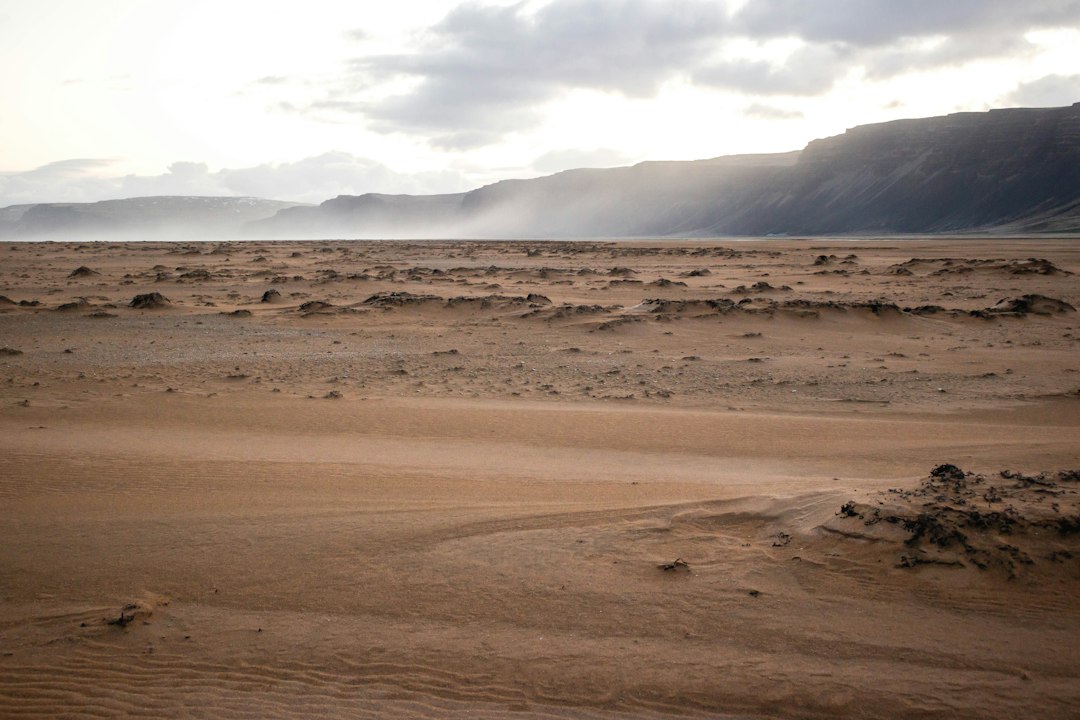
The beach stretches for about 10 kilometers along the Látrabjarg peninsula, in the municipality of Saurbær, and overlooks shallow waters that at low tide transform into vast expanses of mud and wet sand. These intertidal areas are not only scenic: they are rich ecosystems, frequented by shorebirds, seals, and, in the right season, by raptors hunting along the shore. Getting here requires physical and mental effort, but what you find upon arrival more than justifies the journey.
How to get there: the road that tests your nerves
Access to Rauðasandur is via the F612 road, a mountain road with a single lane featuring tight turns, steep drops on the sides, and unpaved surfaces. There are no guardrails in many sections. The descent to the beach is particularly steep and, in case of rain or ice, can become dangerous even for all-wheel-drive vehicles. The most important advice is to check the weather conditions before departing and not to attempt the route with standard front-wheel-drive cars or low vehicles.
The nearest village is Patreksfjörður, about 50 kilometers away, which can be covered in approximately an hour and a half of driving, considering the road conditions. There are no gas stations along the way, so it is essential to fill up before leaving. In summer, the road is generally passable, but in winter it can be closed for weeks. The recommended visiting period is from June to August, when the days are very long and the natural light allows you to fully appreciate the colors of the sand.
The fauna: seals, birds, and intertidal life
The common seals (Phoca vitulina) and grey seals (Halichoerus grypus) are present year-round on the sandy expanses of Rauðasandur, where they gather especially during low tide to rest. The specimens are often indifferent to human presence, but it is important to maintain a distance of at least 50-100 meters to avoid disturbing them, especially during the spring breeding season. With binoculars, it is possible to observe them comfortably from the shore without getting too close.
Birdwatching enthusiasts will find a variety of coastal species in the area: the golden plover (Pluvialis apricaria), various species of curlews, and, in the nearby rocky areas, the characteristic puffins (Fratercula arctica), abundant along the entire Látrabjarg peninsula. The nearby Látrabjarg cliff, just a few kilometers away, is considered one of the largest seabird nesting sites in Europe, with millions of individuals colonizing it every summer. Rauðasandur benefits from this proximity: it is not uncommon to see puffins flying over the beach in the morning hours.
The historic site: the medieval farm of Saurbær
On the hill overlooking the beach are the remains of the farm of Saurbær, whose settlement dates back at least to the 10th century, the period of the first Viking colonization of Iceland. It is one of the oldest inhabited sites in the West Fjords. Today the area is accessible on foot and, although the original structures are not preserved in monumental form, the landscape context — the red beach below, the surrounding mountains, the absolute isolation — allows one to understand the harshness and beauty of the life of the early Icelandic settlers.
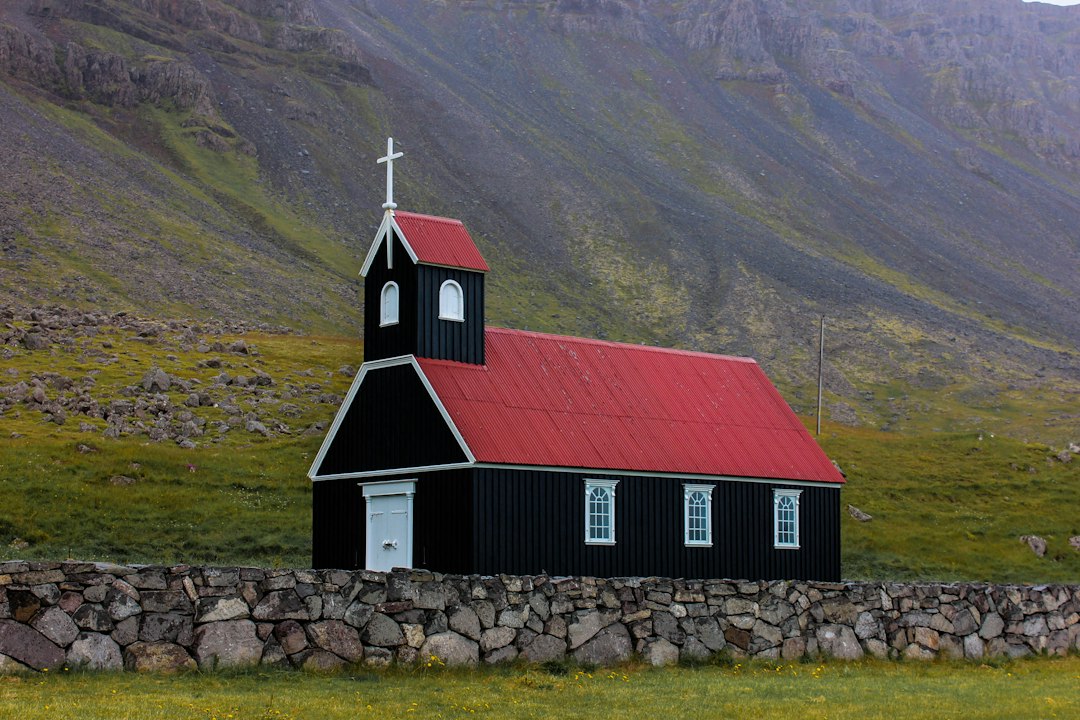
A small white church, dating in its current forms to modern times but built on an ancient place of worship, is visible from the beach and adds an element of historical continuity to the natural landscape. It is not always open to visitors, but the exterior is freely accessible and represents a stopping point on the way to the beach.
Practical tips for a mindful visit
Rauðasandur does not have tourist services: no bars, no public restrooms, no shops. Bringing water, food, and waterproof clothing is essential. The wind can be very strong even in summer, and the perceived temperature drops quickly. The minimum recommended time for the visit is at least two hours, but those who want to observe wildlife or walk along the entire beach should plan for half a day.
The best light for photography and to appreciate the colors of the sand is in the early morning hours or late afternoon, when the sun is low on the horizon. In mid-summer, thanks to the Icelandic midnight sun, it is possible to visit the beach even at 11:00 PM with a warm, golden light that enhances the reddish tones of the seabed. Entrance is free, and there are no tickets or access restrictions, but respect for the environment — no littering, no disturbing wildlife — is the implicit condition of every visit.


