
🎄 Win a month in Italy for two — €10,000 · The Secret Italy Prize GO →
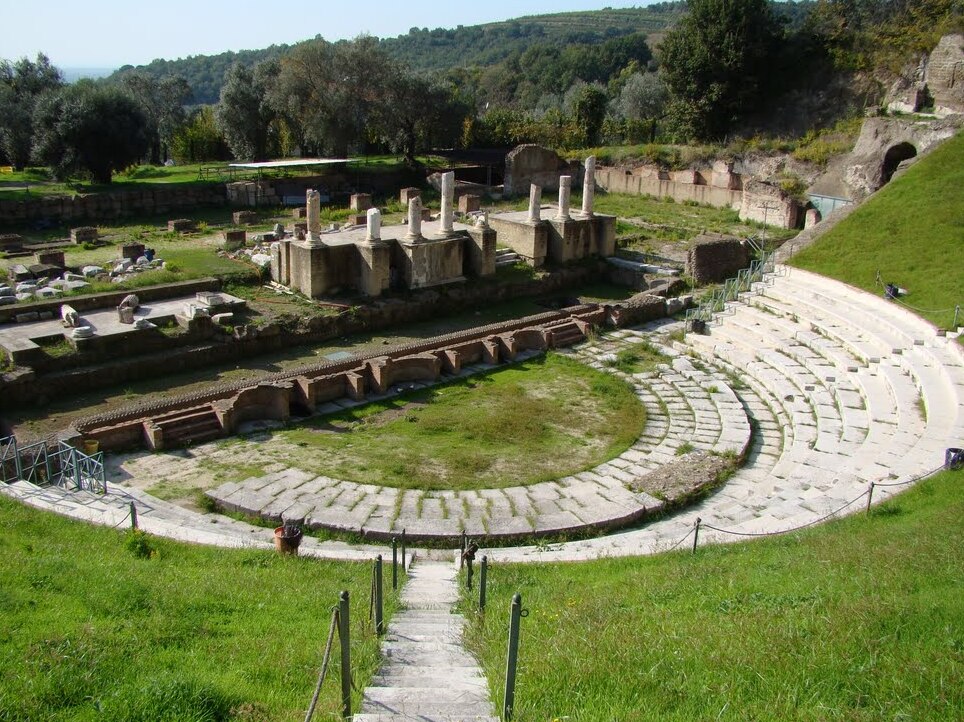
Roman Theatre of Teanum Sidicinum — Caserta
← Back
Historical Sites 📍 Caserta, Italy 208 views

Roman Theatre of Teanum Sidicinum

Built at the end of the 2nd century B.C., the ancient performing arts building was modified in the Augustan age, probably with the election of Teanum Sidicinum as a Roman colony, according to the principles of Roman theatre architecture, with the insertion of stages of honour (tr...

Photo · Happy L.

Roman Theatre of Teanum Sidicinum — Caserta, Italy.

Location
Caserta
Type
Historical Sites
Opening hours
Weather now
↗ Directions

About Roman Theatre of Teanum Sidicinum

Roman Theatre of Teanum Sidicinum - Caserta | Secret World Trip Planner

Built at the end of the 2nd century B.C., the ancient performing arts building was modified in the Augustan age, probably with the election of Teanum Sidicinum as a Roman colony, according to the principles of Roman theatre architecture, with the insertion of stages of honour (tribunalia) and the reconstruction of the vertical backdrop of the orchestra (scaenae frons) which was enriched with columns of precious marble and refined decorations.

The Theatre was part of an architectural complex consisting of a large artificial terrace on which stood a temple that seems to have been dedicated to Apollo. When, at the beginning of the 3rd century A.D., the theatre was completely renovated at the imperial behest, at the instigation of Septimius Severus and completed by Gordian III, it took on grandiose forms.

The cavea reached a diameter of about 85 m. and the scenic building, decorated with three orders of columns, capitals, architraves and sculptures in the rarest and most precious marbles, reached a height of about 26 m. In late ancient and medieval times, on the ruins of the building, probably collapsed due to an earthquake, a building site was set up for the recovery and reuse of architectural marble materials. Between the twelfth and thirteenth century on the now underground cavea was built an artisan quarter for the production of bricks and ceramics. In modern times the ancient theatre remained only a vague memory. A country lane passed over the ruins of the scene, mounted on the structures now almost buried and slipped under the vaults of the median ambulatory and then went out and continue towards the medieval center. The ancient and hidden appearance of the ruins led to the area being called "the Caves" and, to protect the wayfarer, a chapel with an altar dedicated to the Madonna was installed. The first systematic explorations of the monument were conducted in the early 1960s by Werner Johannowsky. After some excavation and restoration work in the second half of the 1980s, a complex project of exploration, restoration and enhancement of the site, which lasted over a decade, was conceived in 1998.

✦ Secret World · suggested day

A perfect day in Caserta

Start with Roman Theatre of Teanum Sidicinum, then continue with nearby places selected by Secret World.

  1. 01
    Morning
    Roman Theatre of Teanum Sidicinum
    📍 Caserta
    Start here
  2. 02
    Afternoon
    📍 0.2 km away
  3. 03
    Evening
    📍 0.5 km away

Collect this place

Turn places you discover into stamps in your Secret Passport.

Open Secret Passport →

Keep exploring · Caserta

Frequently Asked Questions

The theatre was originally built at the end of the 2nd century B.C. and later modified during the Augustan age when Teanum Sidicinum became a Roman colony. It underwent its most significant renovation in the early 3rd century A.D. under the imperial orders of Septimius Severus and was completed by Gordian III, transforming it into a grandiose structure.
At its grandest, the theatre's cavea (seating area) reached a diameter of about 85 meters, while the scenic building stood approximately 26 meters high. The structure was decorated with three orders of columns, capitals, architraves, and sculptures crafted from the rarest and most precious marbles, following strict Roman theatre architecture principles.
The theatre likely collapsed due to an earthquake in late ancient times, after which its ruins were repurposed for marble material recovery during medieval times. Between the 12th and 13th centuries, an artisan quarter for brick and ceramic production was established directly over the buried cavea, and a chapel dedicated to the Madonna was later built to protect travelers passing through the area.
The theatre was part of a larger architectural complex that included a large artificial terrace. A temple, likely dedicated to Apollo, stood on this terrace alongside the theatre, making it a significant religious and cultural center in ancient Teanum Sidicinum.
The first systematic archaeological explorations of the Roman Theatre of Teanum Sidicinum were conducted in the early 1960s by Werner Johannowsky. Following these initial investigations, excavation and restoration work continued in the second half of the 20th century to reveal and preserve this remarkable ancient monument.

Experiences nearby · Caserta

Powered by Viator

See more on Viator.com

Secret World Hidden places, real stories — plan your trip
Get the app
