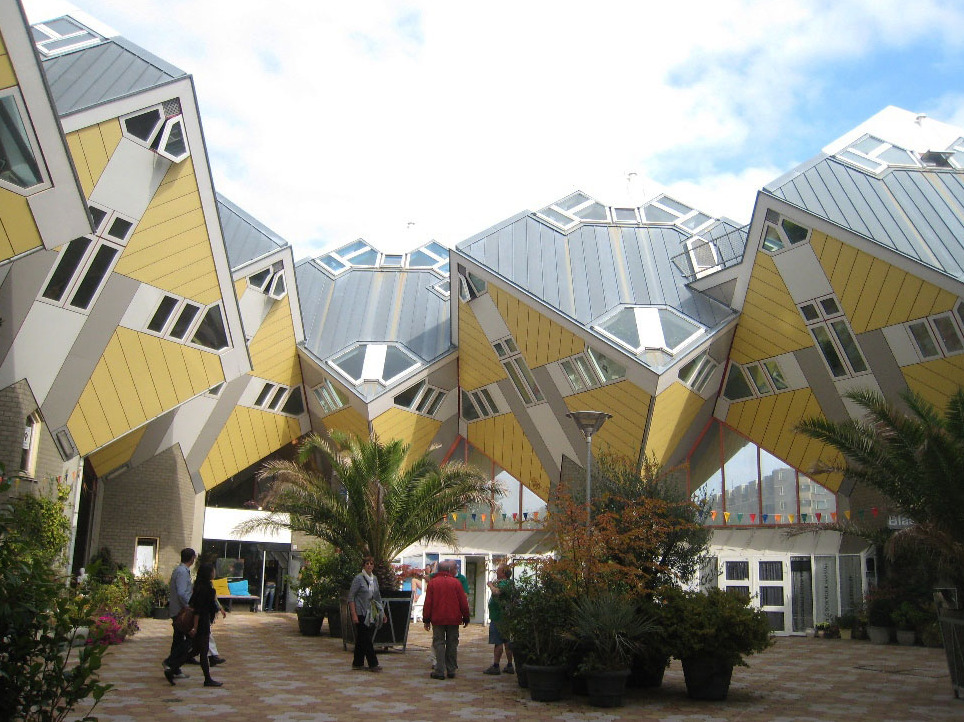

In the heart of Rotterdam, where modernity collides with innovative design, the Cubic Houses stand as a testament to architectural audacity and visionary thinking. Known locally as Kubuswoningen, these iconic structures challenge the conventional understanding of urban living, inviting both residents and visitors into a unique spatial experience.
### History and Origins
Rotterdam has a rich maritime history, dating back to the 13th century when it was founded as a small fishing village. The city's strategic location along the Rotte River allowed it to flourish and develop into one of Europe’s major ports. However, it was the devastation of World War II that would reshape its landscape. Much of the city was reduced to rubble, paving the way for a bold reconstruction that emphasized modern architecture.
The idea for the Cubic Houses emerged in the 1970s, conceived by the Dutch architect Piet Blom. Blom sought to create a new form of urban housing that would reflect a "forest of cubes," where each household would represent a tree in a larger conceptual woodland. The first designs were inspired by the Ponte Vecchio in Florence, Italy, leading to a structure that combines residential living with innovative design. Ultimately, the project culminated in 1984, featuring 38 cubic houses and two larger “super-cubes,” all mounted on hexagonal pillars.
### Art and Architecture
The architectural style of the Cubic Houses is a striking example of Brutalism mixed with elements of Postmodernism. The houses are tilted at a 45-degree angle, creating a distinctive geometric form that challenges traditional design concepts. Each cube is a three-level dwelling, with the living areas arranged in a triangular shape, maximizing the use of space while providing stunning views of the surroundings.
Inside, the interiors are surprisingly spacious despite the unconventional exterior. The design includes open-plan living areas, with large windows allowing natural light to flood in, creating a warm and inviting atmosphere. The architectural significance of these cubes lies not only in their unique aesthetics but also in their innovative approach to urban housing, showcasing how style can harmonize with functionality.
### Local Culture and Traditions
In Rotterdam, local customs are as vibrant as its skyline. The city is known for its progressive culture, hosting a variety of festivals throughout the year. One of the most notable is Rotterdam Unlimited, a multi-day festival celebrating the city’s multicultural identity with music, dance, and art from around the globe.
The city also hosts the International Film Festival Rotterdam (IFFR), which attracts filmmakers and cinephiles alike. This festival emphasizes independent films and innovative storytelling, reflecting the avant-garde spirit that permeates the city. Engaging with the local arts scene, whether through street performances or gallery exhibitions, is a must for any visitor wanting to experience the heartbeat of Rotterdam.
### Gastronomy
Food in Rotterdam is a delightful fusion of traditional Dutch cuisine and international influences, mirroring the city’s diverse population. One must-try dish is Haring, raw herring fish typically served with onions and pickles. The city’s Markthal, an architectural marvel itself, is a hub for local delicacies, offering everything from artisanal cheeses to vibrant street food.
Another local favorite is Kapsalon, a hearty dish consisting of layers of fries topped with döner meat, cheese, and salad, finished with a drizzle of garlic sauce. As you explore the culinary landscape, don’t miss the chance to sip on a local Dutch beer or try the widely popular stroopwafels, a sweet treat that captures the essence of Rotterdam’s playful food culture.
### Lesser-Known Curiosities
While the Cubic Houses are a highlight, many visitors may overlook the intriguing details surrounding them. For instance, the houses are not just architectural wonders; they also serve as a community. The interior of the cubes can be visited as part of the Cubic House Museum, providing insight into how people live within these unusual spaces.
Additionally, the Cubic Houses are situated near the Blaak Station, a transport hub that connects visitors to various parts of the city, including the stunning Erasmus Bridge. Many tourists miss the opportunity to explore the nearby historic district of Witte de Withstraat, known for its lively art scene and trendy bars.
### Practical Visitor Information
The best time to visit Rotterdam is from late spring to early autumn, when the weather is mild and conducive to outdoor exploration. On weekends, the city buzzes with local markets, street performers, and festivals, making it an ideal time for cultural immersion.
When visiting the Cubic Houses, consider taking a guided tour to fully appreciate the architectural nuances and the story behind their creation. Don’t forget your camera; the unique angles and perspectives of the cubes offer fantastic photo opportunities.
To make the most of your time in Rotterdam, it’s wise to plan your itinerary around local events and culinary hotspots. The city has much to offer, and a well-thought-out plan will ensure you experience the best of its culture and gastronomy.
For a truly personalized experience during your visit, consider using the Secret World app to create a tailored itinerary that highlights your interests while exploring the stunning sights of Rotterdam.
