
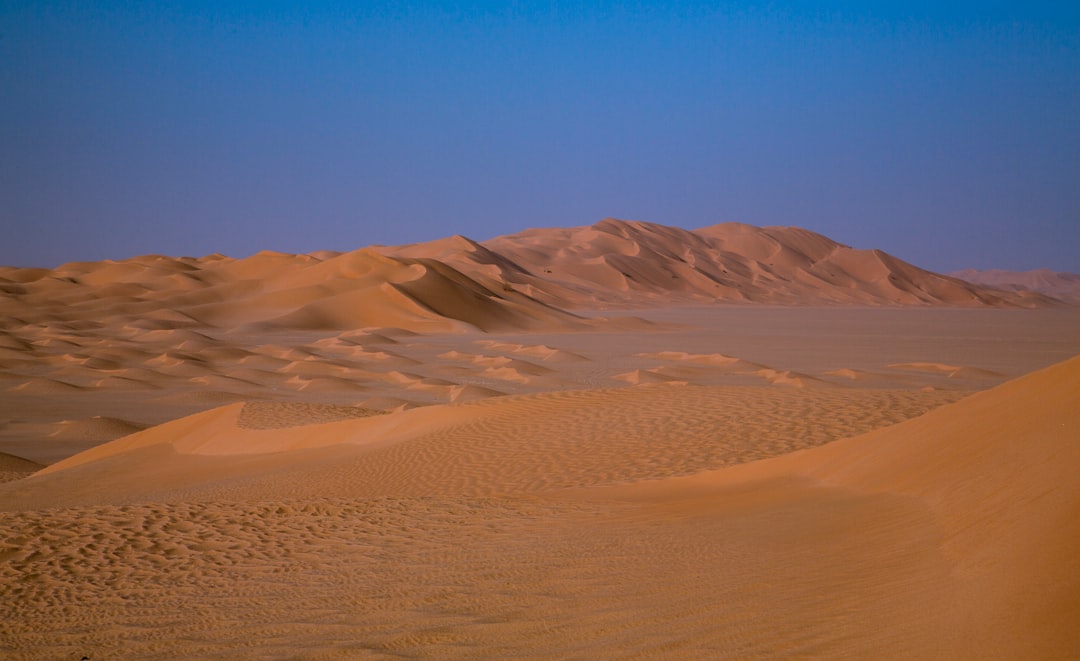

Three hundred thousand square kilometers of sand without a tree, without a sound, without a familiar horizon. The Rub' al-Khali — the Empty Quarter in Arabic — is the largest continuous sand desert on Earth, a stretch that crosses four countries: Saudi Arabia, Yemen, Oman, and the United Arab Emirates. This is not just any desert landscape: here the star-shaped dunes, called star dunes, reach heights of 250 meters, equivalent to an eighty-story building, and are formed by winds blowing from opposite directions, creating sand architectures that seem to have come from another planet.
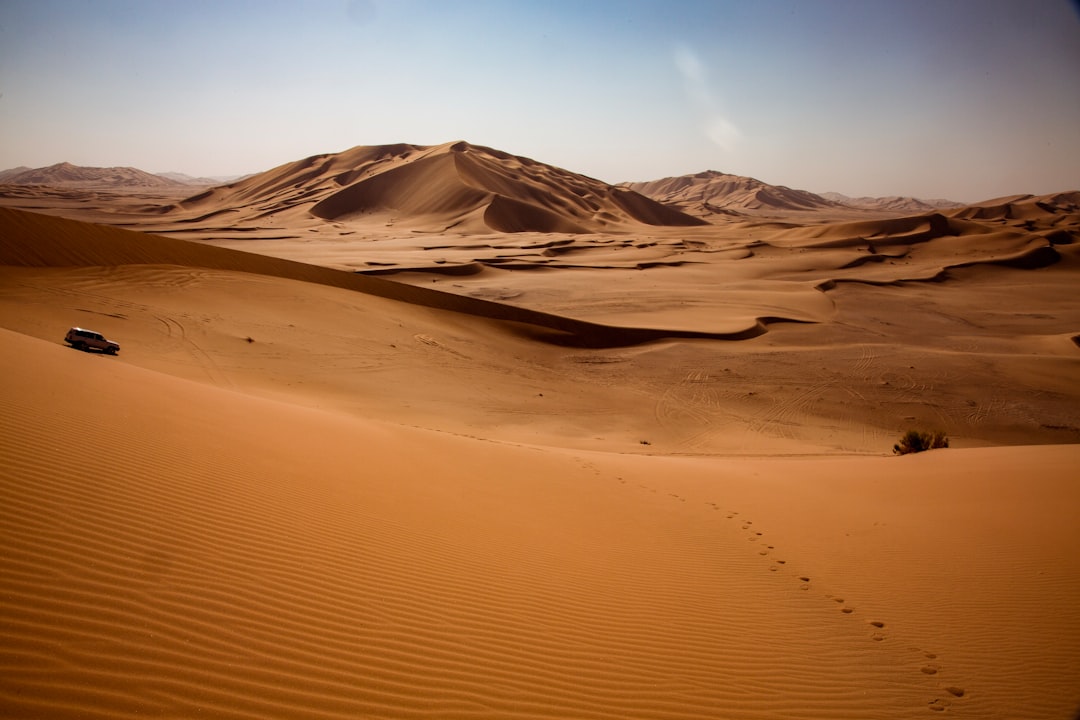
The accessible heart of this immense void is located near Shaybah, in the southeast of Saudi Arabia, where Saudi Aramco operates one of the largest oil extraction facilities in the world, literally built in the midst of the dunes. The presence of this infrastructure has made the area more reachable compared to other parts of the desert, but it has not diminished the absolute nature of the surrounding landscape. Just a few kilometers away from the facility, one finds themselves in an unparalleled silence: no wind, no insects, nothing. Just ancient gold-colored sand that changes shades with the light.
The dunes: natural geometry on an impossible scale
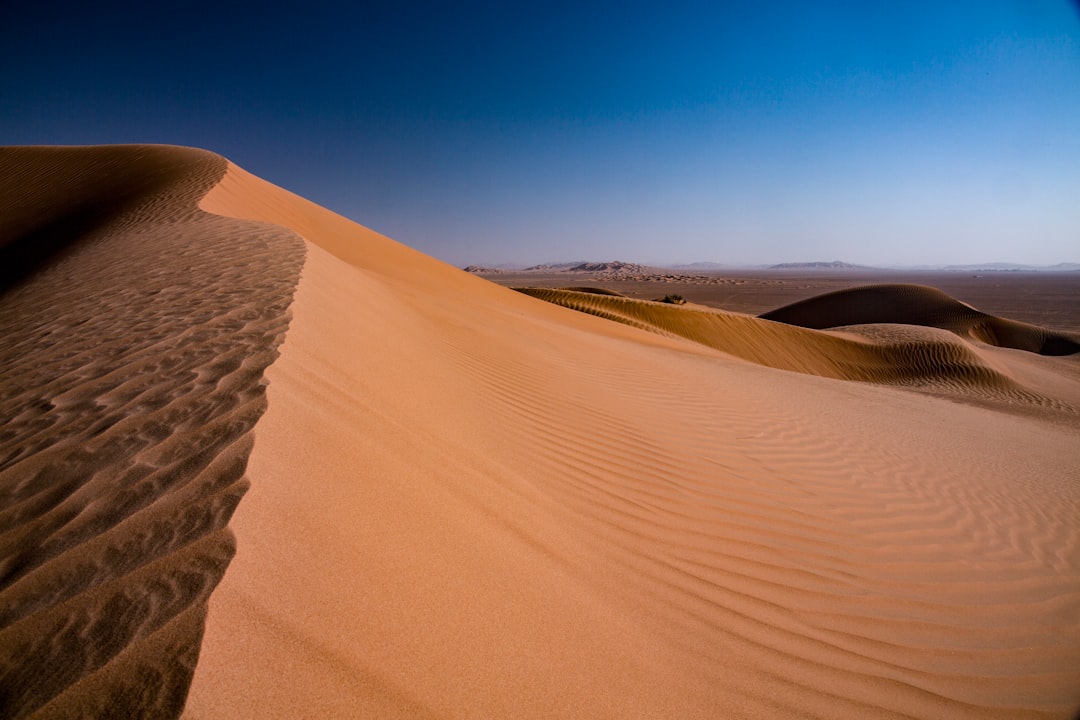
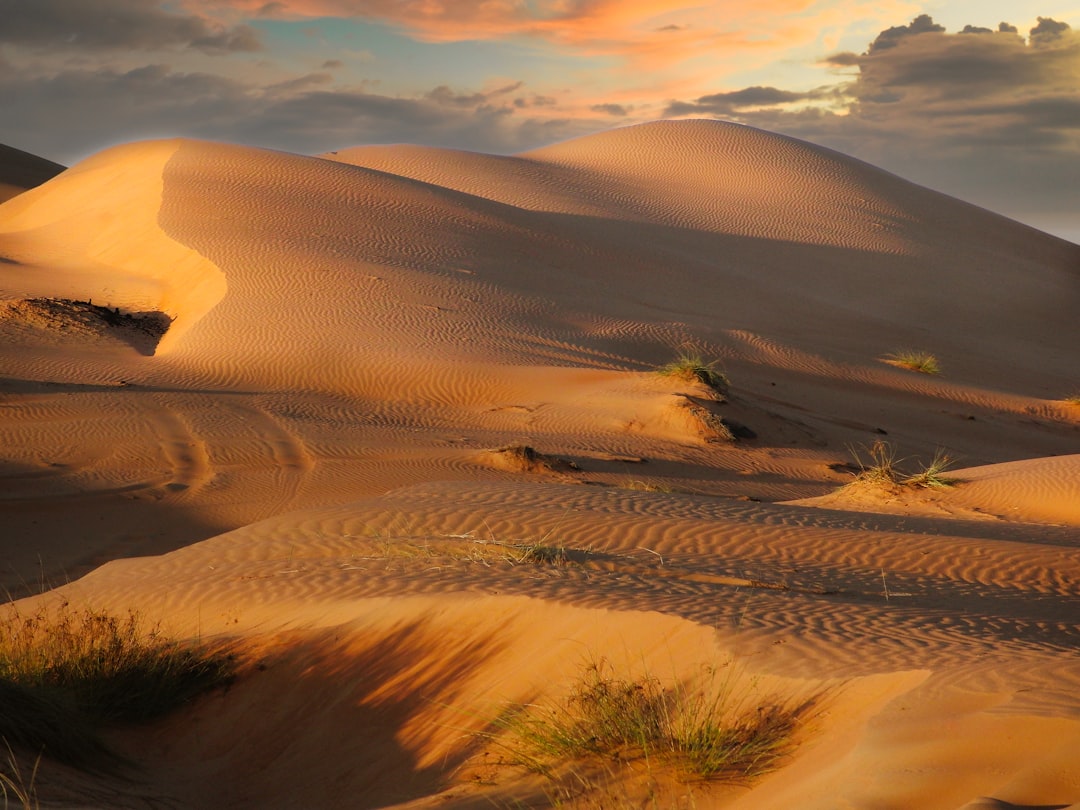
The star dunes of the Rub' al-Khali do not resemble the low and soft dunes that one imagines when looking at a Saharan postcard. They have multiple crests that radiate from a central point, like the rays of a star seen from above, and their side walls descend with slopes that can exceed thirty degrees. Climbing one of these dunes requires considerable physical effort: the sand gives way underfoot with each step, and the last meters towards the crest become an exercise in balance and endurance.
From the upper edge, the panorama that unfolds is devoid of any human reference. There are no visible roads, there are no lines of the horizon broken by buildings. Only other dunes, in sequence, as far as the eye can see. The sand in this part of the desert has a coloration that varies from bright orange in the middle of the day to brick red at sunset, to an almost lunar gray in the hour before dawn.
The nights in the desert: astronomy with the naked eye
The Rub' al-Khali is one of the places with the least light pollution on Earth. On moonless nights, the sky above the dunes of Shaybah shows the Milky Way as a dense and detailed luminous band, visible to the naked eye with a clarity that is impossible in European cities even with optical instruments. The celestial vault seems lower, closer, almost tangible.
The nighttime temperature in this desert can drop drastically even in the warm seasons: temperature swings of twenty degrees between day and night are normal. In winter, between December and February, nighttime temperatures can approach zero. This rapid cooling of the sand sometimes produces a thin sound, almost a crackling, which is one of the few noises heard in the absolute silence of the deep desert.
How to get there and when to visit
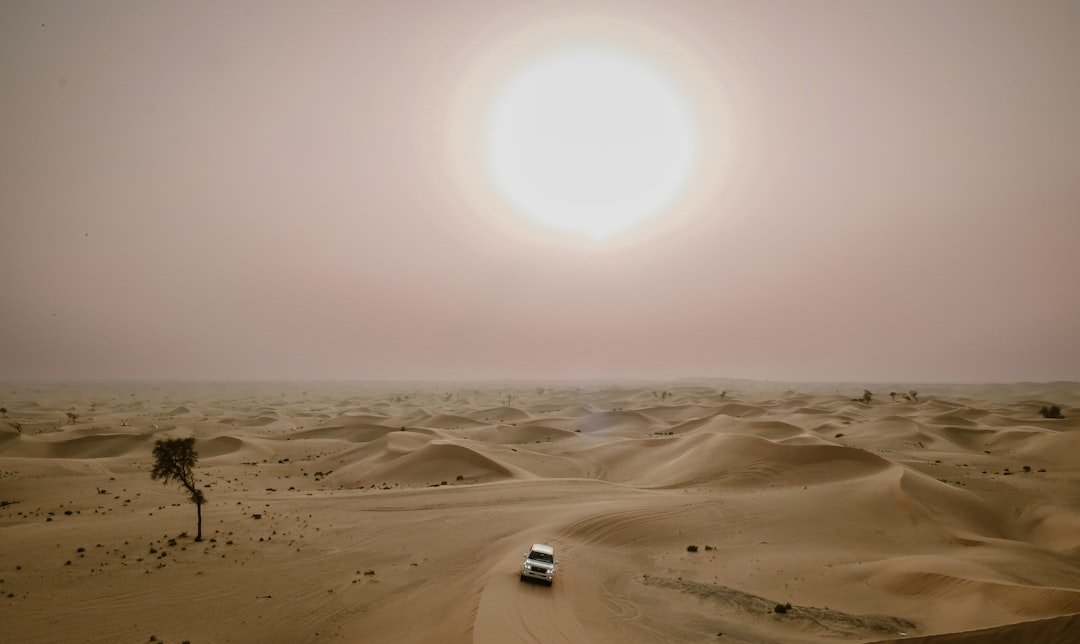
Access to the Rub' al-Khali in the Shaybah area is mainly from Rub' al-Khali through organized tours departing from Abu Dhabi or Nizwa in Oman for the eastern sectors, or from Najran in Saudi Arabia for the Saudi sectors. The best time to visit is between October and March, when daytime temperatures remain below 35 degrees. In the summer months, between June and August, the thermometer regularly exceeds 50 degrees Celsius and any excursion becomes dangerous.
It is essential to travel with an experienced local guide and at least two off-road vehicles equipped with GPS, shovels, recovery kits, and ample water reserves. Venturing alone into the Rub' al-Khali without adequate logistical support is considered dangerous even by industry experts. Organized tours by certified operators generally include camping equipment, food, and the necessary permits to cross protected areas. Costs vary significantly, but a three-day excursion with specialized operators generally starts from 500 dollars per person.
The silence as a physical experience
Those who have visited the Rub' al-Khali often describe silence not as the absence of sound, but as an active presence. In an environment where there are no artificial reflective surfaces, where there is no vegetation rustling in the wind, and where the sand absorbs every vibration, silence becomes something that is physically perceived, almost a light pressure on the ears. Some visitors report feeling their own heartbeat in an unusual way, as if the body itself is astonished by the absence of external noise.
This quality of silence, combined with the visual scale of the dunes and the purity of the night sky, makes the Rub' al-Khali an experience that is hard to compare with other terrestrial landscapes. It is not a comfortable place, it is not an easy place to reach, but for those seeking a direct contact with nature in its most essential and stripped-down form, this desert offers something that no equipped park or desert resort can replicate.


