
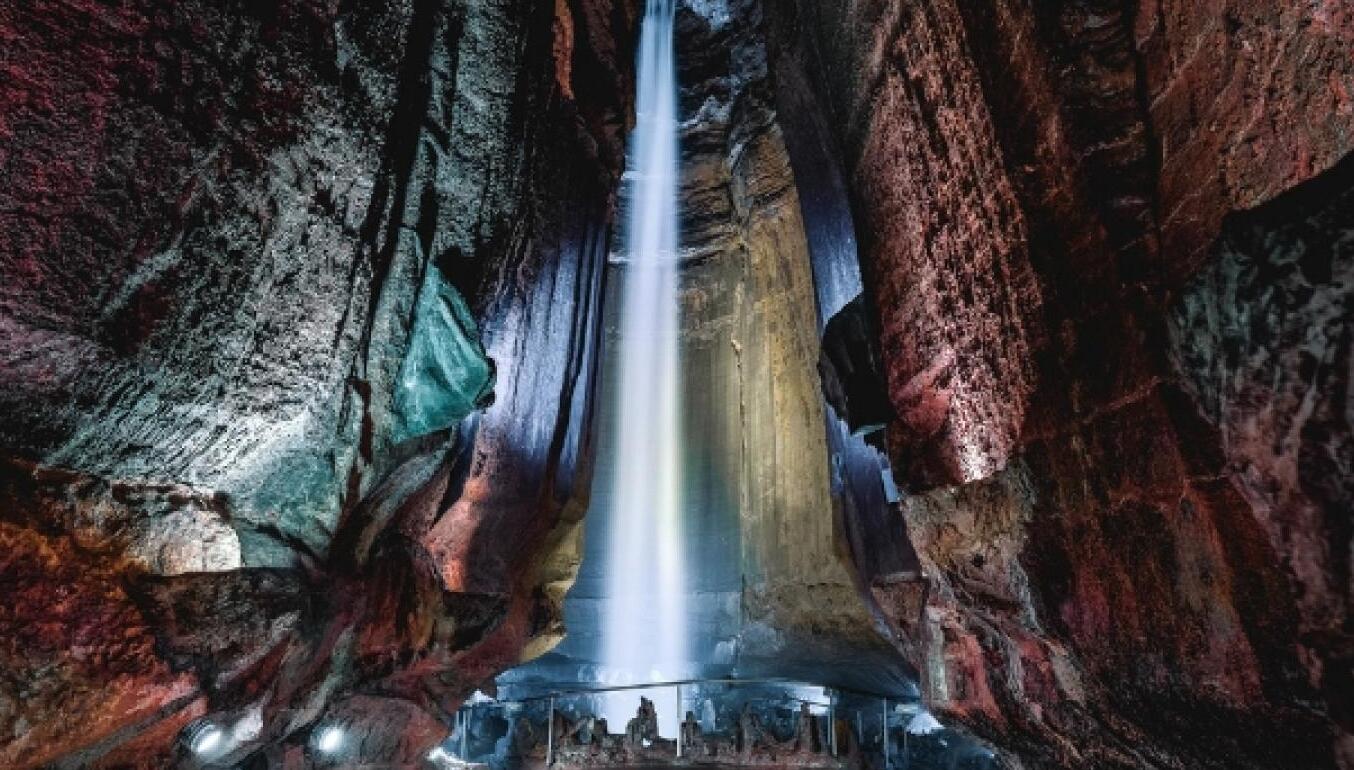

Beneath the rugged exterior of Lookout Mountain near Chattanooga, Tennessee, lies a hidden gem—a subterranean wonder known as Ruby Falls. This breathtaking underground waterfall, cascading in myriad hues of light, is one of nature's most enchanting spectacles, drawing visitors from far and wide to witness its ethereal beauty.
The story of Ruby Falls begins with an ancient geological journey. Formed over millions of years, the limestone caverns housing the waterfall were shaped by the relentless flow of water through the mountain's core. However, the waterfall itself was discovered much later, in 1928, by Leo Lambert, a local cave enthusiast and chemist. Lambert named the falls after his wife, Ruby, and opened them to the public in 1930, transforming the site into a beloved local landmark.
The architectural elements that guide you through the caverns to Ruby Falls are a testament to early 20th-century ingenuity. The elevator shaft, drilled through solid rock to a depth of 260 feet, was a significant engineering feat of its time. As visitors descend, they're enveloped by a labyrinth of stalactites and stalagmites, illuminated in a way that accentuates their natural beauty. The careful use of lighting, pioneered by Lambert, enhances the allure of the cavernous spaces, making each twist and turn a work of art in itself.
The local culture surrounding Ruby Falls is deeply intertwined with the broader heritage of Chattanooga and Lookout Mountain. The area is rich in Civil War history, with the Battle of Lookout Mountain playing a pivotal role. This historical backdrop is celebrated through various festivals and reenactments throughout the year, offering visitors a glimpse into the past and the spirit of the community.
While Ruby Falls does not have a specific culinary tradition of its own, Chattanooga's vibrant food scene is an essential part of any visit. The city's gastronomy features Southern classics with a modern twist. Visitors can savor dishes like Nashville hot chicken or indulge in Tennessee whiskey tastings, all against the backdrop of the scenic mountain views. Local eateries often incorporate fresh, regional produce, ensuring a delightful gastronomic experience for all.
Beyond its visual splendor, Ruby Falls holds a trove of lesser-known curiosities. For instance, the waterfall's source is a natural spring deep within the mountain, which flows at a steady rate regardless of external weather conditions. The cave's constant temperature of 60 degrees Fahrenheit offers a refreshing escape during the sweltering summer months. Another intriguing aspect is the Echo Room, where the acoustics allow even the softest whisper to resonate throughout the cavern—a phenomenon that delights both children and adults alike.
For those planning a visit, the best time to experience Ruby Falls is during the off-peak seasons of spring and fall. These months offer milder weather and fewer crowds, allowing for a more intimate exploration of the caverns. It's advisable to wear comfortable shoes, as the tour involves walking on uneven surfaces. Photography enthusiasts will find the unique lighting arrangements within the cave an exciting challenge, promising opportunities for stunning shots.
As you journey through Ruby Falls, take a moment to appreciate the remarkable blend of natural wonder and human ingenuity that makes this site truly unique. From its geological origins to its cultural significance, Ruby Falls is more than just a waterfall; it's a testament to the timeless allure of nature and the enduring spirit of exploration.


