


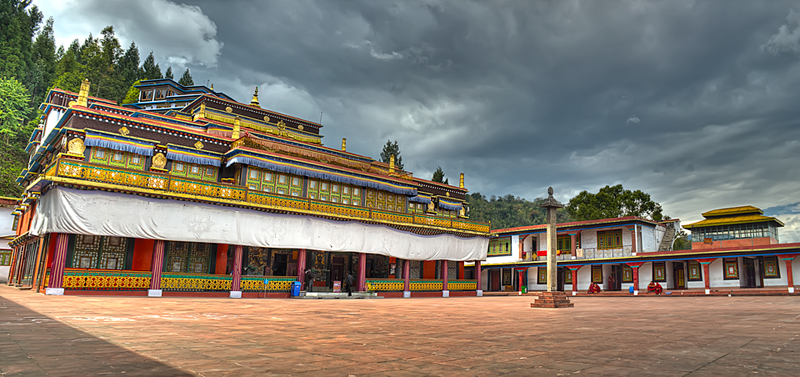
Perched serenely amidst the emerald hills of Sikkim, the Rumtek Buddhist Monastery is more than a spiritual sanctuary; it is a gateway to the rich cultural tapestry of the region. Known as the largest monastery in Sikkim, Rumtek's history is steeped in tales of devotion, resistance, and reverence.
The monastery's origins date back to the 16th century when it was established by the 9th Karmapa, Wangchuk Dorje. However, its current grandeur owes much to the 16th Karmapa, Rangjung Rigpe Dorje, who, in exile from Tibet in 1959, chose Rumtek as the base for the Karma Kagyu lineage and rebuilt it in 1966. This decision not only preserved a critical aspect of Tibetan Buddhism but also infused Sikkim with spiritual vibrancy.
Architecturally, Rumtek is a marvel. The monastery exhibits the quintessential Tibetan style with its tiered roofs, ornate prayer halls, and vibrant murals that tell tales of Buddhist lore. The golden stupa, a centerpiece, enshrines the relics of the 16th Karmapa, surrounded by intricate thangkas and statues that exude artistic brilliance.
The monastery pulses with life during festivals like Losar and Saga Dawa, when the air is filled with the sound of ceremonial chants and the sight of monks in traditional robes performing masked dances. These festivals are a testament to the monastery’s cultural importance, drawing visitors from around the globe to witness these age-old traditions.
While exploring the monastery, one must indulge in the local gastronomy. Sikkimese cuisine offers delightful surprises such as momos (dumplings), thukpa (noodle soup), and the refreshing chaang (a traditional fermented drink). These dishes provide a taste of the region's culinary heritage, showcasing a blend of Tibetan and Nepali influences.
Despite its fame, Rumtek harbors lesser-known curiosities. For instance, the Karmapa controversy that embroiled the monastery in a legal battle over its rightful steward is a captivating chapter of its recent history. Additionally, keen observers might notice the black hat dance ritual, a sacred performance believed to dispel evil spirits, adding an enigmatic layer to the visitor experience.
For those planning to visit, the best time is during the cooler months from October to December when the weather is pleasant. Visitors are advised to dress modestly and be respectful of the monastery's sacred spaces. Allow yourself to be immersed in the tranquil atmosphere, and don't miss the opportunity to join the monks in a prayer session for a truly enriching experience.
To make the most of your visit to Monastero di Rumtek, plan your journey with the Secret World app for a personalized AI itinerary.
