

Every year, between July and October, the shallow waters around Rurutu come alive with a rare phenomenon: humpback whales arrive here to give birth and nurse their calves. This is not observation from a distance on a pier or from a distant boat — in Rurutu, it is possible to dive with a mask and snorkel and find oneself just a few meters away from these cetaceans, in a silence interrupted only by the soft songs that the females direct towards their young. It is an experience that is hard to forget, and that alone justifies the journey to one of the most remote corners of French Polynesia.

Rurutu belongs to the Austral archipelago, a group of volcanic islands that extends about 600 kilometers south of Tahiti. The island measures approximately 36 square kilometers and has fewer than 2,500 inhabitants, primarily distributed among the three villages of Moerai, Avera, and Hauti. There are no luxury resorts, nor long equipped beaches: what you find is an island that operates according to its own rhythms, where fishing, the artisanal production of hats and pandanus mats, and community life mark the days.
How to reach Rurutu and when to go

The most common way to get to Rurutu is to take a flight from Tahiti-Faa'a, the international airport of Papeete. Air Tahiti operates regular flights to the island, with a duration of about an hour and a half. Flights are not daily, so it is essential to plan ahead for both the outbound and return trips, checking the schedules on the airline's official website. A slower but fascinating alternative is the passenger cargo Tuhaa Pae, which periodically connects the Austral Islands with Papeete, but the sailing times are long and the schedules variable.
For those coming mainly for the whales, the recommended period is between August and September, when the presence of humpback whales is statistically higher. The water temperatures during this time hover around 24-26 degrees Celsius, making snorkeling comfortable even without a wetsuit. From November to April, on the other hand, the whales move to Antarctic waters to feed, and Rurutu becomes a quiet and almost deserted island from a tourist perspective.

Snorkeling with humpback whales: what to expect
Sea outings to swim alongside whales are organized by small local operators, often family-run. The boats are generally small, the number of participants limited, and the guides know the waters of the island with a precision that no GPS could replicate. Once a humpback whale is spotted, one quietly enters the water, without sudden movements, and observes from a respectful distance that local authorities try to enforce to protect the whales.
What strikes you is not only the size of the animals — an adult humpback can exceed 15 meters in length — but their apparent indifference to human presence. The calves, born just a few weeks ago, sometimes show a curiosity that leads to close visual exchanges that are hard to describe in words. It is important to remember that these are wild animals in a delicate moment of their life cycle, and that any intrusive behavior is not only inappropriate but potentially illegal under French law regarding the protection of cetaceans.
The island beyond the whales: landscape and daily life

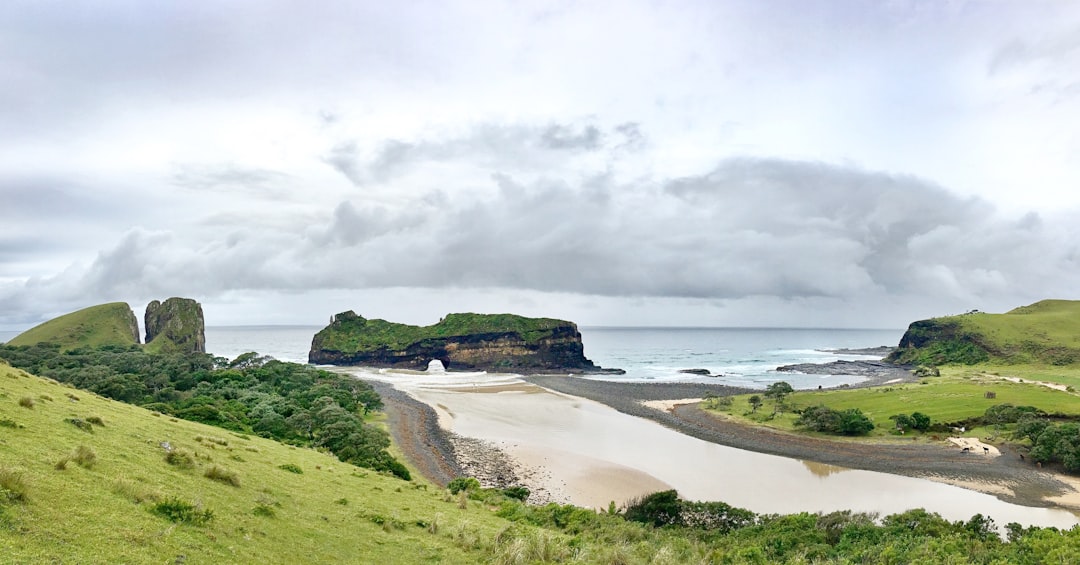
Rurutu is a volcanic island with unusual geology: over millions of years, tectonic uplift has brought ancient coral reefs to the surface, creating spectacular limestone formations along the coasts, particularly in the area of Pointe Ana, where caves and natural arches open directly onto the sea. The interior of the island is hilly, covered with dense tropical vegetation, and can be explored on foot or by scooter rented in the main village of Moerai.
The Moerai market is the best place to observe the daily life of the island: women weave pandanus leaves to make hats and mats that are then sold even in Papeete. This craftsmanship, passed down from generation to generation, is one of the most deeply rooted cultural expressions of the community. Stopping to watch, and perhaps buying a piece directly from the artisan, is one of the most authentic ways to connect with Rurutu beyond the natural spectacle.
Practical travel tips
The accommodation options in Rurutu are limited to small family-run guesthouses, the so-called pensions, where meals are often included or available upon request. Booking well in advance is essential, especially during the high season for whales. It is advisable to bring cash, as not all establishments accept credit cards. The internet network is available but not always reliable, which — depending on one's perspective — can be considered an advantage.
Those who suffer from technological isolation or need constant connectivity may find Rurutu challenging. On the other hand, those looking for a place where time slows down, where the sound of the sea replaces that of traffic, and where nature is not a backdrop but the center of everything, will find something difficult to replicate elsewhere on this small island of the Australs.


