



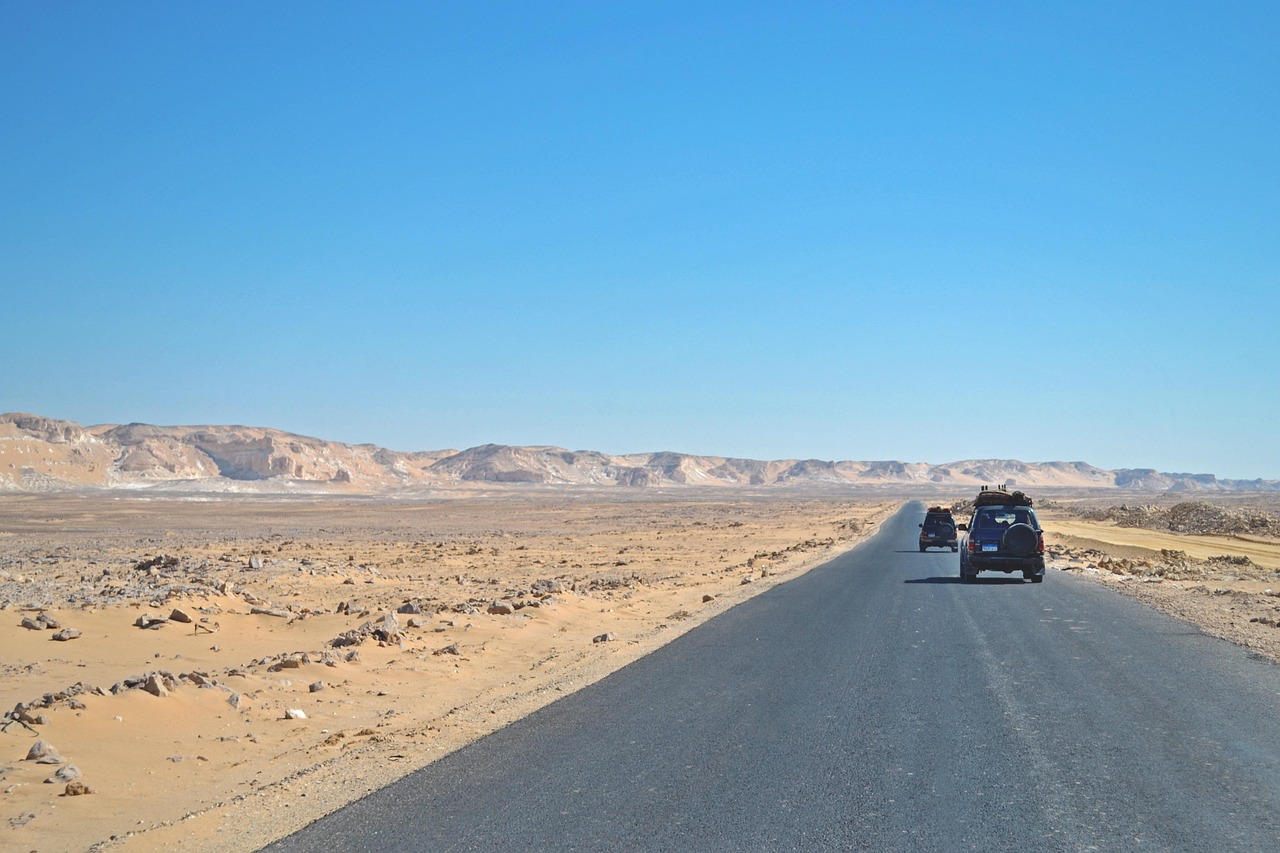
The Sahra al-Beida, known as the White Desert, is a mesmerizing location in Egypt that captivates travelers with its stunning natural formations and rich culture. Spanning over 300 square kilometers, this barren expanse of unique white rock spires and chalk towers, shaped by millennia of wind erosion, offers a surreal landscape that feels otherworldly. Nestled in Farafra, a region primarily inhabited by the Bedouin people, the desert is a remarkable testament to the forces of nature and human history intertwined.

### History and Origins The White Desert has a history that stretches back thousands of years, with its formations dating to the Cretaceous period when this area was submerged under a vast sea. As the waters receded, the remnants formed the sedimentary layers that we see today. Ancient Egyptians utilized this area for quarrying white limestone, which played a significant role in their architectural endeavors.
In the modern era, the White Desert was brought to broader attention in the late 20th century. It became a favored site for adventurers and nature lovers, who were drawn to its stark beauty and the fascinating stories of the Bedouins, who have inhabited the region for centuries. The desert's unique landscapes and the rich heritage of the Bedouin communities make it a site of historical and cultural significance.
### Art and Architecture While the White Desert itself is a natural work of art, the surrounding areas reflect the architectural styles of the Bedouin culture. Traditional Bedouin tents, often made from goat hair, showcase a simple yet functional design that is both aesthetic and practical.
Artisan crafts from the region, including woven textiles and intricately designed pottery, are notable. These crafts often depict scenes from the desert and Bedouin life, embodying the artistic spirit of a community deeply connected to its environment. The artistic significance of this region can also be seen in the way the Bedouins tell their stories through folklore, often shared around evening campfires under a star-studded sky.
### Local Culture and Traditions The culture surrounding the White Desert is rich with Bedouin traditions. Hospitality is central to their way of life; visitors are often welcomed into tents for tea and local delicacies, showcasing the warmth and generosity of the Bedouin people.
Festivals, particularly during the Eid al-Fitr and Eid al-Adha, are marked by communal gatherings, music, and traditional dances. These celebrations offer a glimpse into the vibrant cultural tapestry of the Bedouins, highlighting their connection to nature and each other.
### Gastronomy A visit to Sahra al-Beida is incomplete without indulging in local gastronomy. The Bedouin cuisine is rich and varied, with dishes such as Mansaf (a traditional lamb dish served with rice) and Hummus (chickpea dip) being staples.
Tea, especially mint tea, is a significant part of daily life, often brewed with fresh herbs gathered from the desert. For those adventurous enough, Desert dates and the occasional grilled rabbit provide a taste of the local flavors that have sustained the Bedouins for generations.
### Lesser-known Curiosities While many are drawn to the White Desert for its breathtaking landscapes, few know about the unique rock formations that resemble various animals and objects. Among them, the Chicken Rock and the Camel Rock are popular landmarks, making for excellent photo opportunities and sparking the imagination of those who visit.
Additionally, the phenomenon of bioluminescence in certain areas of the desert adds an otherworldly charm, as the sands seem to shimmer under the moonlight, creating a magical experience for night-time explorers.
### Practical Visitor Information The best time to visit the Sahra al-Beida is during the cooler months, from October to April, when temperatures are more comfortable for exploring the desert landscape. It is advisable to travel with a knowledgeable guide familiar with the intricacies of the terrain and the rich cultural heritage of the area.
Travelers should also prepare for the extreme weather conditions that can occur in the desert, including strong winds and significant temperature drops at night. Bring plenty of water, sun protection, and a camera to capture the stunning vistas.
In your exploration, be sure to look for the unique rock formations and experience the tranquil silence that envelops the desert, allowing for moments of reflection and awe in a truly breathtaking natural setting.
For a unique journey through the enchanting landscapes of the White Desert, consider using the Secret World app to create a personalized itinerary tailored to your interests.
