
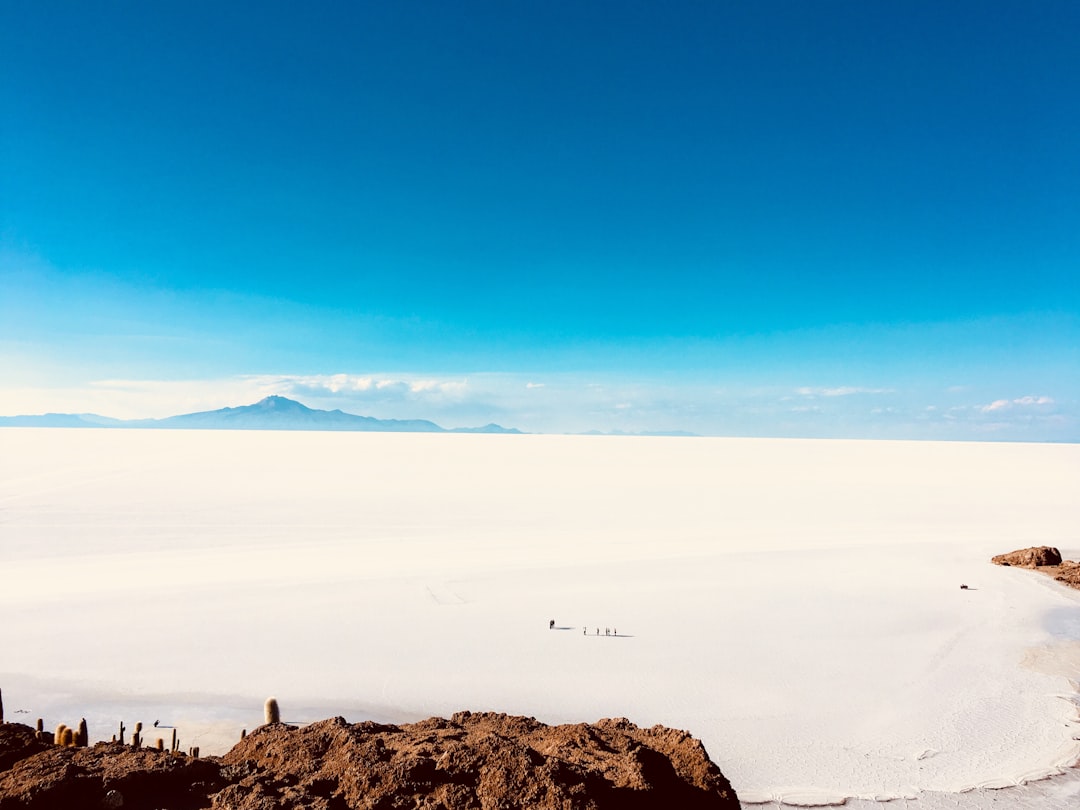

At over 3,600 meters above sea level, in the southwest of Bolivia, lies the largest salt desert in the world: the Salar de Uyuni, with its approximately 10,582 square kilometers of white, flat surface. When the sun descends towards the horizon, the landscape transforms into something that defies any rational description. The orange and pink light spills over an expanse that seems endless, and if you are fortunate enough to be present during the rainy season — between November and March — the thin layer of water covering the salt becomes a perfect mirror, capable of doubling the sky so precisely that it becomes impossible to distinguish where the land ends and where the atmosphere begins.
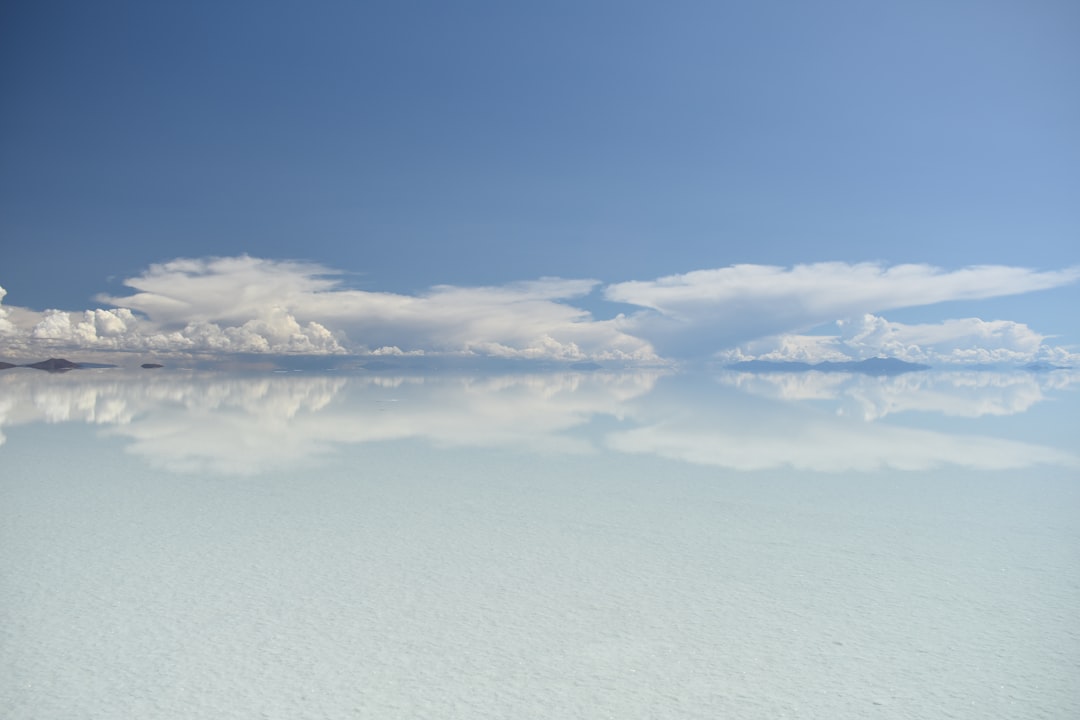
This phenomenon is neither an optical illusion nor a photographic effect: it is pure physics. When the layer of water reaches a few centimeters in depth, the smooth surface of the salt acts as a natural reflector. The colors of the sunset — bright yellow, deep red, intense purple — multiply downward with an almost mathematical symmetry. Walking in this space during twilight literally means moving within the sky.
A sunset that changes with the season
The Salar de Uyuni does not offer the same spectacle all year round, and this variability is part of its charm. During the dry season, from April to October, the surface is completely dry and the salt crust forms the characteristic hexagonal polygons visible to the naked eye, created by the crystallization of the mineral over the centuries. During this time, the sunsets tint the blinding white with warm hues, with long and sharp shadows that accentuate the texture of the surface.
During the rainy season, on the other hand, the scenery changes radically. Rainwater, having nowhere to drain on this perfectly flat plain, remains on the surface for weeks. It is during this time that the sunsets become that unique visual experience that has made the salt flat famous all over the world. The sky reflects so faithfully that the photographs taken seem digitally manipulated, yet they are entirely real.
How to reach the salt flat and when to go
The city of Uyuni is the logistical starting point to visit the salt flat. It can be reached by train or bus from Potosí or Oruro, or by plane with domestic Bolivian flights. From Uyuni, local agencies organize one or more day tours with 4x4 jeeps, guided by experienced drivers who know the best spots to watch the sunset. The average price of a one-day tour is around 150-200 bolivianos per person, equivalent to about 20-25 euros.
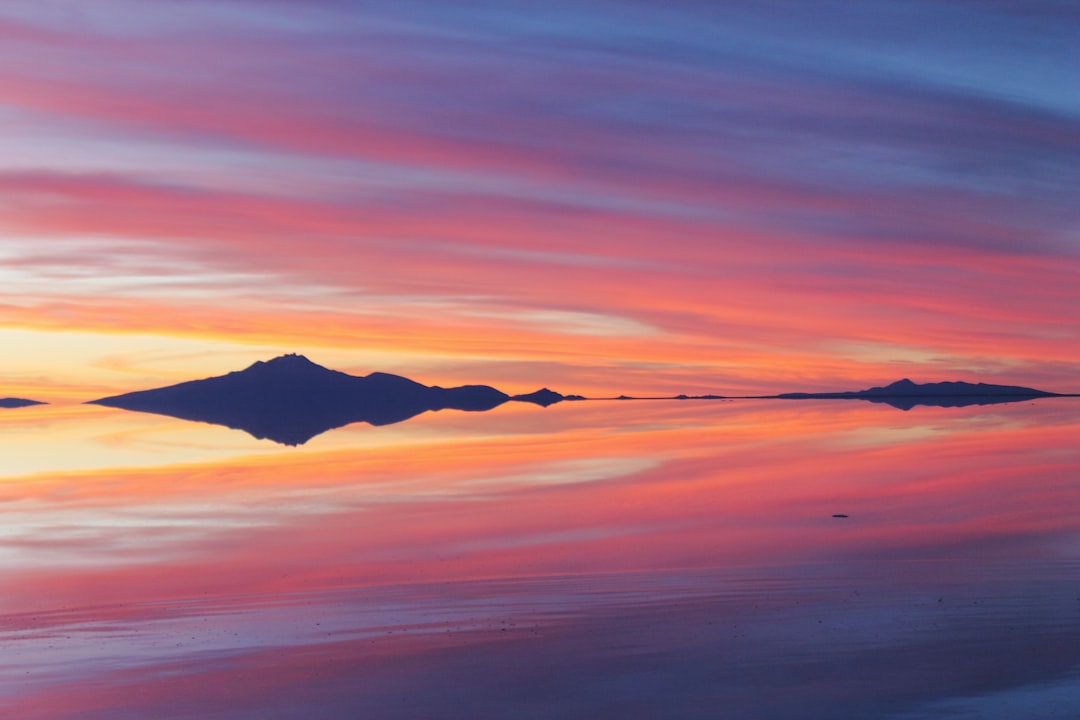
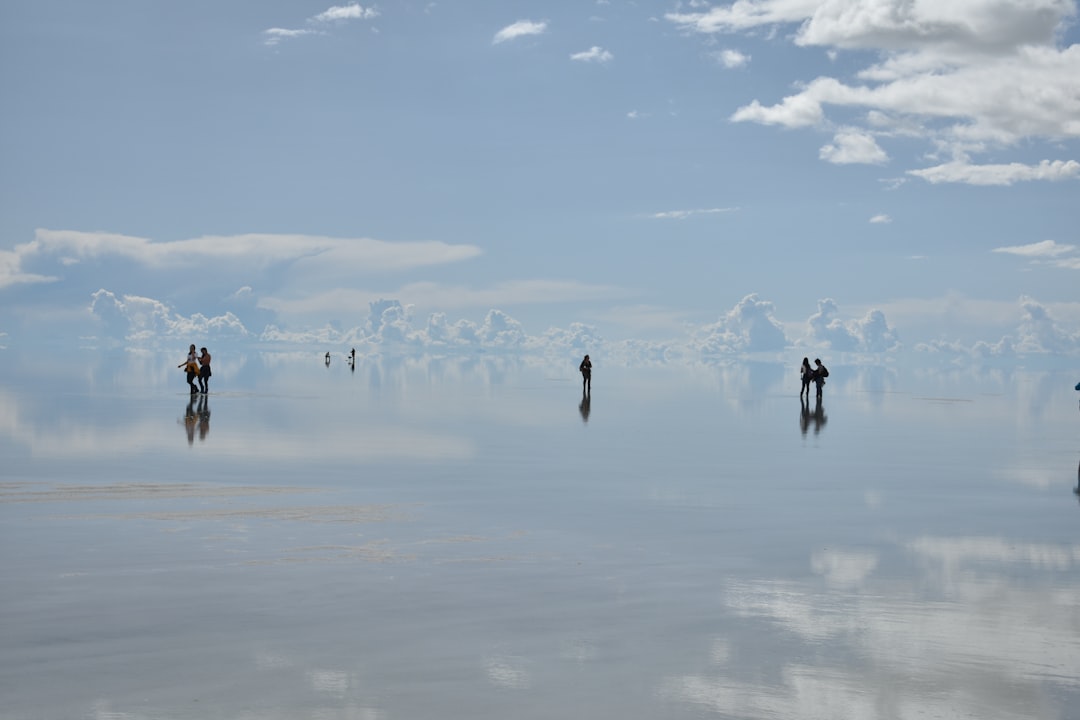
The most important practical advice: if the goal is to see the sunset reflected on the water, it is essential to plan the trip between December and February, when the likelihood of finding water on the surface is higher. Arriving at the salt flat at least an hour before sunset allows you to choose the right spot and enjoy the gradual change of light. Wearing rubber boots is essential during the rainy season, as the water can reach the ankle.
The Incahuasi Island: a privileged observation point
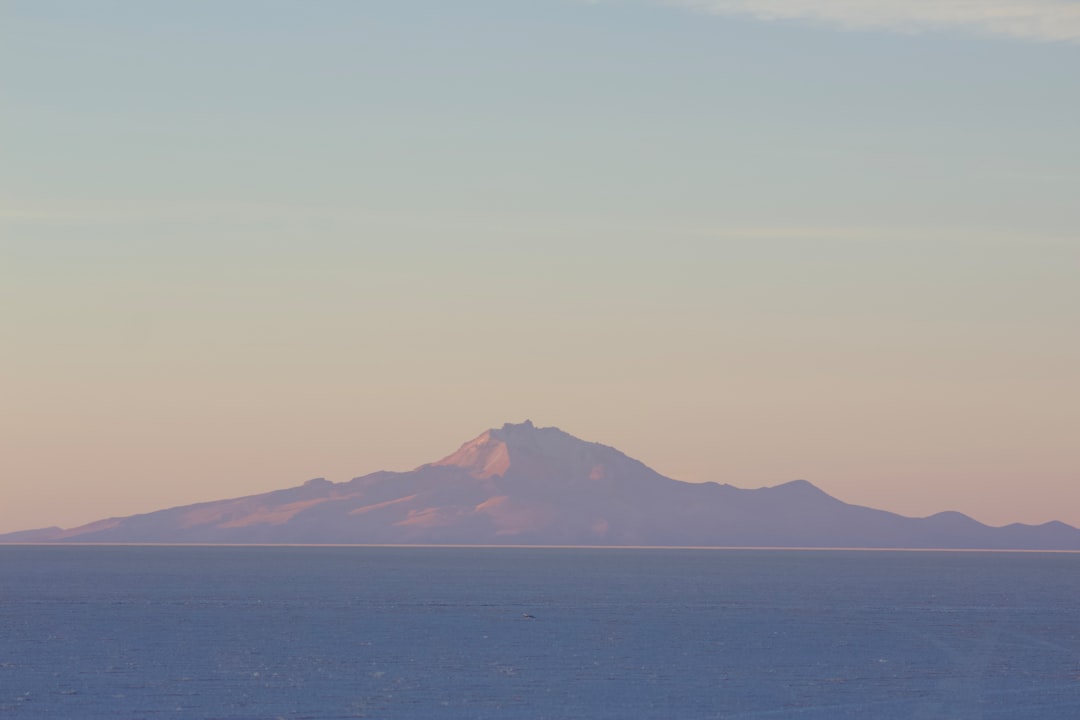
At the center of the salt flat lies the Incahuasi Island, a rocky island of volcanic origin covered with columnar cacti that can exceed 10 meters in height. These cacti grow at a rate of about one centimeter per year, which means that the largest specimens are centuries old. Climbing the island offers a unique perspective: the salt flat stretches in every direction to the horizon, and during sunset, the cacti stand out as dark silhouettes against the fiery sky.
Entry to the island requires a small fee of about 30 bolivianos. The walking path around the island takes about 30-40 minutes and is suitable for almost all fitness levels, although the altitude can make breathing more strenuous for those who are not accustomed. Bringing enough water is essential, as there are no fountains on the island.
The silence as part of the experience
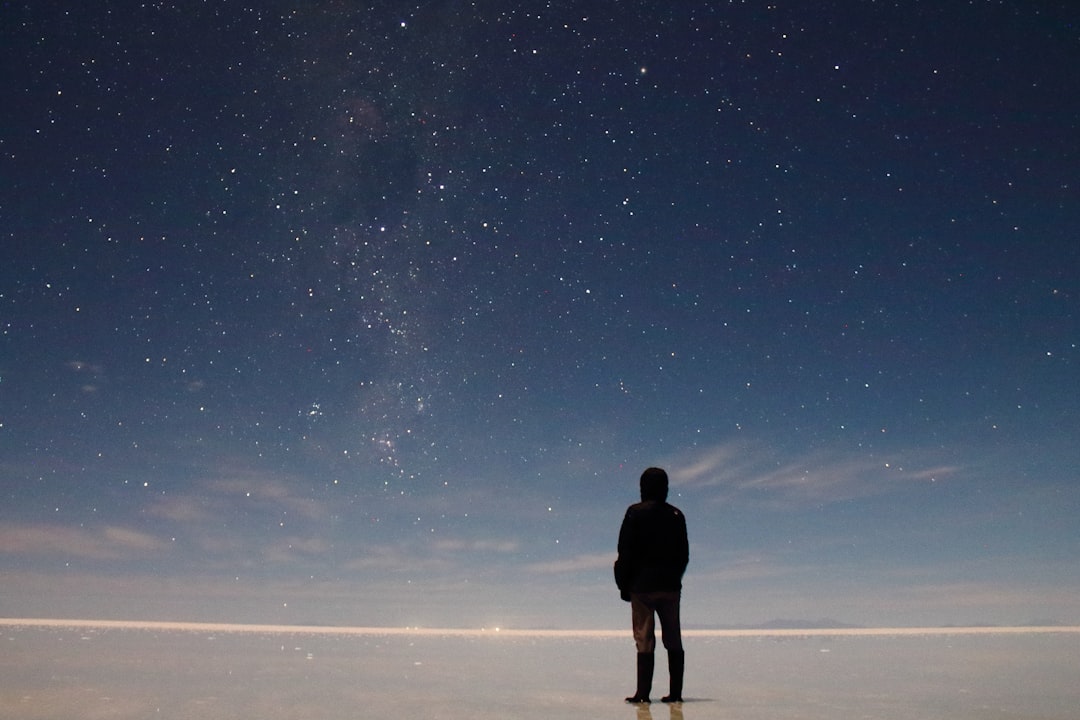
What no photograph can convey about the Salar de Uyuni at sunset is the silence. At that altitude, far from any urban settlement, the only sound is the gentle wind that sometimes barely ripples the surface of the water, creating small waves that distort the reflection of the setting sun. It is a physical silence, almost tangible, that amplifies the feeling of being suspended in a boundless space.
Many visitors describe the experience of sunset on the salt flat as one of the most intense moments of their travels, not for mystical or spiritual reasons, but for a very concrete reason: it is rare to find a place on Earth where the grandeur of the natural landscape manifests so directly and immediately to the senses. The light changes every minute, the colors evolve, and the mirror of water records everything with absolute fidelity.


