

At over 4,000 meters above sea level, the volcanic plateau of the Aguada Blanca National Reserve opens up in almost total silence. The wind moves the low clouds above the puna plains, and among the tufts of ichu — the yellow grass typical of the Andes — elegant shapes move: they are the vicuñas, the wild camelids that were once hunted almost to extinction and today populate this plateau in considerable numbers. Most travelers who arrive in Arequipa stop in the city, attracted by the white sillar palaces of the historic center. Few venture east, along the road that leads to Colca or towards the Misti volcano, crossing this reserve that remains one of the least frequented natural spaces in southern Peru.

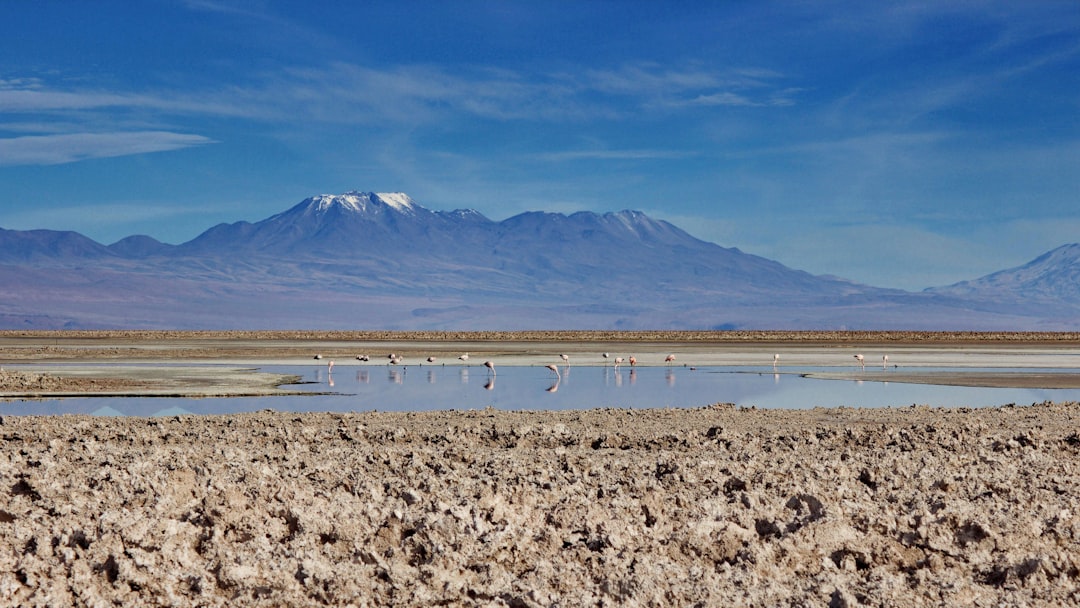
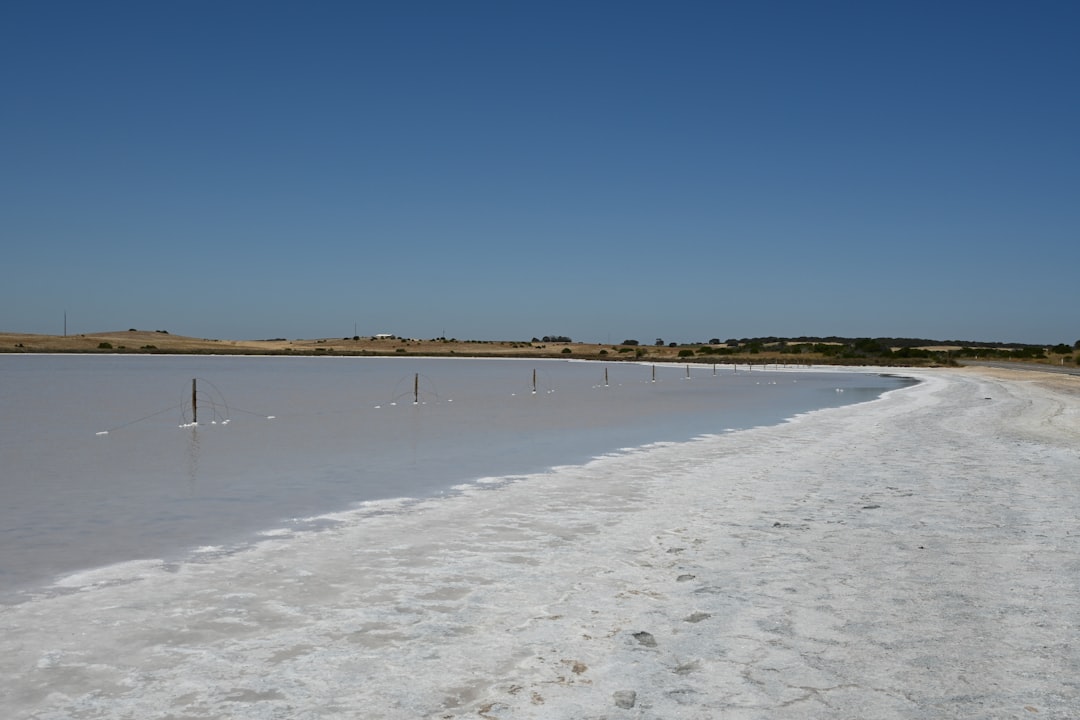
The reserve was established in 1979 with the main objective of protecting the populations of vicuñas (Vicugna vicugna), which at that time were drastically reduced due to poaching for their prized fiber. The protected territory covers about 366,936 hectares across the provinces of Arequipa, Caylloma, and General Sánchez Cerro, and is dominated by the presence of two stratovolcanoes: Misti (5,822 m) and Chachani (6,057 m), whose snow-capped silhouettes stand out on the horizon in an almost unreal way on clear days. The landscape is that of the classic dry Andean puna: flat, sunburned and wind-swept, with saline lagoons that reflect a sky of an intense blue that can only be seen at these altitudes.
The Vicuña: The Symbolic Animal of the Reserve

The vicuñas are the most certain sighting in the reserve. They move in small family groups, led by a dominant male, and graze calmly along the edges of the paved road that crosses the protected area. Unlike domestic llamas, vicuñas are wild animals and maintain a cautious distance from humans, but it is not uncommon to find oneself just a few dozen meters away from a group busy grazing. Their fiber is considered among the most precious in the world — each animal produces about 200-300 grams of wool per year — and for this reason, they are still today the subject of a controlled shearing program called chaku, a practice that dates back to the Inca era.
Observing these creatures in their natural habitat, with the backdrop of snow-capped volcanoes, is an experience that is difficult to describe accurately. There is nothing domesticated in this landscape: no fences, no tourist signs, no visible accommodations. Just the high plateau, the wind, and the animals.

Flamingos and Viscachas: the Biodiversity of the Plateau
The brackish lagoons of the reserve, including the Laguna de Salinas — located at about 4,300 meters — host colonies of Andean flamingos. Three species frequent these waters: the Andean flamingo (Phoenicoparrus andinus), the James's flamingo (Phoenicoparrus jamesi), and the Chilean flamingo (Phoenicopterus chilensis). The best season to observe them in greater numbers is the wet season, from November to March, when the lagoons fill up and the flamingos arrive to nest. The bright pink of their plumage against the white of the salt flats and the gray of the volcanic soil creates color contrasts that seem almost artificial.
On the rocky walls and among the boulders scattered across the plateau live the viscachas (Lagidium viscacia), rodents with long, curved tails that resemble a cross between a rabbit and a squirrel. They are curious animals and tend to be not very shy: they sit still on the rocks to warm themselves in the sun, and often allow people to get close enough to be easily photographed. They are one of the most charming and unexpected sightings in the reserve.
How to get there and when to visit

The reserve can be reached starting from Arequipa, taking the road that leads to the Colca Canyon (route to Chivay) or the one towards the Laguna de Salinas. Many tour operators in the city offer one-day excursions that combine the reserve with the Colca Canyon, necessarily passing through the protected area. Alternatively, it is possible to rent a car or take the local minibuses that depart from the Arequipa Land Terminal towards Chivay.
The most important practical advice is to leave early in the morning, preferably by 7:00 AM, for two reasons: the morning light is better for photographing animals and volcanoes, and the afternoon clouds tend to cover the peaks. Those who suffer from altitude sickness should be cautious: the rapid transition from Arequipa (2,335 m) to over 4,000 meters can cause symptoms even in physically fit individuals. Bringing water, hot food in a thermos, and layered clothing is essential: even in summer, temperatures can drop below zero at night and the wind is constant during the day.
A silence that is not easily found
What strikes the most, in the end, is not a single sighting or a specific panorama. It is the feeling of being in a place that still operates according to its own rules, regardless of tourism. The vicuñas graze as they always have, the flamingos move along the edges of the salt lagoons, the viscachas watch passersby from the rocks without particular alarm. The reserve is not equipped for mass tourism, and this lack of infrastructure is, paradoxically, its most authentic strength.
For those coming from Europe or North America, accustomed to nature reserves with visitor centers, marked trails, and visible park rangers every hundred meters, Aguada Blanca offers something different: the opportunity to be in a living landscape without that landscape being organized for visitation. It is a subtle distinction, but those who perceive it rarely forget it.


