



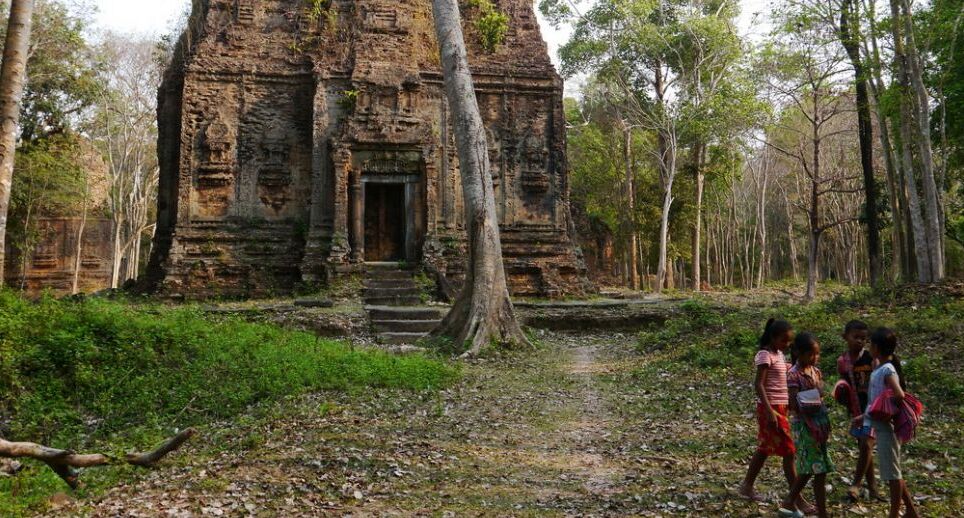
Nestled in the heart of Cambodia, Sambor Prei Kuk is a mesmerizing archaeological site that whispers tales of the past. Dating back to the Chenla period, this ancient temple complex predates the grandeur of Angkor Wat, offering a unique glimpse into Cambodia’s rich history. Scholars believe that the site was originally established as a royal city around the 7th century during the reign of King Isanavarman I, who was instrumental in the early foundation of the Chenla Kingdom. The intricate stone carvings and architectural styles found here reflect the influences of both Hinduism and Buddhism, showcasing a blend of artistic traditions that would later flourish in the Angkor period.
As you wander through the lush vegetation that envelops Sambor Prei Kuk, you’ll find a serene atmosphere reminiscent of the ancient world. The site is home to several important temples, including Prasat Tor, Prasat Ak Yum, and Prasat Sambor, each adorned with exquisite carvings and inscriptions that tell stories of deities, kings, and the daily lives of the Khmer people. The architectural style here is characterized by brick and sandstone, with some structures still standing tall despite centuries of wear. It’s a photographer’s dream, with vibrant greens contrasting against the weathered stones.
The local culture surrounding Sambor Prei Kuk is deeply intertwined with the traditions of the Khmer people. Festivals such as Bon Om Touk, the Water Festival, celebrate the connection between the river and the agricultural calendar, while the Pchum Ben festival honors ancestors and is marked by offerings to the spirits. Visitors to the site can often witness local customs in practice, as villagers engage in traditional dances and rituals that have been passed down through generations.
When exploring the region, don’t miss the opportunity to indulge in local gastronomy. The area is known for its delicious Khmer cuisine, featuring dishes like Amok, a fragrant coconut fish curry steamed in banana leaves, and Lok Lak, a stir-fried beef dish served with rice and a tangy lime sauce. For those with a sweet tooth, Num Ansom Chek, a sticky rice cake wrapped in banana leaves, offers a delightful taste of tradition. Pair your meal with a refreshing glass of sugarcane juice or the local favorite, Angkor Beer, brewed to perfection.
Among the whispers of history and the rustle of leaves, Sambor Prei Kuk holds lesser-known curiosities that intrigue even the most seasoned travelers. For instance, the area still bears the scars of war, with remnants of conflict visible in the landscape. Visitors are advised to stay on marked paths due to the presence of unexploded landmines from Cambodia’s tumultuous past. Furthermore, the complex is home to a diverse range of wildlife, including unique bird species, making it a haven for birdwatchers.
The best time to visit Sambor Prei Kuk is during the dry season, from November to February, when temperatures are cooler and the trails are more accessible. Early mornings offer a magical experience, with soft light illuminating the ancient stones and the sounds of wildlife awakening around you. To enhance your visit, consider hiring a knowledgeable local guide who can provide deeper insights into the history and significance of the site.
As you explore the ancient wonders of Sambor Prei Kuk, take your time to connect with the surroundings and absorb the serene beauty of this hidden gem. Whether you are an archaeology buff, a nature enthusiast, or simply seeking a peaceful retreat, this site offers a unique experience that speaks to the heart and soul of Cambodia.
For a personalized itinerary that captures the essence of your journey, consider using the Secret World app to plan your visit to Sambor Prei Kuk.
