
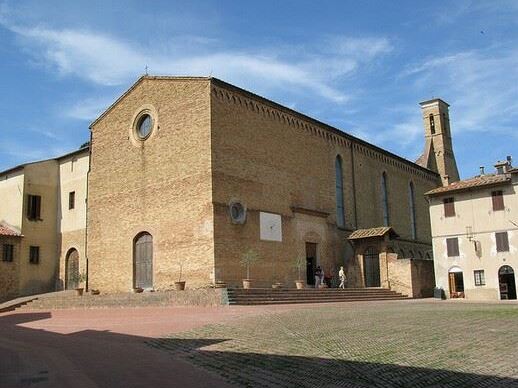

Nestled in the heart of Tuscany, San Gimignano enchants visitors with its medieval charm and stunning landscapes. This hilltop town, famous for its well-preserved towers, also houses the remarkable Sant’Agostino Church, an architectural gem that tells tales of faith, art, and history.
History and Origins
Founded in the 3rd century AD, San Gimignano gained prominence during the Middle Ages as a significant stop for pilgrims traveling along the Via Francigena, the ancient route to Rome. The town flourished in the 12th century, marked by the construction of its iconic towers, which symbolized wealth and power among its noble families. Sant’Agostino Church, built in the late 13th century, was established to serve the local Augustinian community. Its foundation reflects the town's growing spiritual importance during this era, providing a place of worship and community gathering amidst the backdrop of economic prosperity.
Throughout the centuries, San Gimignano has witnessed pivotal historical events. Notably, it successfully resisted the expansion of nearby Florence, maintaining its autonomy until the 16th century. This independence allowed the town to preserve its medieval character, exemplified by the architecture of Sant’Agostino Church.
Art and Architecture
The architectural style of Sant’Agostino Church is a classic example of Romanesque design, characterized by its simple yet imposing façade, with a series of arches and a bell tower that rises majestically against the skyline. Stepping inside, visitors are greeted by a serene atmosphere, adorned with stunning frescoes and artworks that narrate the life of St. Augustine.
The Cappella Maggiore, or Main Chapel, showcases some of the most exquisite frescoes depicting the Stories of Saint Augustine. Created by the renowned painter Benozzo Gozzoli, these works are not only significant for their artistry but also for their role in illustrating the saint's life and teachings. Gozzoli, a prominent figure in the Florentine school, was known for his ability to infuse a narrative quality into his works.
In addition to the frescoes, the church houses a striking depiction of Saint Sebastian, also attributed to Gozzoli. Unlike traditional portrayals of the martyr, often depicted in a vulnerable state, Gozzoli presents him elegantly dressed in blue, challenging the typical iconography of the time. The church further enriches its collection with 15th-century canvases and panels by Antonio del Pollaiolo, showcasing the evolution of artistic styles during the Renaissance.
Local Culture and Traditions
San Gimignano’s cultural landscape is vibrant, with traditions deeply rooted in its historical context. One of the most significant events is the Festa Medievale, held every June, where the town transforms into a medieval spectacle, complete with costumes, music, and historical reenactments. This festival not only celebrates the town's rich history but also fosters a sense of community among residents and visitors alike.
Additionally, the Palio di San Gimignano, a traditional horse race held in September, draws crowds eager to witness this exhilarating event. The race pits the town’s neighborhoods against each other in a spirited competition, celebrating local pride and camaraderie.
Gastronomy
No visit to San Gimignano would be complete without indulging in its culinary delights. The town is renowned for its Vernaccia di San Gimignano, a white wine that has been celebrated since the 13th century. The crisp and refreshing flavors of this wine pair beautifully with local dishes, making it a staple on many dining tables.
Local cuisine features traditional Tuscan fare, such as pici, a hand-rolled pasta typically served with a rich garlic and tomato sauce. For a sweet treat, don’t miss the gelato, especially the famous gelateria in Piazza della Cisterna, which boasts a variety of flavors crafted from local ingredients.
Lesser-known Curiosities
While the towering skyline of San Gimignano is a sight to behold, hidden details often escape the casual observer. For instance, the church’s exterior features a lesser-known rose window, a delicate masterpiece that embodies the artistry of the period. Furthermore, the Cappella Maggiore is not just a display of art; it also contains intriguing symbols and motifs that reflect the theological debates of the time.
Additionally, the town boasts an ancient well in Piazza Sant’Agostino, which served as a vital water source for residents. This well, often overlooked, is a testament to the town's practical past and its reliance on local resources.
Practical Visitor Information
The best time to visit San Gimignano is during the spring (April to June) and fall (September to October) when the weather is mild, and the crowds are less overwhelming. To make the most of your visit to Sant’Agostino Church, consider arriving early in the morning or later in the afternoon to enjoy a quieter atmosphere. Don’t forget to take a moment to appreciate the intricate details of the frescoes and the serene ambiance of the church.
When exploring the town, be sure to wander the narrow streets and discover local artisan shops, adding to your experience of this enchanting place.
With its rich history, stunning art, and vibrant culture, San Gimignano is a destination that promises to linger in your memory long after you leave. To plan a personalized itinerary for your visit, consider using the Secret World app for tailored recommendations.


