

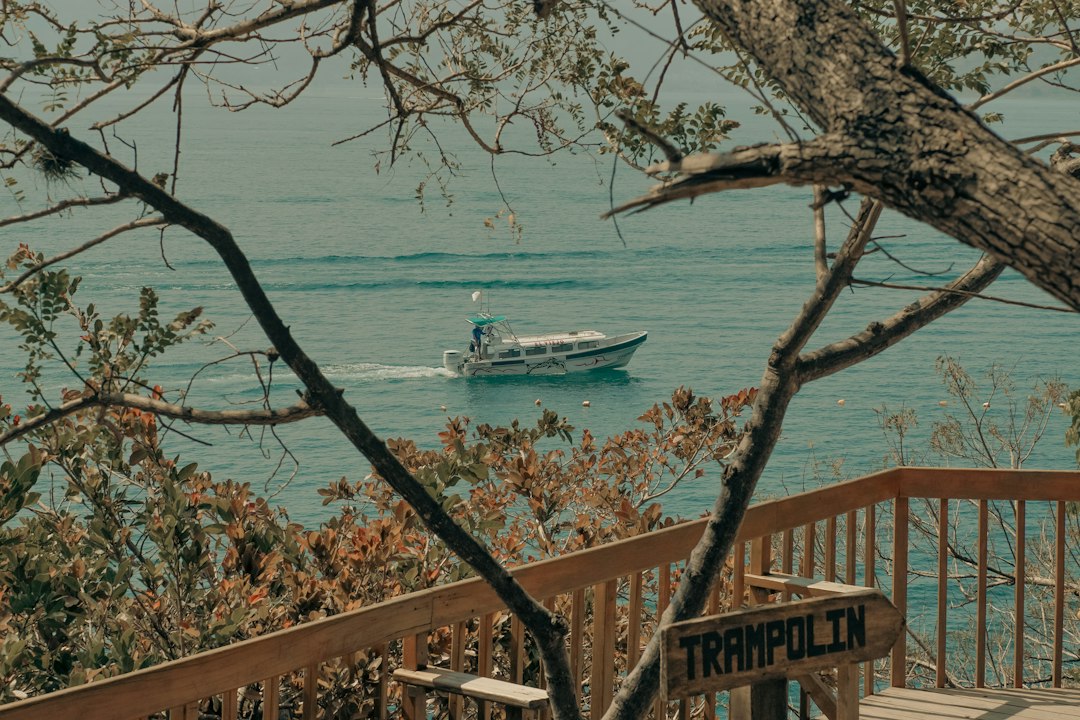
The boat slowly approaches the wooden dock and the water beneath the bow changes color, shifting from deep blue to an almost unreal jade green. San Marcos La Laguna appears just like that, without warning, nestled among the tropical vegetation and the volcanic rock walls that descend directly into the lake. There are no roads connecting this village to the rest of Guatemala: the only way to reach it is by lancha, the collective boat that plies the waters of Lake Atitlán several times a day.
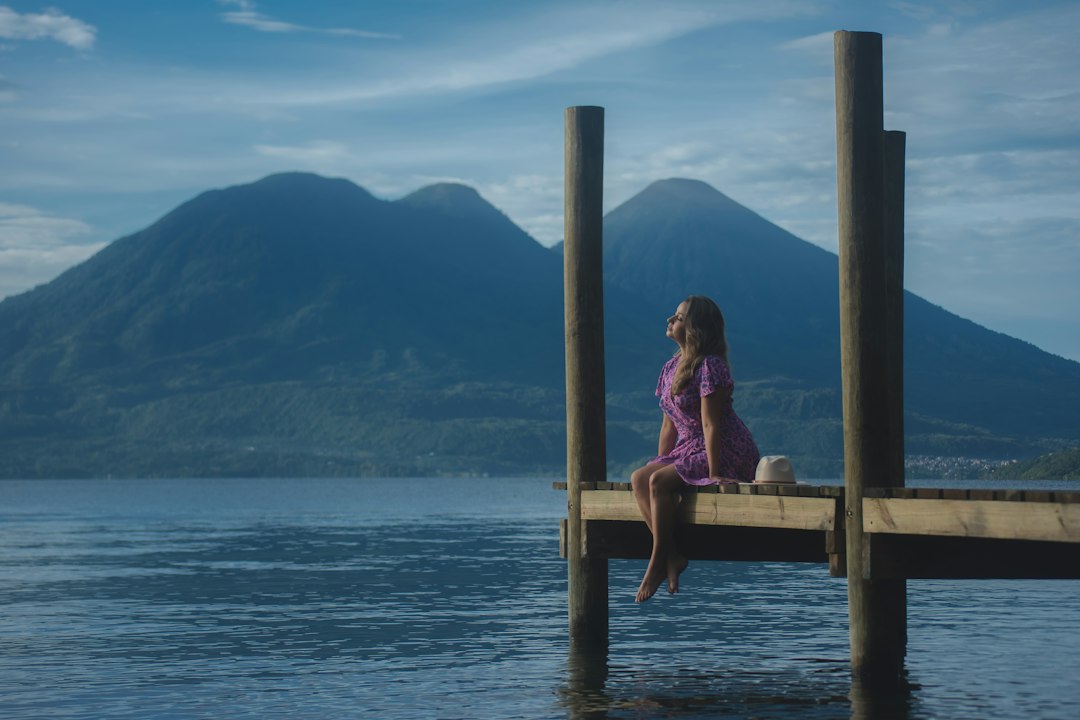
Lake Atitlán is located in the Guatemalan highlands, at about 1,560 meters above sea level, and is contained within a volcanic caldera formed about 84,000 years ago. Three volcanoes dominate the southern horizon — San Pedro (3,020 meters), Tolimán, and Atitlán — and their presence transforms every dawn and every sunset into something difficult to photograph and even harder to forget. San Marcos is one of the twelve villages that line the lake, and among them, it is the one that has managed to maintain a more intimate and authentic atmosphere.
A village that can be walked through in twenty minutes
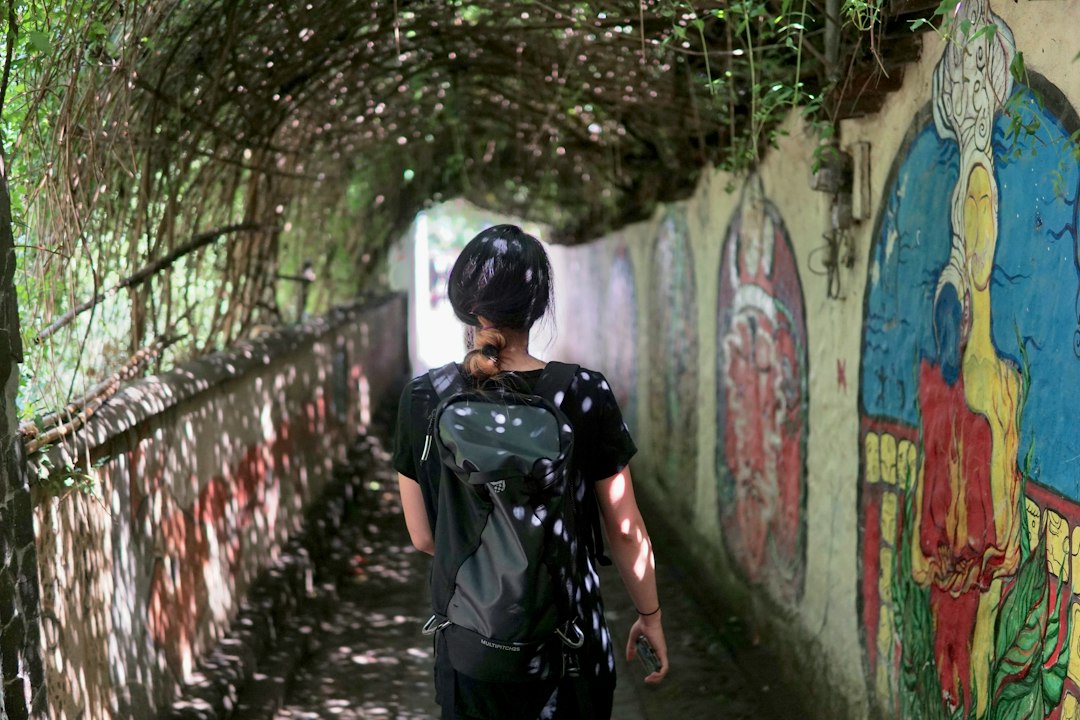
San Marcos La Laguna is small in the most literal sense of the term. The center of the village can be crossed on foot in less than twenty minutes, following stone paths that rise from the shore towards the adobe houses and the gardens where banana trees, coffee, and tropical flowers grow. The community is predominantly Maya Tz'utujil, and this identity is perceived in the colorful fabrics that the women wear every day, in the local markets, and in the ceremonies held in the village church.
Along the path that runs alongside the lake, one encounters the rocks from which the village youth dive into the water. These natural platforms of volcanic stone, some several meters high, have become a landmark for the more adventurous travelers. The water is cold even in the hottest months — the average temperature of the lake hovers around 18-20 degrees Celsius — but the clarity is such that the bottom is visible to considerable depths.
The meditation centers and the local spiritual tradition
San Marcos is known throughout the Lake Atitlán region for its meditation and yoga centers, many of which are run by local families or by foreigners who settled here in the 1990s and 2000s, attracted by the tranquility of the place. The Las Pirámides del Ka is one of the most well-known centers, founded decades ago and still active with residential meditation courses that last entire weeks. The architecture of the center features pyramid shapes inspired by Mesoamerican cosmology, and the gardens that surround it are maintained with almost monastic care.
This coexistence between Maya spirituality and contemplative practices of various origins creates a particular atmosphere, which is neither kitsch nor superficial. The villagers often participate in traditional ceremonies led by ajq'ijab, the Maya priests of the calendar, which take place in specific locations along the shore or near the natural springs that flow down from the volcanoes. Those who visit San Marcos with respect and genuine curiosity can witness moments of authentic spiritual life.
How to get there and when to visit
The most convenient starting point to reach San Marcos is Panajachel, the main tourist center of the lake, accessible by bus from Antigua Guatemala in about two and a half hours of travel. From Panajachel, public lanchas depart regularly throughout the day to various villages around the lake, and the journey to San Marcos takes about thirty minutes with intermediate stops. The ticket price generally ranges around 25-35 quetzals per trip, equivalent to a few euros.
The most useful advice for visitors is to arrive in the late afternoon and stay at least one night. San Marcos completely changes character after the last lanchas of the day have left: the noise of the engines disappears, the lake calms down, and the village returns to its rhythms. The months from November to April correspond to the dry season and offer the best conditions for hiking and swimming, while from May to October, afternoon rains can be intense but provide lush vegetation and dramatic skies at sunset.
Where to sleep and what to eat
The accommodation options in San Marcos are mainly composed of small family-run hotels and bungalows set in greenery, with prices that remain affordable compared to European standards. Many establishments are located directly on the lake shore or just a few steps from the water, with terraces from which the volcanoes seem close enough to touch. Some local farmhouses offer breakfasts with products grown in their gardens, including high-quality Guatemalan coffee from the plantations in the surrounding highlands.
The local cuisine revolves around traditional Maya-Guatemalan dishes: pepián, a thick stew with toasted pumpkin seeds, and tamales wrapped in banana leaves are found in the small comedores in the center. Eating where the villagers eat is always the best choice, both for flavor and price.


