
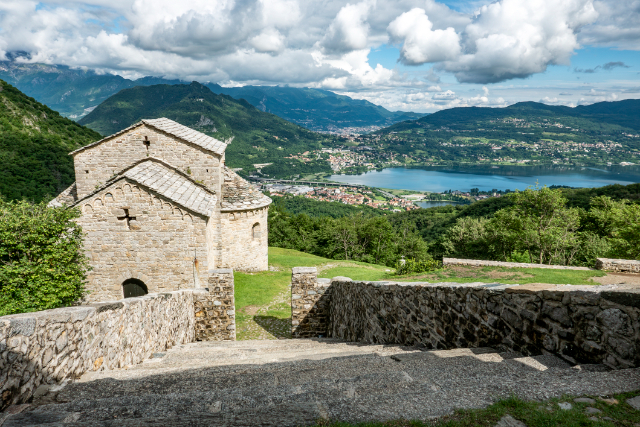

San Pietro al Monte in Civate is not just another ancient church nestled in the Italian Alps; it’s a monumental testimony to the rich history and spiritual significance of the region. First-time visitors are often struck by the beauty and scale of the site, prompting the question: who envisioned such a structure, and when was it built?
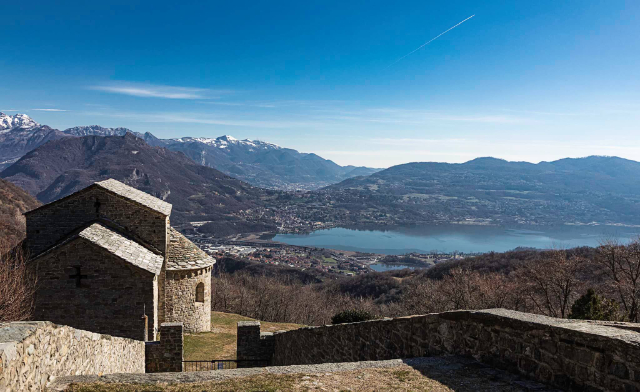
To answer that, one must delve into the millennia-old history of this region, stretching back to the Copper Age. Over the centuries, the area saw the arrival of the Ligurians, Celts, Romans, Goths, Byzantines, Lombards, and finally the Franks. However, it was during the Roman era that the territory acquired its distinctive character, serving as a crucial military outpost. This region was part of a defensive line stretching from Lecco to Como, with signal posts communicating potential threats from the northern frontier.
The name Civate itself traces back to the Roman term Clavis, meaning "key," denoting a vital checkpoint in this defense system. Following the Romans, the Lombards took over, establishing monasteries as centers of Christianization and cultural integration. The most notable of these was the monastery of San Pietro al Monte, founded in the late 8th century, according to legend, by King Desiderius to fulfill a vow made after his son Adalgiso was miraculously healed.
The monastery underwent several reconstructions, with significant expansions in the 9th and 11th centuries, evolving into the Romanesque masterpiece we see today. The basilica is renowned for its intricate decorations and symbolic artwork. Above the entrance, the "Traditio Symboli" scene is a powerful representation of Christ as the founder of the Church, with St. Peter and St. Paul receiving the keys and the book of the Word, respectively.
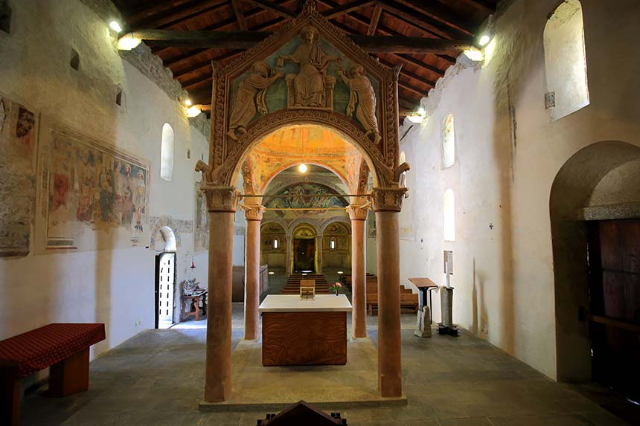
Inside, visitors are greeted by an elaborate interior, rich with frescoes and stucco decorations. The ciborium, a rare architectural feature also seen in Sant’Ambrogio in Milan, stands as the focal point of the presbytery. Its design reflects the resourcefulness of the builders, who used local materials to create a structure that, while less opulent than its Milanese counterpart, is architecturally more refined.
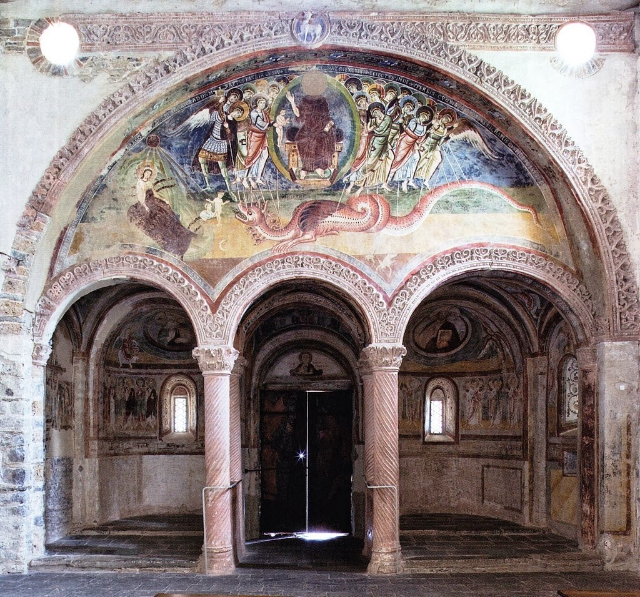
The walls of the nave and crypt were once fully adorned with frescoes, many of which have been lost over time. However, the surviving decorations offer a glimpse into the rich theological and artistic narrative that once covered every surface of the church. The Apocalyptic frescoes above the entrance, depicting the woman clothed with the sun and the battle between St. Michael and the dragon, are particularly striking, offering a vivid portrayal of the cosmic struggle between good and evil.
Despite the passage of time and the destruction of the residential parts of the monastery—likely after the defeat of Barbarossa—the church of San Pietro al Monte remains a stunning example of medieval religious architecture, deeply embedded in the spiritual and cultural fabric of the region. The crypt, the most ancient part of the structure, still retains fragments of its original stucco work, providing a tangible link to the monastery's early days.
This sacred site, perched high in the Alps, continues to captivate visitors with its profound history, architectural elegance, and the serene beauty of its mountainous surroundings.


