
Nestled in the heart of Milan, just a stone's throw from the bustling Piazza Duomo, lies a hidden gem that often escapes the notice of even the most seasoned travelers. The church of Santa Maria presso San Satiro offers a captivating glimpse into the city’s rich tapestry of history and art, making it a must-visit for those willing to seek out the unexpected.
### History and Origins
The origins of Santa Maria presso San Satiro date back to the late 15th century when it was built on the site of an earlier church dedicated to San Satiro, the brother of St. Ambrose, the patron saint of Milan. The church was commissioned by the Franciscan Order and completed in 1492. It was designed during a time of significant change, as the Renaissance blossomed across Italy, bringing forth not only new artistic styles but also a revival of classical themes.
Throughout the centuries, Santa Maria has witnessed pivotal moments in Milanese history. It survived the tumultuous period of the Napoleonic Wars and the subsequent unification of Italy, adapting to the changing tides of society while retaining its spiritual essence. The church has been lovingly preserved, reflecting the resilience of Milanese culture through the ages.
### Art and Architecture
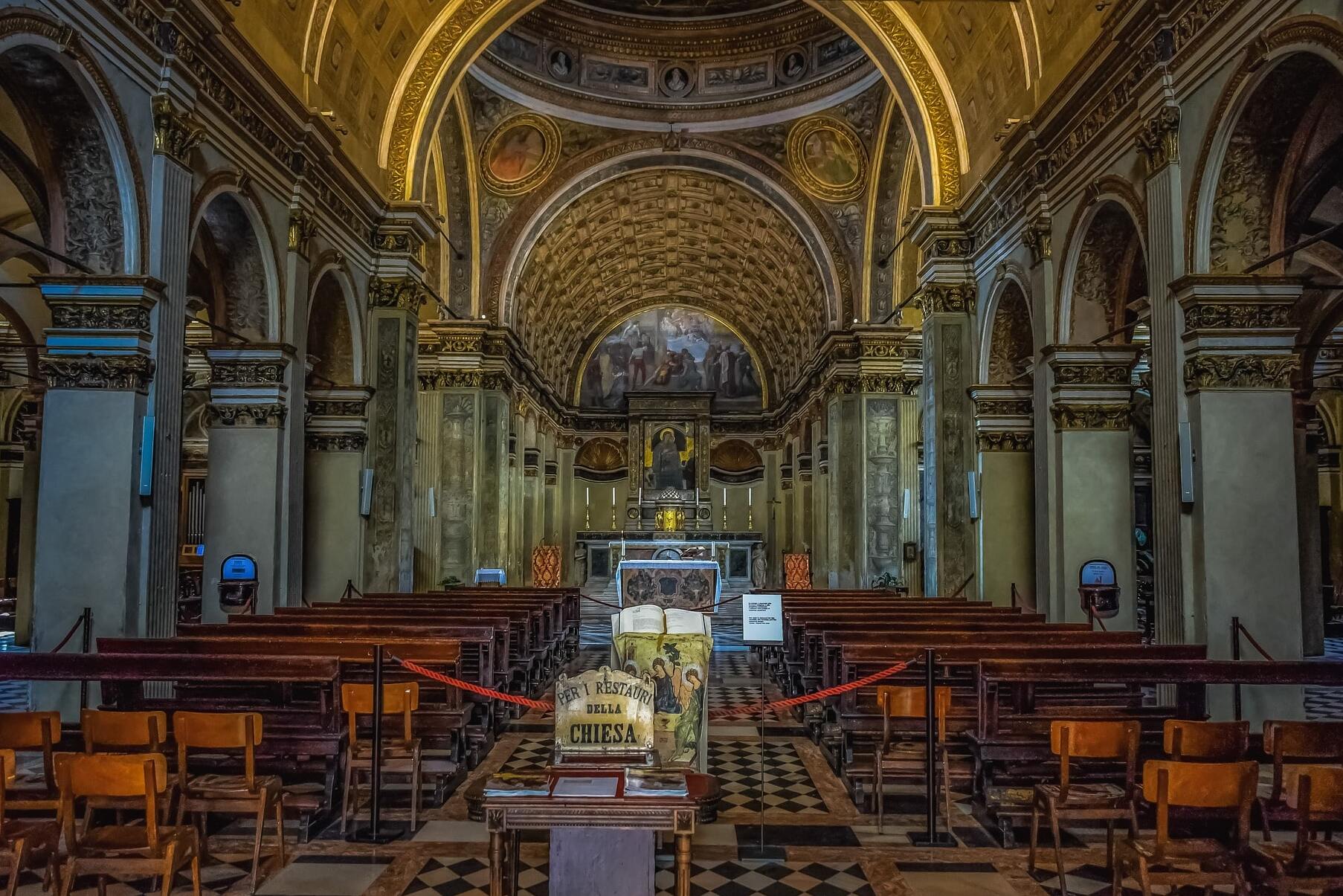
At first glance, the exterior of Santa Maria presso San Satiro may seem unassuming with its neo-Renaissance façade designed by Giovanni Battista Lazzari. However, it is the interior that captivates and surprises. Upon entering, visitors are greeted by an explosion of artistic brilliance. Notably, the church features a remarkable optical illusion created by the architect Donato Bramante, who is credited with the intricate design of the apse.
Although the church is small, the apse appears unusually deep, inviting the curious eye to explore its secrets. In reality, the apse is less than a meter deep, a masterful trick of perspective that demonstrates Bramante’s innovative genius. The walls are adorned with stunning frescoes and altarpieces, including works by Giovanni Battista Crespi, also known as Il Cerano, whose paintings elevate the spiritual atmosphere of the church.
### Local Culture and Traditions
Santa Maria presso San Satiro is not just an architectural marvel; it is also an integral part of the local culture. The church is a site of regular worship and community gatherings, fostering a sense of connection among the residents of Milan. Local traditions often see the church as a backdrop for celebrations, especially during Holy Week, when the community gathers for special masses and processions.
The area surrounding the church is vibrant, featuring street performers and local artisans who contribute to its lively cultural landscape. Visitors may encounter small festivals, particularly during the summer months, which celebrate Milanese traditions through music, dance, and local cuisine.
### Gastronomy
No visit to Santa Maria presso San Satiro would be complete without indulging in the local culinary delights. The nearby streets are lined with charming cafés and trattorias, where one can savor Milanese risotto, a creamy dish made with Arborio rice, saffron, and often accompanied by ossobuco, a braised veal shank.
Another local specialty is panettone, the iconic sweet bread that originated in Milan. While traditionally associated with Christmas, you can find variations of this delightful treat year-round in local bakeries. Don’t miss the chance to sip on a glass of Campari, a bitter aperitif that was invented in Milan, which perfectly complements the rich flavors of the region’s cuisine.
### Lesser-Known Curiosities
While the church itself is a treasure, there are hidden details that often go unnoticed. For instance, the church has a unique sacristy adorned with ancient wooden furnishings, where visitors can glimpse intricately designed woodwork that dates back to its founding.
Another curious fact is that Santa Maria presso San Satiro is home to a small chapel dedicated to San Satiro, which contains a relic of the saint himself—a piece of bone believed to hold miraculous powers. This relic attracts pilgrims and visitors alike, adding a layer of spiritual significance to the site.
### Practical Visitor Information
The best time to visit Santa Maria presso San Satiro is during the weekdays when the church is less crowded. Early mornings or late afternoons provide a peaceful atmosphere, allowing visitors to fully appreciate the artistry and serenity of the space. Admission is typically free, although donations are appreciated to help maintain this historical site.
As you explore, take a moment to absorb the ambiance—listen to the whispers of history echoing off the walls, and don’t hesitate to engage with the local community. A quick chat with the parish staff can reveal fascinating insights and stories that breathe life into the church's past.
For those looking to uncover Milan's hidden treasures, Santa Maria presso San Satiro stands as a poignant reminder of the city’s artistic and cultural heritage, waiting patiently for those who seek it out.
To create a personalized itinerary that includes this enchanting spot, consider using the Secret World app for your Milan adventure.