
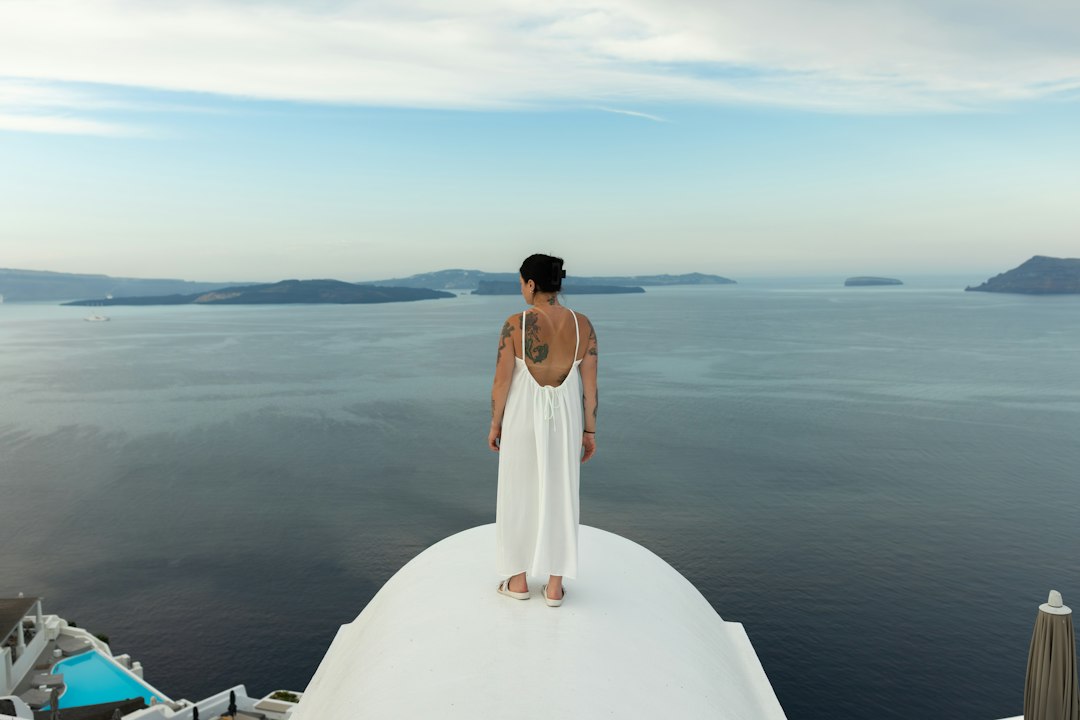

Three hundred meters of volcanic rock drop steeply into the blue sea of the Aegean: this is the first thing that strikes you when you look out from the edge of the caldera of Santorini. It is not just a simple cliff, but the edge of an ancient and immense crater, filled by the waters of the Mediterranean after one of the most devastating eruptions in human history. Looking down from the village of Oia or from the path that connects Fira to Firostefani means observing, literally, the interior of a still-active supervolcano.
The eruption that shaped Santorini occurred around 1600 BC, during the Bronze Age, and is known as the Minoan eruption. It was a catastrophic event of extraordinary proportions: scholars estimate that it expelled between 60 and 100 cubic kilometers of volcanic material, causing the collapse of the central part of the original island and the formation of the caldera that we see today. Some historians and geologists believe that this event may have contributed to the decline of the Minoan civilization on Crete, located about 110 kilometers away.
The living geology of an active caldera
The caldera of Santorini is not an inert geological relic. At the center of the marine basin are the islands of Nea Kameni and Palea Kameni, two volcanic formations that emerged in different historical periods: Palea Kameni appeared around 197 BC, while Nea Kameni gradually took shape between 1707 and 1711 AD and continued to grow with subsequent eruptions until the 20th century. The last significant eruptive activity dates back to 1950. Walking on Nea Kameni means stepping on basalt rock that is still warm in some places, with fumaroles emitting sulfur and vapors visible to the naked eye.
The waters around Palea Kameni are warm due to underwater geothermal activity, and many boats that conduct caldera tours stop in this area to allow passengers to swim. The water has a reddish or brownish tint near the hot springs, a phenomenon caused by dissolved minerals, particularly iron and sulfur, that emerge from the seabed.
How to visit the caldera: boat tours and hiking trails
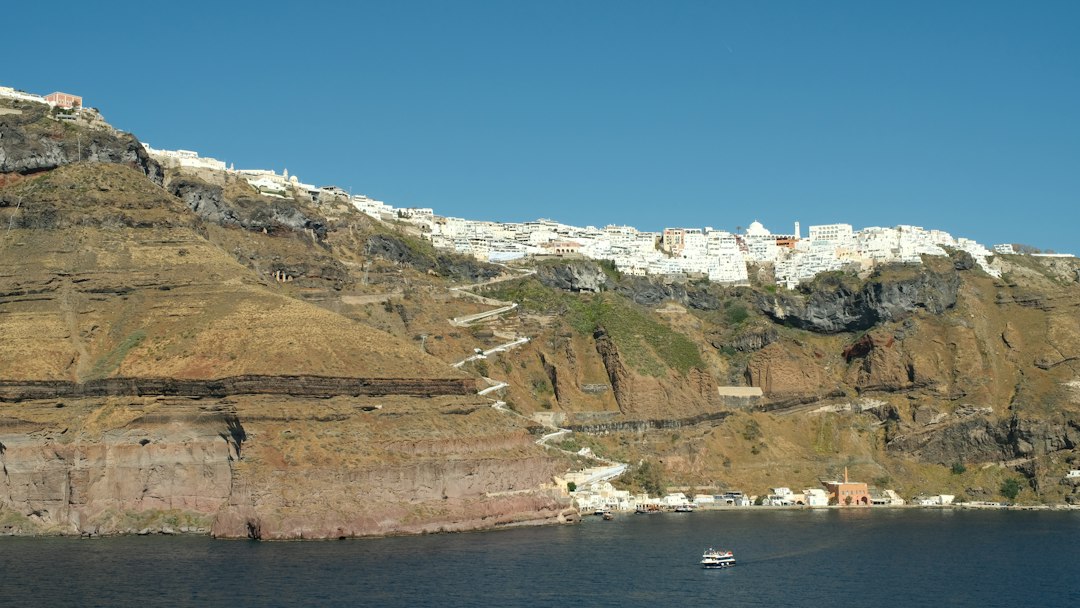
The most direct way to approach the heart of the caldera is to embark on one of the numerous boat tours that depart from the port of Athinios or the ancient port of Fira, accessible by cable car or on muleback from the high town. Classic tours last between four and six hours and generally include a stop at Nea Kameni for a walk on the volcano, a swim in the hot springs of Palea Kameni, and often a visit to the village of Thirasia, the smaller island that forms the western side of the caldera.
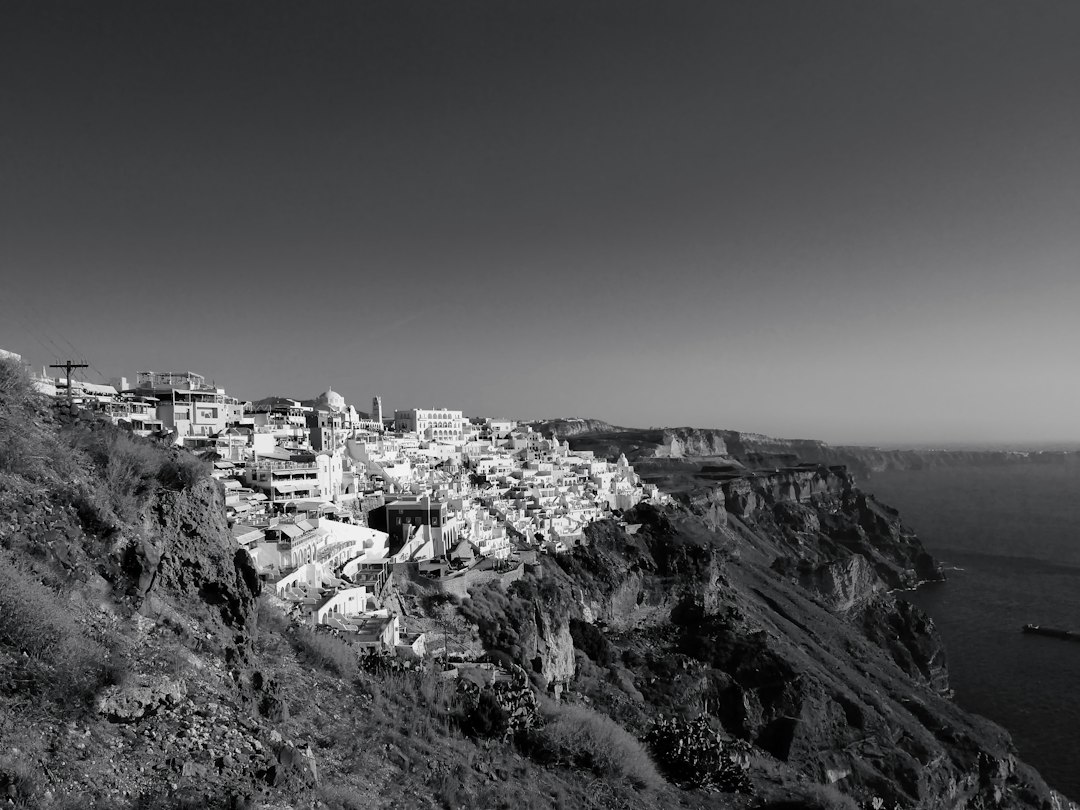
For those who prefer to stay on land, the trail that connects Fira to Oia along the edge of the caldera is one of the most scenic walking routes in Greece. The route measures about 10 kilometers and typically takes three hours to walk. The terrain is uneven and in some sections challenging, so suitable shoes are necessary. The most useful advice is to start at dawn or in the early morning, especially in summer, when temperatures exceed 30 degrees and the trail is exposed to the sun without shade. Walking in this direction, from Fira to Oia, also allows you to reach the island's most famous village before the massive influx of tourists in the afternoon.
Oia and Fira: the viewpoints on the edge of the crater
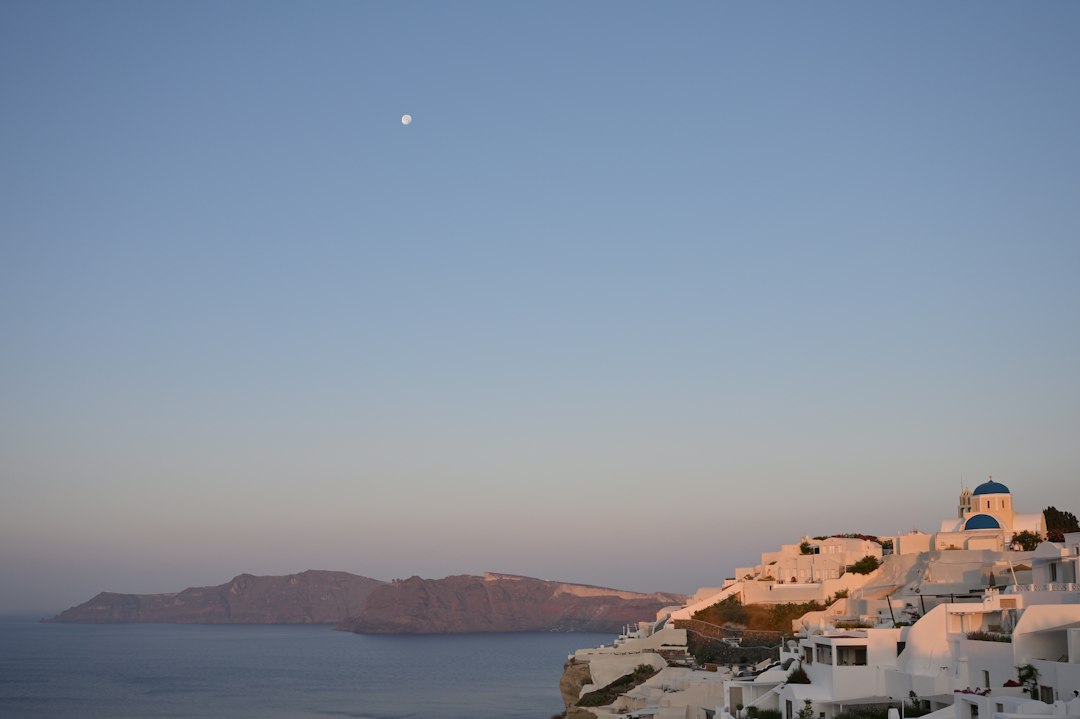
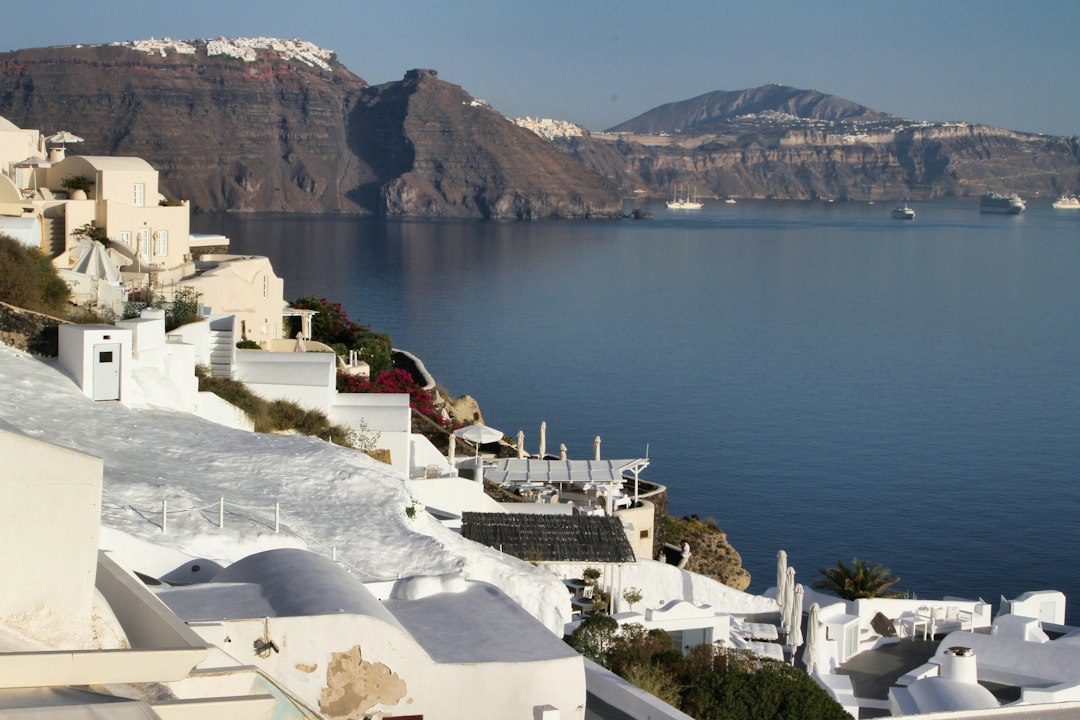
The two main settlements built on the edge of the caldera offer different perspectives on the same landscape. Fira, the capital, is more chaotic and commercial, but from its main viewpoint, there is a direct view of the central volcanic islands and the vastness of the basin, which measures about 12 kilometers in diameter. The white houses glued to the volcanic slope are partly carved into the rock of the caldera itself: many of the characteristic hotels with infinity pools occupy ancient caves or cisterns.
Oia, at the northern end of the island, is famous for its sunsets that attract hundreds of people every evening to the ruined Venetian castle that overlooks the village. To avoid the sunset crowd, a good alternative is the viewpoint of Skaros Rock, a volcanic promontory that juts out over the caldera between Imerovigli and Fira, reachable on foot in about twenty minutes from Imerovigli and often much less crowded.
What to expect and how to organize the visit
Boat tours of the caldera have an indicative cost that varies between 25 and 60 euros per person, depending on whether you choose a group boat or a more private catamaran excursion. Morning departures are generally quieter compared to afternoon ones. The best time to visit Santorini and the caldera is late spring, between May and June, or September: the weather is pleasant, the sea is navigable, and the island has not yet reached the tourist saturation of the central summer months. In July and August, the trails and ports are overcrowded, and the temperatures make any outdoor activity strenuous during the central hours of the day.
Bringing enough water, sunscreen, and closed shoes is essential for any activity that involves walking, whether on the caldera trail or on the lava surface of Nea Kameni, where the ground is uneven and in some places still warm underfoot.


